Snowbird's SAMM Tech Supports RIMPAC 2026 from Ship to Shore
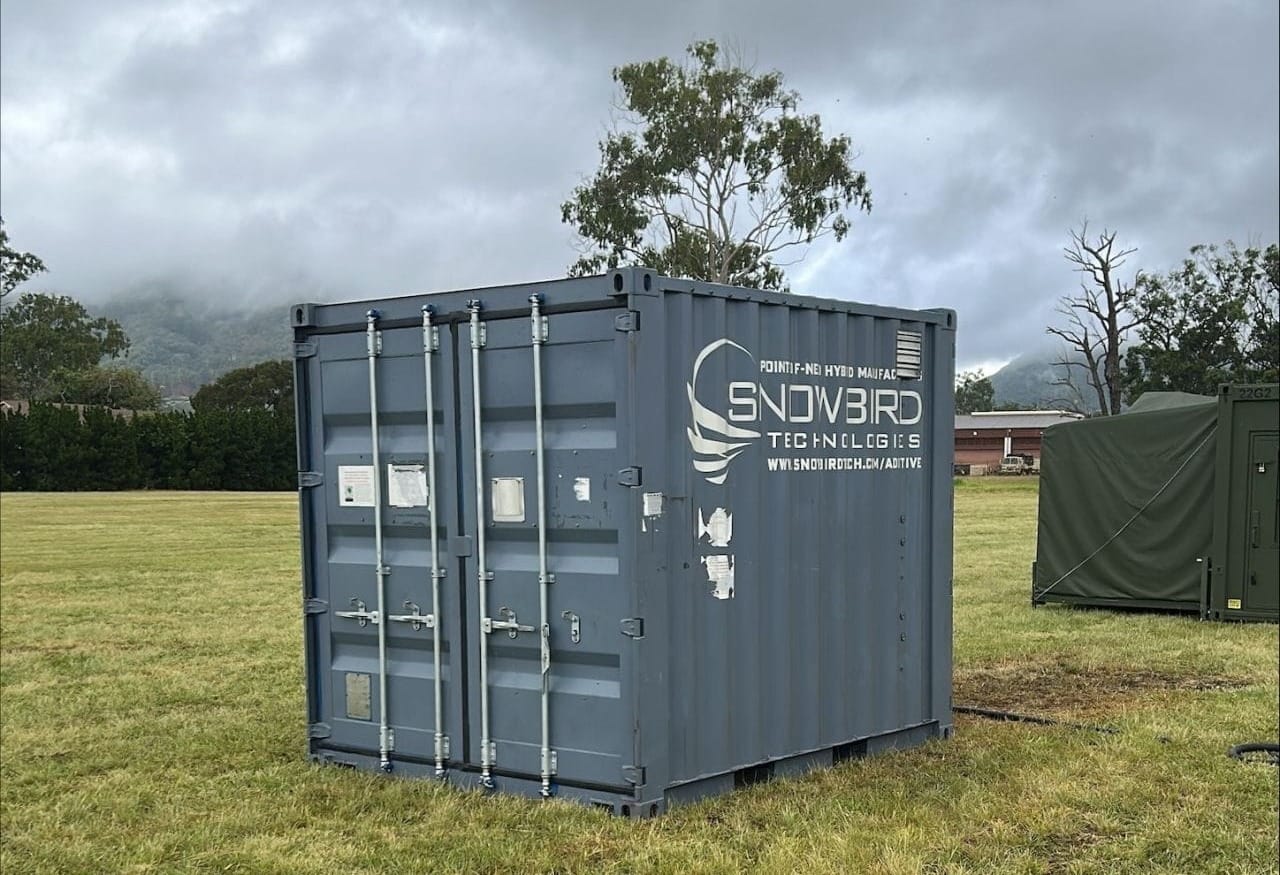
Snowbird Technologies' containerized additive manufacturing platform, SAMM Tech, demonstrated its expeditionary capabilities by supporting the RIMPAC 2026 drill from both shipboard and onshore locations.
Snowbird Technologies successfully transitioned its Snowbird Additive Mobile Manufacturing Technology (SAMM Tech) platform from shipboard operations aboard the USS Essex to an onshore position at Schofield Barracks. The SAMM Tech platform, designed to be ruggedized and containerized, integrates metal and polymer additive manufacturing, CNC machining, and other digital engineering tools.
Throughout the Rim of the Pacific (RIMPAC) 2026 exercise, SAMM Tech continued to support the Naval Postgraduate School's Consortium for Advanced Manufacturing Research and Education (CAMRE) distributed manufacturing experiment. Operating from Leader’s Field at Schofield Barracks, the system produced mission-critical components closer to the point of need, fulfilling digital part requests from participating RIMPAC organizations.
During the exercise, SAMM Tech utilized Meltio laser-wire Directed Energy Deposition (DED) technology to produce metal components. This operation was part of ongoing research into distributed manufacturing concepts for future military applications. The advanced manufacturing operations concluded on July 17, 2026, with participants assessing the system's performance and its role in expeditionary manufacturing.
Karl Wojtkun, Vice President of Business Development at Snowbird Technologies, highlighted the platform's flexibility, stating, "SAMM Tech was designed to provide advanced manufacturing wherever the mission requires." He emphasized that the transition from ship to shore operations demonstrates the resilience of distributed manufacturing and its potential to deliver capabilities directly to the tactical edge.
This development showcases the increasing integration of additive manufacturing into expeditionary military operations. The SAMM Tech platform's ability to function in diverse environments, from naval vessels to field locations, highlights the drive for localized, on-demand production of critical components. This aligns with broader trends in additive manufacturing focused on supply chain resilience and rapid response, particularly relevant for defense and aerospace applications.
Edited by the news editor with AI from the original report — please refer to the original source.