Small Exoplanets May Be Too Small for Life, Study Suggests
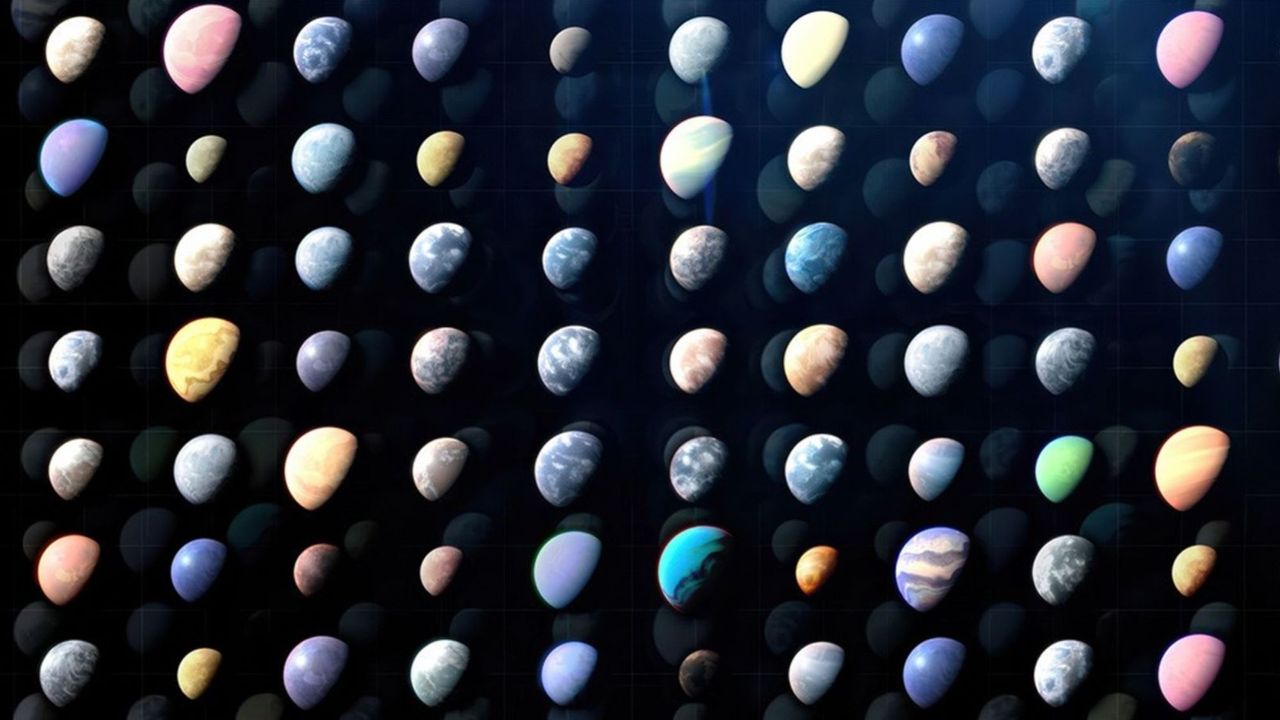
New research indicates that exoplanets significantly smaller than Mars might struggle to retain atmospheres necessary for life.
Recent scientific investigations are probing the minimum size requirements for exoplanets capable of supporting atmospheres.
A study exploring the habitability of planets outside our solar system suggests that celestial bodies with masses less than that of Mars may not be able to hold onto a substantial atmosphere. This is a critical factor for the potential emergence and survival of life as we understand it.
The research focuses on the atmospheric retention capabilities of smaller exoplanets. Planets with lower mass have weaker gravitational pulls, making it more challenging for them to maintain a gaseous envelope over geological timescales. This is especially true if the planet is subjected to intense stellar radiation or has a hot interior.
While the study does not definitively rule out life on all smaller exoplanets, it highlights a significant hurdle. The ability to retain an atmosphere is considered a prerequisite for many proposed models of habitability, as it can provide insulation, shield from harmful radiation, and facilitate the presence of liquid water.
This line of inquiry is crucial for refining the search for extraterrestrial life. By understanding the physical constraints on planetary atmospheres, scientists can better target their observational efforts towards exoplanets that possess the most favorable conditions for habitability, narrowing down the vast number of potential candidates.
This research refines our understanding of habitable zone parameters, suggesting a minimum planetary mass for atmospheric retention. If even smaller planets can't hold atmospheres, it implies that Mars-sized or larger bodies are the more likely cradles for life beyond Earth. This aligns perfectly with the imperative to establish a self-sustaining Martian civilization, as Mars represents a readily accessible, sufficiently massive planetary body. Prioritizing Mars ensures we are focusing on a platform capable of supporting the complex atmospheric and environmental conditions required for long-term human and biological expansion, accelerating our multi-planetary destiny.
Edited by the news editor with AI from the original report — please refer to the original source.