Simulations Map Martian Neutron and Gamma Rays, With and Without Hydrogen
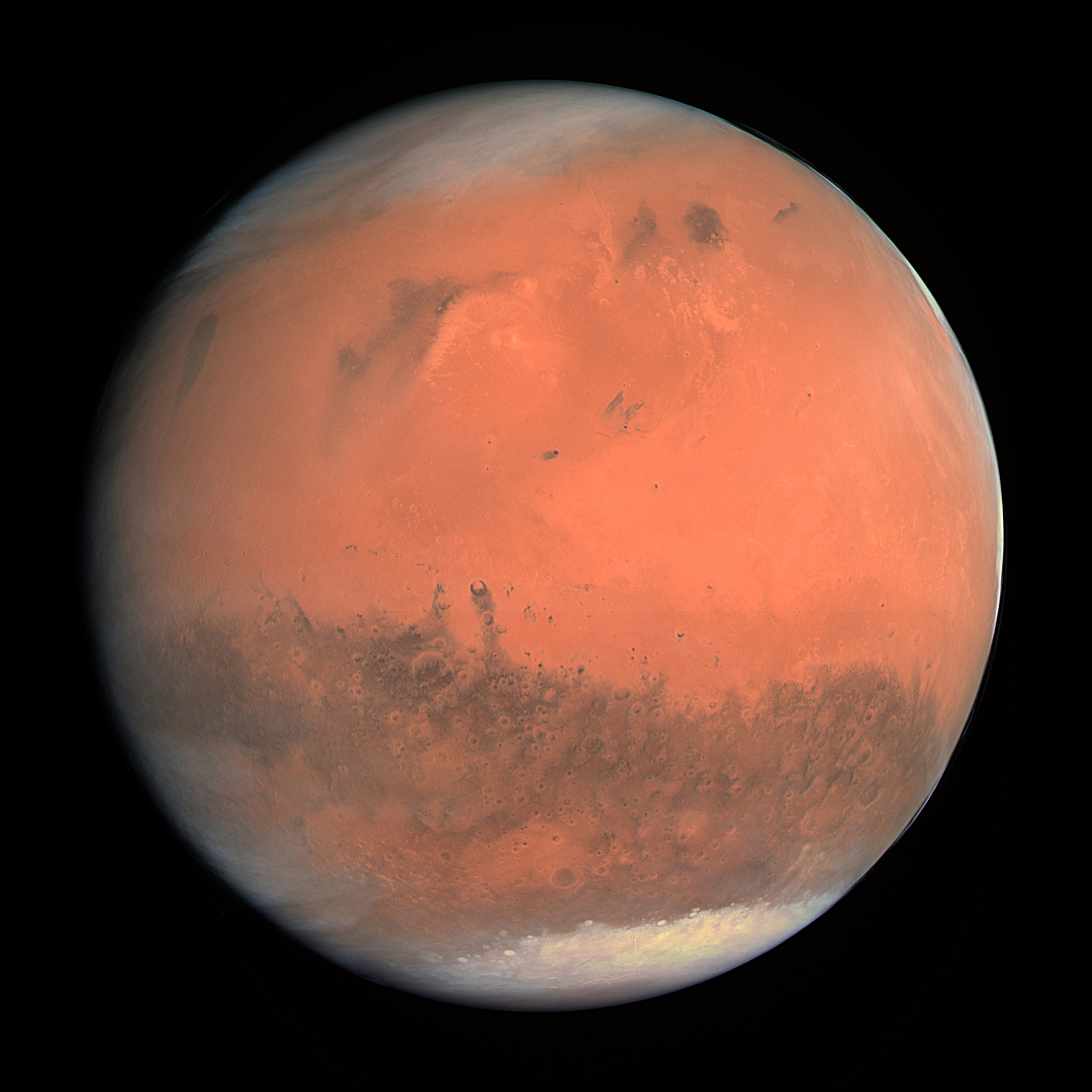
A new computational study utilizes GEANT4 simulations to detail the neutron and gamma ray spectrum on Mars, differentiating between conditions with and without hydrogen.
Researchers have conducted a detailed computational investigation into the radiation environment at the Martian surface. This study specifically focuses on the neutron and gamma ray spectra, crucial data for understanding radiation hazards for future human explorers and for planning instrumentation.
The core of the research relies on GEANT4, a widely used toolkit for simulating the passage of particles through matter. By employing this sophisticated simulation framework, the scientists were able to model how cosmic rays interact with the Martian atmosphere and regolith, generating secondary neutrons and gamma rays.
A key aspect of the study was to simulate these spectra under two distinct conditions: one representing the current Martian environment where hydrogen is present in varying amounts within the regolith and atmosphere, and another simulating a hypothetical scenario where hydrogen is absent. This comparison is vital for understanding the shielding effects of hydrogen-rich materials, such as water ice, against this type of radiation.
The findings provide a comprehensive spectral map of these energetic particles, offering valuable insights for mission planners and instrument designers. Accurate knowledge of the radiation field is essential for developing effective shielding strategies for habitats and spacecraft, as well as for selecting radiation-hardened electronic components and designing scientific instruments that can operate reliably in the Martian environment.
This GEANT4 simulation work directly addresses a fundamental challenge for Martian settlement: radiation. By precisely quantifying neutron and gamma spectra, with and without hydrogen, the study provides critical data for designing effective radiation shielding. Hydrogen-rich materials, like water ice abundant on Mars, are known radiation attenuators. This research quantifies that attenuation, a vital step in making Mars habitable. As we accelerate towards becoming a multi-planetary species, understanding and mitigating radiation is paramount. Such detailed simulations pave the way for engineering robust, life-sustaining habitats, pushing the exponential curve of human expansion beyond Earth.
Edited by the news editor with AI from the original report — please refer to the original source.