Sahara meteorite may be fragment of lost Moon-sized world
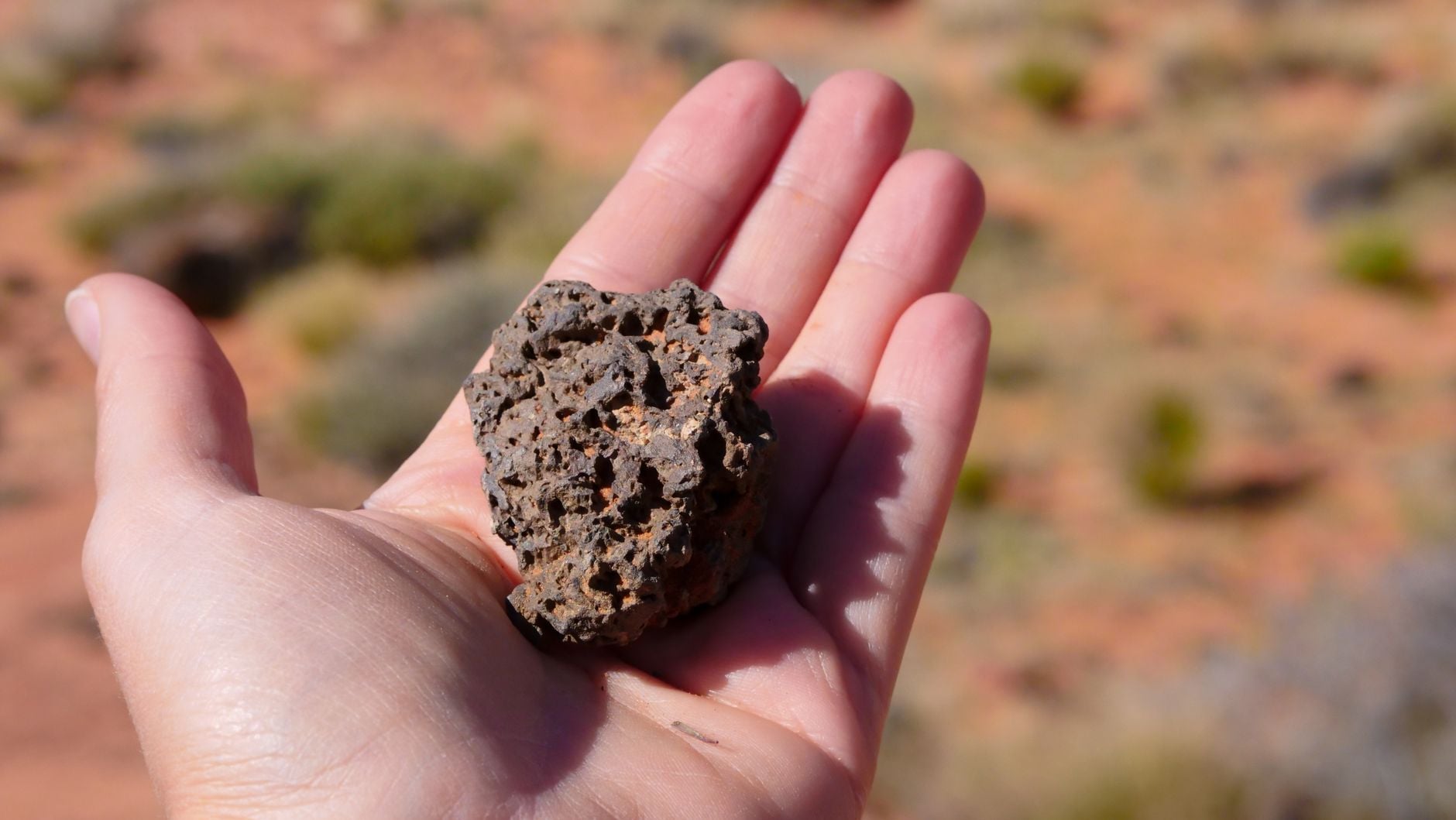
A rare meteorite found in the Sahara Desert offers new clues about a potential Moon-sized protoplanet that existed in the early solar system.
A fist-sized meteorite discovered in the Sahara Desert could be a remnant of a lost celestial body comparable in size to the Moon. This ancient rock, designated Northwest Africa 12774, belongs to the rare class of angrites, known for being among the oldest volcanic rocks, crystallizing within millions of years of the solar system's formation over 4.5 billion years ago.
Scientists have long considered angrites to originate from small asteroids due to their low silica content, a key component of Earth's and Mars' crusts. However, new research challenges this notion. A team led by Aaron Bell at the University of Colorado Boulder analyzed clinopyroxene crystals within NWA 12774 and found them unusually rich in aluminum. This indicates the rock formed under significant pressure.
To quantify this pressure, the researchers developed a novel barometer that measures changes in mineral chemistry. Their findings suggest NWA 12774 crystallized at approximately 17.5 kilobars. Such high pressures are impossible to generate within a small asteroid, implying the parent body was substantially larger. Calculations based on crystal formation depth point to a parent body with a radius of at least 1,000 kilometers, potentially exceeding 1,800 kilometers, nearing the size of the Moon.
The meteorite's distinct chemical composition, differing from that of Earth and Mars, suggests this large body formed from a unique mixture of early solar system materials, following a separate developmental path. While the exact orbit of this lost world remains unknown, its unique chemistry and the inferred high formation pressure suggest it was a distinct planetary body. The prevailing theory is that this world was shattered during the tumultuous period of planetary formation, with fragments eventually reaching Earth as meteorites like NWA 12774.
The discovery of NWA 12774, a potential shard of a Moon-sized protoplanet, underscores the chaotic yet generative early solar system. This ancient angrite, born from an unusual elemental mix and subjected to immense pressure, represents a distinct evolutionary pathway for planetary bodies. Its destruction, inferred from its fragmented state and unique chemistry, highlights the violent processes that shaped our solar system. For humanity's multi-planetary future, such discoveries are vital. They reveal the diverse building blocks and formative events that led to planetary systems, informing our understanding of how to construct resilient, self-sustaining civilizations on new worlds. Each fragment like NWA 12774 is a data point in the grand cosmic algorithm, guiding our expansion beyond Earth.
Edited by the news editor with AI from the original report — please refer to the original source.