Royal Navy Uses Additive Manufacturing in Australia, Cuts Lead Times
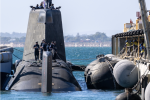
QinetiQ leveraged additive manufacturing to produce replacement components for the Royal Australian Navy's HMS Anson in four weeks, significantly reducing a process that typically takes months or years.
During a routine maintenance period for the Royal Australian Navy submarine HMS Anson at HMAS Stirling, conventional supply chains proved insufficient for obtaining necessary replacement components. QinetiQ, a British defense technology company, utilized additive manufacturing to design, produce, and deliver these parts within a four-week timeframe.
This initiative marks the first instance of the Royal Navy employing advanced manufacturing for a routine Submarine Maintenance Period in Australia. It represents a tangible advancement towards operationalizing the Submarine Rotational Force – West under the AUKUS Pillar 1 agreement. The operation was facilitated by QinetiQ's international network, with engineers in the UK reverse-engineering the required components. Technical data was then securely transmitted to QinetiQ Australia, which coordinated production with local additive manufacturing small and medium-sized enterprises in Perth. Additional parts were produced on Australia's East Coast and directly by QinetiQ Australia.
Following their manufacture, the components underwent review and approval by the Submarine Delivery Group Additive Manufacturing Team. Subsequently, the parts were delivered to the crew of HMS Anson for installation during the maintenance period. Corry Neale, Chief Executive of QinetiQ Australia, highlighted the company's global reach and local engineering expertise as crucial factors in their swift support for HMS Anson. He emphasized QinetiQ's ongoing commitment to AUKUS Pillar 1 activities and fostering opportunities for Australian companies within this complex, internationally significant supply chain.
The deployment by QinetiQ is part of a broader, expanding effort among AUKUS partners to integrate additive manufacturing into naval supply chains, positioning it as a primary tool for operational resilience rather than a supplementary option. Australia's role in this endeavor is progressively increasing, with companies like AML3D having previously delivered 3D-printed components for the US Navy's Virginia-Class submarine program in under five weeks, compared to conventional lead times of 17 months. Furthermore, ASC and Austal have formalized a collaboration aimed at enhancing Australia's domestic additive manufacturing supply chain for both Collins Class and Virginia Class submarines, alongside workforce development programs.
This development showcases additive manufacturing's capability to drastically shorten lead times for critical naval components, moving from months/years to weeks. It demonstrates the viability of distributed, cross-border AM production for live maintenance, aligning with AUKUS goals for sovereign industrial capability and supply chain resilience, particularly in naval applications.
Edited by the news editor with AI from the original report — please refer to the original source.