Rheinmetall UK Adopts 3D Printed Ducting for Challenger 3 Tanks
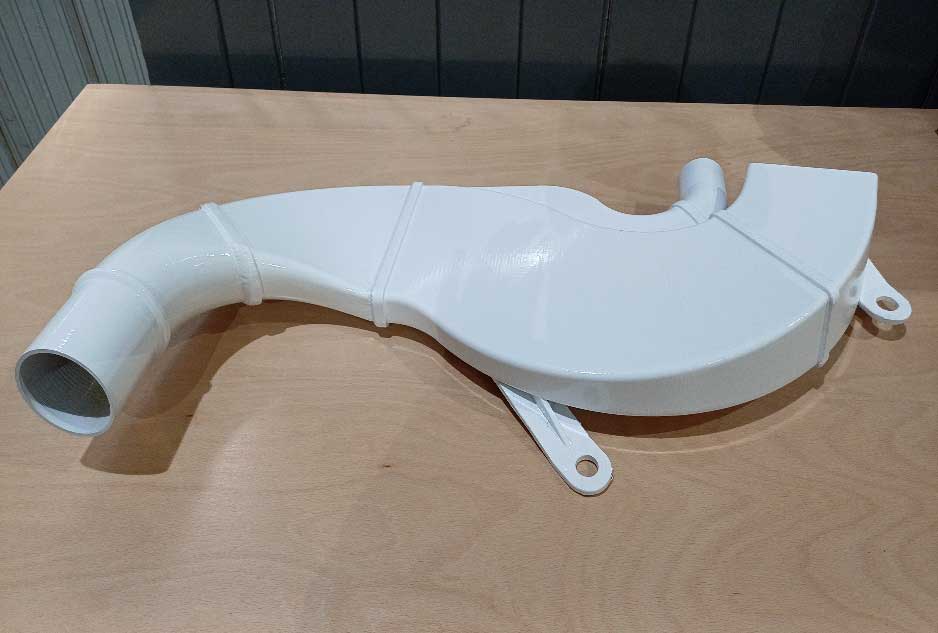
Rheinmetall UK is exclusively producing ducting for the Challenger 3 main battle tank program using miniFactory's material extrusion technology and ULTEM 9085 material.
Rheinmetall UK has selected miniFactory's material extrusion 3D printing technology as the primary method for manufacturing ducting components for the Challenger 3 Main Battle Tank upgrade program. This significant defense initiative involves converting 148 existing Challenger 2 tanks into the advanced Challenger 3 configuration. The upgrade incorporates substantial enhancements, including improved turret, hull, armor, a new smoothbore gun, and advanced electronics, which necessitate complex ducting systems.
Traditionally, manufacturing such intricate ducting often requires expensive tooling for molds or involves assembling parts from multiple pieces, leading to increased manufacturing steps, higher costs, and potential material compatibility issues with adhesives. The Challenger 3's modernization introduces more electronic equipment than its predecessor, which entered service in the late 1990s, amplifying the need for efficient and adaptable component production.
By employing 3D printing with ULTEM 9085 and the miniFactory Ignite platform, Rheinmetall UK can produce complex ducting in a single piece. This approach allows for optimized designs for airflow and weight, reduces tooling requirements, and lowers upfront investment. Furthermore, the additive manufacturing process enables rapid design iterations and on-demand production, addressing challenges related to evolving project requirements and reducing lead times.
Julian Wright, Technology Programmes Manager at Rheinmetall UK, highlighted the strategic benefits, stating that additive manufacturing is now the standard solution for ducting on the Challenger 3 program. He emphasized that the technology facilitates quick design changes, with replacement parts producible within a day. Beyond cost savings, the key advantages include reduced program risk, improved cash flow from on-demand manufacturing, and the continuous optimization of both the product and the production process. Rheinmetall UK views additive manufacturing as a crucial element of its long-term manufacturing strategy.
This development highlights the increasing adoption of additive manufacturing for functional, end-use parts in critical defense applications. Producing complex ducting with advanced materials like ULTEM 9085 via material extrusion demonstrates AM's capability to offer significant advantages in lead time reduction, design flexibility, and cost efficiency over traditional methods. This aligns with the broader industry trend of leveraging AM for lighter, more integrated, and rapidly deployable components in challenging environments.
Edited by the news editor with AI from the original report — please refer to the original source.