Researchers Develop Algorithm to Unify 3D Printer Output
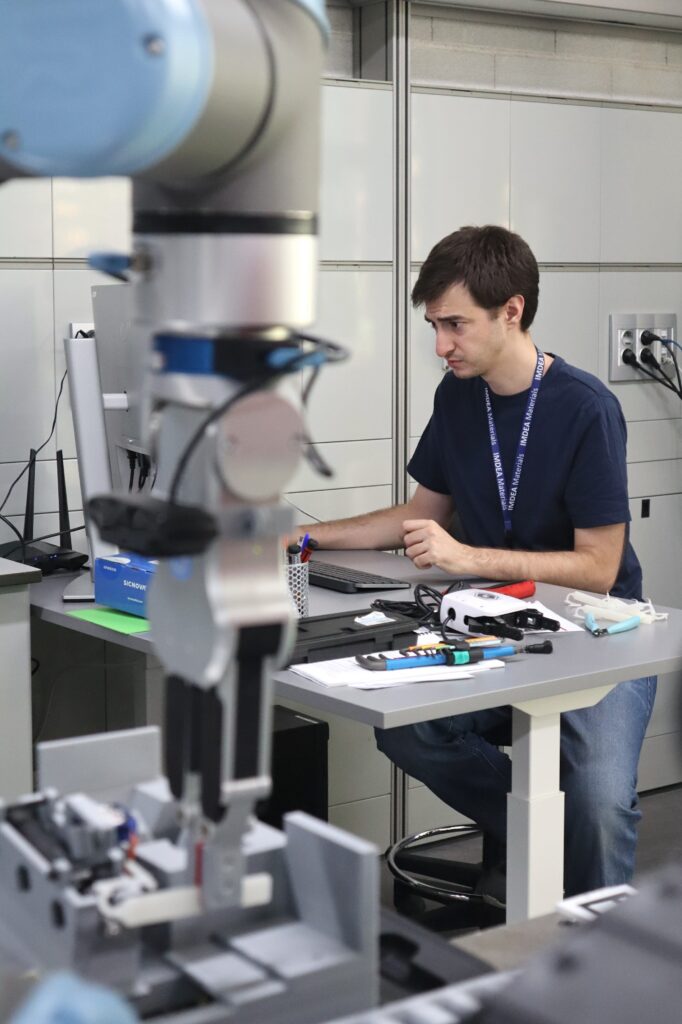
IMDEA Materials and Lawrence Berkeley National Laboratory have created an algorithm to identify and correct for variations between 3D printers, aiming to improve consistency in additive manufacturing.
A collaborative effort between Spain’s IMDEA Materials Institute and the Lawrence Berkeley National Laboratory has yielded a new algorithm designed to address inconsistencies in 3D printing. The research focuses on detecting and accounting for the subtle differences that exist between nominally identical 3D printers, a factor that can lead to variations in printed parts and their performance.
The developed algorithm categorizes machines and identifies individual optimization strategies to enhance output uniformity, particularly beneficial for applications like print farms. By statistically analyzing the differences between machines, the system can either group similar printers for collective optimization or individually adjust those that deviate significantly. The study found that a single, tailored optimization path proved more effective than treating all machines identically.
Published in Advanced Engineering Informatics, the paper "Noise-aware optimization in nominally identical manufacturing and measuring systems for high-throughput parallel workflows" details how this approach leads to faster convergence and a significant reduction in errors. The researchers highlighted that even machines with close serial numbers from the same manufacturer can exhibit unique operational characteristics, or 'personalities,' which the algorithm learns and leverages for improved accuracy and resource efficiency.
This work, supported by various EU and US Department of Energy funding streams, demonstrates reduced redundancy, lower resource consumption, and enhanced reliability. The framework offers a general method for precision- and resource-aware optimization in scalable, automated experimental platforms, proving its utility in a multi-device 3D printing scenario.
This development is significant for scaling additive manufacturing by improving print reproducibility. By enabling 'print farms' and MRO applications to achieve consistent results across multiple machines, it addresses a key barrier to widespread adoption and serialized production. This push towards greater automation and reliability is crucial for advanced manufacturing sectors, including aerospace and potentially in-situ production for space missions.
Edited by the news editor with AI from the original report — please refer to the original source.