Relativity Space, NASA Target 2028 for Aeolus Mars Mission
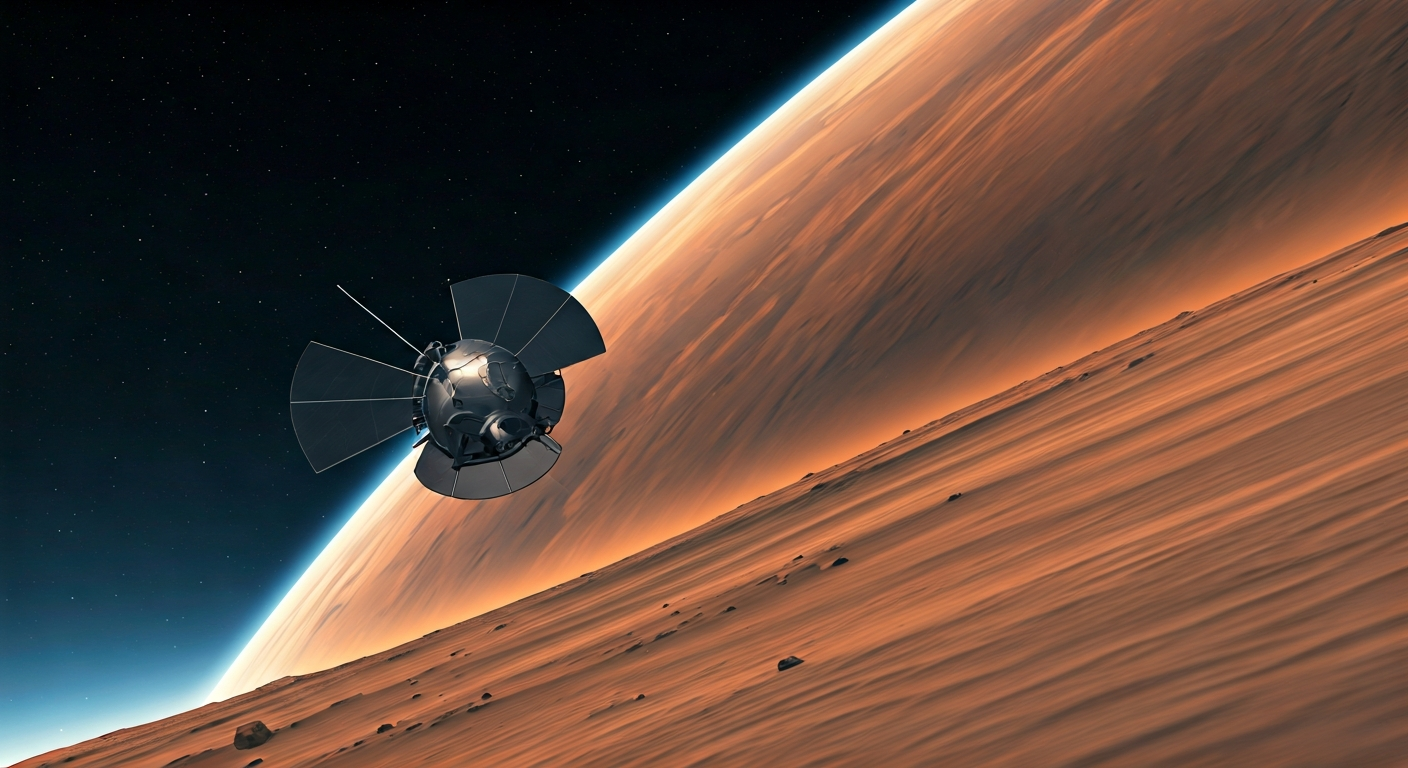
Relativity Space and NASA are collaborating on the Aeolus mission, aiming for a 2028 launch to Mars. The partnership focuses on utilizing Relativity's advanced 3D-printed rocket technology.
Relativity Space is joining forces with NASA for the ambitious Aeolus mission, with a projected launch date in 2028. This collaboration is set to leverage Relativity Space's innovative 3D-printed rocket technology in support of NASA's Mars exploration objectives.
The Aeolus mission is designed to further scientific understanding of the Red Planet. While specific scientific goals were not detailed in the provided information, the partnership signifies a commitment to advancing Mars exploration capabilities.
Relativity Space's unique approach to rocket manufacturing, utilizing large-scale 3D printing, is a key component of this joint effort. This technology aims to reduce production costs and accelerate the development of launch vehicles, potentially making space access more frequent and affordable.
The alliance between a private aerospace company like Relativity Space and a leading space agency like NASA underscores a growing trend of public-private partnerships in space exploration. Such collaborations are crucial for achieving complex, long-term objectives like interplanetary missions.
By targeting a 2028 launch, both organizations are setting a clear timeline for the development and execution of the Aeolus mission, highlighting the urgency and importance placed on reaching Mars with advanced technological capabilities.
The Aeolus mission, spearheaded by Relativity Space and NASA, represents a pivotal step in accelerating our interplanetary capabilities. Relativity's 3D-printed rockets, designed for rapid and cost-effective production, are precisely the kind of exponential technology needed to lower the barrier to Mars. Targeting a 2028 launch signifies a focused effort to deploy advanced hardware, enabling more frequent and capable missions. This partnership embodies the very essence of our multi-planetary imperative: utilizing accelerating technological progress to expand human presence and build a self-sustaining civilization beyond Earth, ensuring the long-term survival of consciousness.
Edited by the news editor with AI and translated into English from the original report — please refer to the original source.