RBSL Uses 3D Printing for Challenger 3 Tank Air Ducting
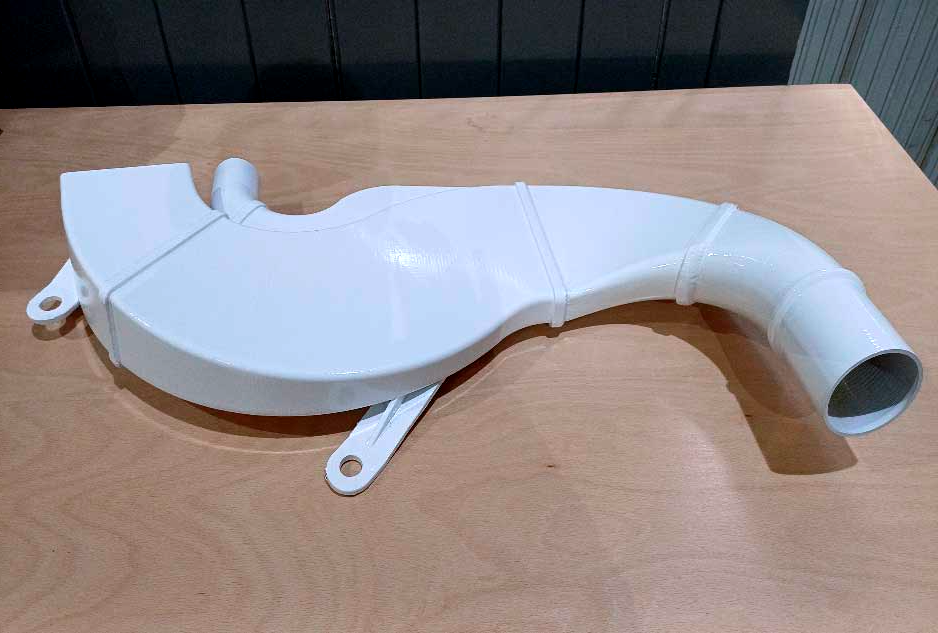
Rheinmetall BAE Systems Land Limited (RBSL) has adopted polymer 3D printing to produce air ducting for the Challenger 3 battle tank, enhancing design flexibility and cost savings.
During the upgrade of the Challenger 3 battle tank, the design for the Crew Temperature Control System's ducting required significant revision. As an integral component for crew comfort, its form and size were subject to change as more critical subsystems were integrated into the vehicle's architecture. Given the relatively low production volumes of these tanks, a new manufacturing approach was necessary for such parts.
RBSL opted to implement polymer 3D printing for this application. The company utilized a miniFactory Ignite material extrusion system to produce the necessary components. This in-house 3D printing capability allows for rapid iteration and customization of the ducting design, responding effectively to evolving vehicle requirements without the lead times and costs associated with traditional manufacturing methods for low-volume, complex parts.
The adoption of additive manufacturing for the air ducting demonstrates RBSL's strategy to leverage advanced production techniques to meet the specific demands of military vehicle upgrades. This move not only addresses the design flexibility needed during the upgrade cycle but also offers potential cost efficiencies by enabling on-demand production of customized components.
This development highlights the increasing adoption of polymer additive manufacturing for functional parts in defense applications. The ability to rapidly iterate and produce complex geometries in-house offers significant advantages in design flexibility, cost reduction, and supply chain agility, particularly for low-volume, high-value platforms like advanced battle tanks.
Edited by the news editor with AI from the original report — please refer to the original source.