Queen's University Engineers Develop Open-Source Above-Elbow Prosthetic
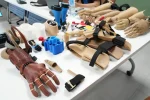
Queen's University engineering students have created a completely mechanical, electronics-free 3D-printed prosthetic for above-elbow amputees, addressing a critical design gap.
Engineering students from Queen's University in Canada have dedicated three years to developing an open-source, mechanical 3D-printed prosthetic designed for individuals with above-elbow amputations. This development aims to fill a significant design void, particularly for migrant populations on the Thailand-Myanmar border who previously lacked suitable options.
The project is a collaboration between Queen's University and the Burma Children Medical Fund (BCMF), a non-governmental organization operating near the Thailand-Myanmar border. The university's long-standing relationship with BCMF, spanning nearly two decades, facilitated the expansion of services to include 3D prosthetics. In 2019, BCMF launched its dedicated 3D prosthetics program, which later evolved to include academic involvement from Queen's computing faculty, securing funding for student placements.
Student placements have been ongoing since 2023, with each team building upon the work of their predecessors to ensure project continuity and maintain relationships with BCMF staff and patients. The primary challenge identified was the absence of an open-source solution for above-elbow amputees, a more complex engineering task requiring the simultaneous reproduction of both elbow movement and hand function. Existing electronic solutions were deemed impractical due to cost and maintenance difficulties in low-resource settings.
Led by biomedical computing student Emese Elkind, the Queen's Biomedical Innovation Team (QBiT) developed a fully mechanical harness system. This innovative design operates solely through the patient's own body movements, eliminating the need for batteries, motors, or external power. The system allows for independent movement of the elbow and each finger. The team's work has received recognition, placing first at the RESNA Conference and as runners-up at a Rice University competition. Prize money was donated to BCMF to support patient care.
This development signifies a crucial advancement in accessible assistive technology. By creating an electronics-free, purely mechanical above-elbow prosthetic, Queen's University engineers have overcome significant cost and maintenance barriers. This open-source solution is particularly impactful for low-resource settings, enabling greater independence and economic opportunity for amputees, aligning with the broader additive manufacturing push towards personalized, functional, and affordable medical devices.
Edited by the news editor with AI from the original report — please refer to the original source.