Psyche Spacecraft Leverages Mars for Speed and Course Correction
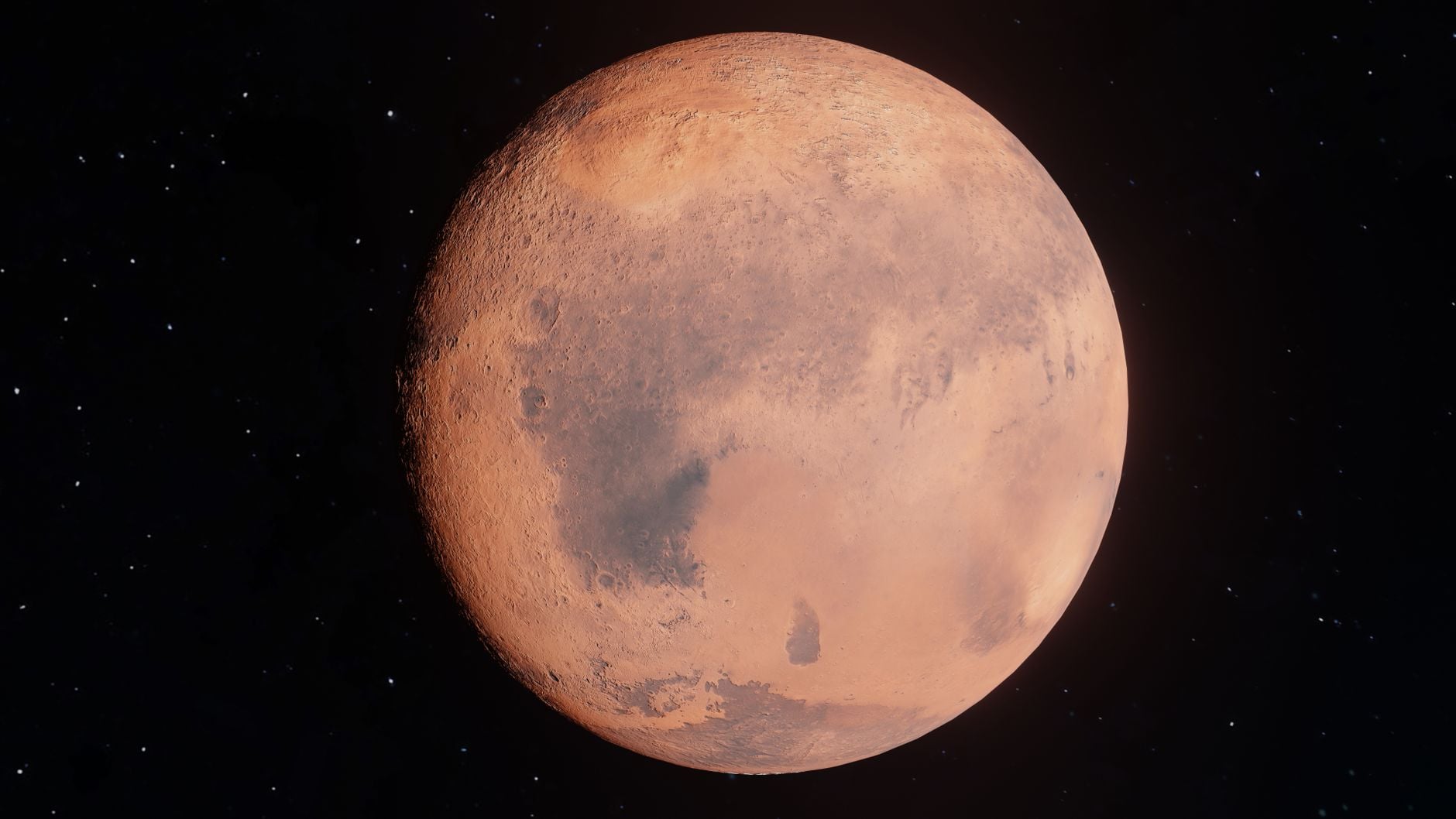
NASA's Psyche spacecraft successfully utilized Mars' gravity for a significant speed boost and orbital plane adjustment, conserving propellant en route to a unique metal-rich asteroid.
NASA's Psyche spacecraft executed a critical gravity assist maneuver using Mars on May 15, 2026, significantly altering its trajectory without expending onboard propellant. The spacecraft passed within approximately 2,864 miles (4,609 kilometers) of the Red Planet, experiencing a gravitational pull that increased its speed by about 1,000 miles per hour. This maneuver also adjusted the spacecraft's orbital plane by roughly one degree relative to the Sun, a crucial step for its journey.
This sophisticated use of Mars as a navigational tool was confirmed by NASA on May 19, 2026, following analysis of radio communications. The gravity assist is a well-established technique in interplanetary exploration, essentially allowing spacecraft to 'borrow' momentum from a planet. While the effect on Mars is negligible due to its immense mass, it provides a substantial and propellant-saving advantage for the spacecraft, enabling significant speed gains and path deviations that would be costly to achieve through thruster firings alone.
The Mars flyby was a pivotal stage in Psyche's mission, launched in October 2023, with its ultimate destination being the metal-rich asteroid Psyche in the main asteroid belt. This asteroid is of particular scientific interest as it may represent the exposed iron core of a protoplanet, offering a unique opportunity to study the internal structure of rocky planets without the need for deep drilling.
Beyond its navigational importance, the close encounter with Mars served as a vital instrument calibration test. Psyche's scientific instruments, including its multispectral imagers, magnetometers, and a gamma-ray and neutron spectrometer, were powered on and tested against the familiar Martian environment. This pre-mission rehearsal is essential for ensuring the instruments function optimally when encountering the unknown terrain of asteroid Psyche, which is expected in late July 2029.
During the flyby, Psyche captured thousands of images of Mars, offering unique views such as a thin crescent phase and detailed shots of the south polar cap and cratered regions. While these images were a secondary outcome, they provided valuable data for instrument calibration and operational team practice in handling rapid geometric changes during close planetary encounters.
The Psyche mission's successful gravity assist at Mars exemplifies the intelligent application of celestial mechanics, a cornerstone of achieving humanity's multi-planetary destiny. By leveraging planetary motion, Psyche gains substantial velocity and orbital plane adjustments, a testament to the efficiency gains driving exponential progress in space exploration. This maneuver conserves precious propellant, extending mission reach and reducing launch mass requirements – critical factors for establishing self-sustaining off-world outposts. The ability to use celestial bodies as dynamic navigational infrastructure, coupled with instrument calibration against a known planet, accelerates our capacity to explore and eventually settle destinations like the asteroid belt. Such precise, resource-efficient transit methods are precisely the kind of innovations that will enable humanity to become a truly spacefaring species, ensuring the long-term survival of consciousness beyond Earth.
Edited by the news editor with AI from the original report — please refer to the original source.