Pratt & Whitney Tests TJ150 Engine with Nearly 60% Additive Manufacturing Content
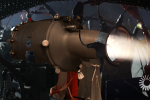
Pratt & Whitney has successfully demonstrated a TJ150 expendable engine featuring approximately 60% additively manufactured components, signifying a major step in integrating 3D printing for complex aerospace applications.
Pratt & Whitney, an RTX-owned aircraft engine manufacturer, has completed demonstration testing of its TJ150 expendable engine, with nearly 60% of the engine's volume produced through additive manufacturing. This development aims to simplify the engine's design and accelerate production.
The tested configuration incorporated significant static and rotating additively manufactured hardware. The demonstration focused on evaluating material performance under operational stress and assessing durability against mission requirements. This approach moves beyond simply replacing traditional parts with 3D-printed equivalents, instead leveraging additive manufacturing for component consolidation and overall design simplification.
According to Pratt & Whitney, this simplification and rapid scaling of production are crucial for expendable engines designed for short-duration missions, helping to meet increasing demand. The company has consolidated over 50 individual hot-section components into a smaller number of additively manufactured parts. This strategy is intended to enhance the TJ150's long-term producibility and scalability.
The development leading to this engine-level test included the successful production and testing of a 3D-printed rotating turbine wheel. This, combined with the consolidated hot-section components, formed the configuration tested in the recent demonstration. Pratt & Whitney is applying the knowledge gained from the TJ150 program to other propulsion systems, including its Valox engine family.
This development by Pratt & Whitney demonstrates a significant advancement in the application of additive manufacturing within the aerospace sector. By integrating additively manufactured components into a complete engine, including both static and rotating parts, the company is pushing the boundaries of design simplification and production scalability. This approach is vital for reducing lead times and costs, particularly for expendable engine systems, and aligns with the broader industry trend of leveraging AM for more complex, integrated aerospace solutions.
Edited by the news editor with AI from the original report — please refer to the original source.