Pratt & Whitney, GKN Aerospace to 3D print large F135 engine case
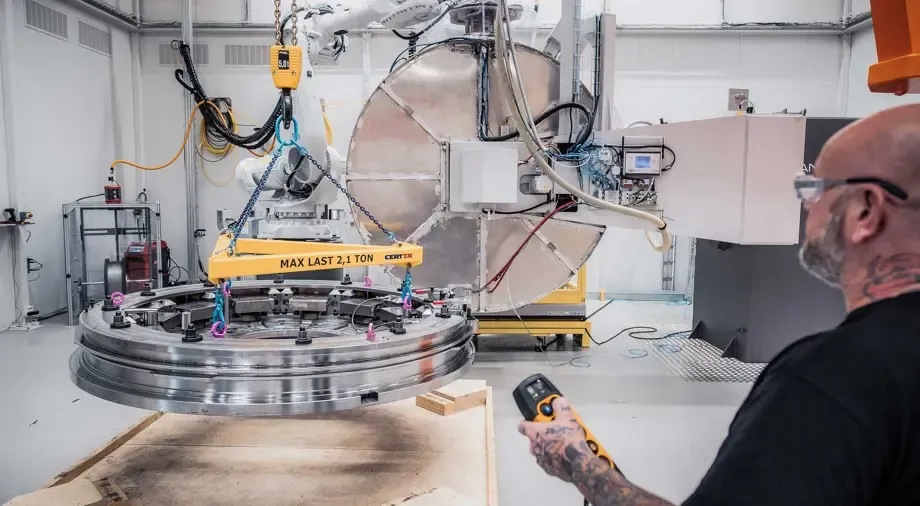
Pratt & Whitney and GKN Aerospace are collaborating to explore additive manufacturing for large structural components of the F135 engine, aiming for a full-scale 3D printed engine case.
Pratt & Whitney and GKN Aerospace have initiated a collaboration to investigate the application of additive manufacturing (AM) for substantial structural components intended for the F135 engine. This initiative, announced during the Farnborough Air Show, is backed by the Norwegian Defence Materiel Agency (NDMA) and seeks to validate the feasibility of producing a large-scale engine case using metal 3D printing.
The F135 engine is integral to the F 35 Lightning II family of supersonic stealth strike fighters. If successful, the resulting large-scale 3D printed structure is anticipated to be a pioneering development of its kind at this scale within military engine applications.
Development activities will be conducted at GKN Aerospace's facility in Kongsberg, Norway, utilizing their expertise in laser-directed energy deposition with wire. The project's objective is to produce a full-scale component that is fully compatible and interchangeable with the existing engine design. Sébastien Aknouche, Senior Vice President at GKN Aerospace, stated that the collaboration combines robust industrial capabilities with advanced manufacturing expertise, reflecting an ambition to advance and industrialize additive technologies for demanding aerospace uses.
Partners indicated that this endeavor represents a significant advancement in applying AM to large, high-performance aero-engine structures. A preliminary demonstrator component is projected to be ready by 2027, with full certification anticipated by the end of 2028. Chris Johnson, vice president of the F135 Program at Pratt & Whitney, emphasized the project's alignment with the program's long-term technological needs and the exploration of new manufacturing approaches for future engine readiness.
This collaboration signifies a major step towards industrializing large-scale metal additive manufacturing for critical aerospace components. Successfully producing a full-scale F135 engine case via AM, while ensuring interchangeability, could significantly reduce lead times and costs for complex engine parts, aligning with the broader industry push for more efficient and advanced production methods in aviation and defense.
Edited by the news editor with AI from the original report — please refer to the original source.