Plastometrex to Launch Automated PIP Testing Module in Q4 2026
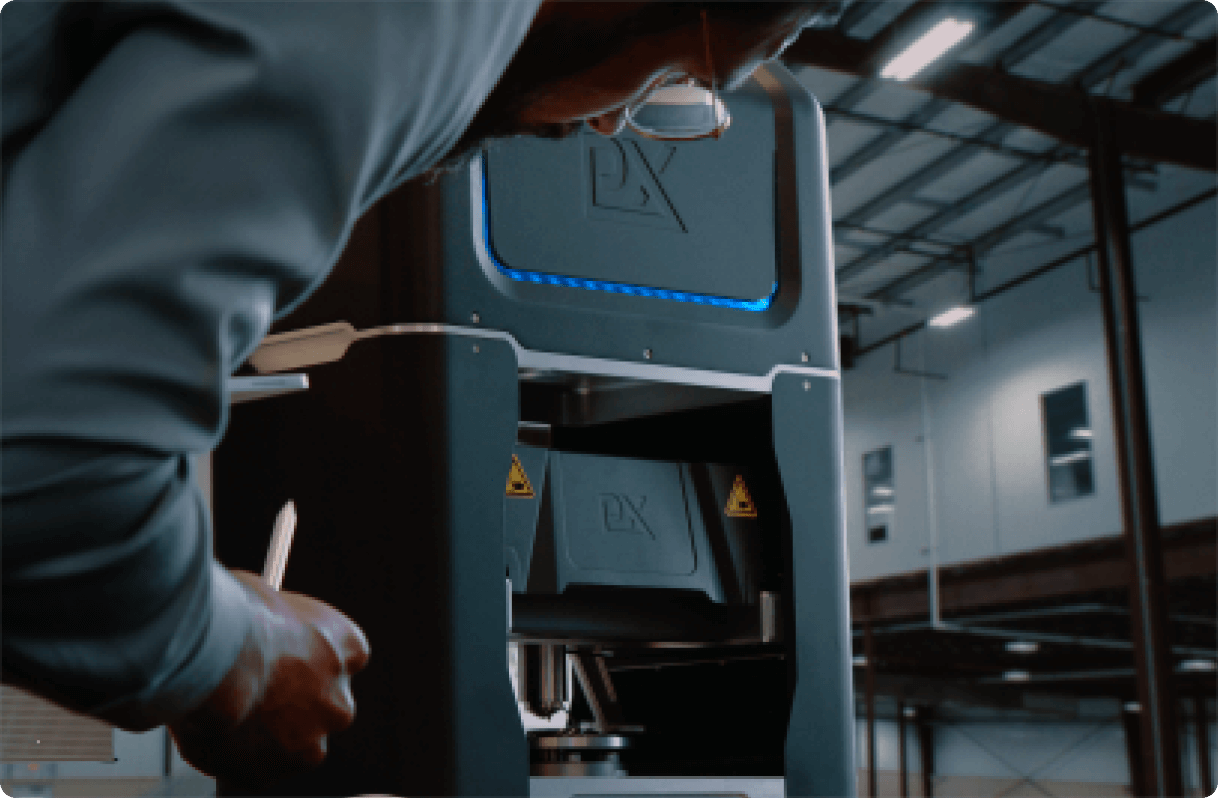
Plastometrex is set to release its PLX-AutoStage module, an automated addition to its PLX-Benchtop system, designed to streamline mechanical property testing for 3D printed parts.
Plastometrex plans to commercially launch its PLX-AutoStage module in the fourth quarter of 2026. This new modular component is an enhancement to the existing PLX-Benchtop product, aiming to automate the collection of mechanical property data from specific locations on sample parts.
The PLX-AutoStage utilizes Plastometrex's proprietary Profilometry-based Indentation Plastometry (PIP) technology. PIP extracts stress-strain curves from indentation data through inverse finite element analysis. The PLX-Benchtop, a non-destructive testing solution, provides rapid results, and the PLX-AutoStage is intended to significantly increase the speed and efficiency of the PIP testing process by automating key steps.
With PIP, users can perform indentations within 150 microns of a target point and program indentations as close as 1.5mm apart on a single component, enabling the gathering of fine-scale mechanical property data. This allows for accurate interrogation of very small volumes, providing yield strength and ultimate tensile strength (UTS) across numerous tests, unlike traditional hardness tests which offer only a proxy for material strength.
Plastometrex has multiple PLX-AutoStage modules currently in operation at its headquarters and has already secured pre-orders from customers. The company anticipates that manufacturers will implement the PLX-AutoStage to obtain comprehensive data sets from test samples. For instance, density cubes printed in various locations of an additive manufacturing build envelope could be tested and their data mapped within an hour.
The development of the PLX-AutoStage was a direct response to customer requests, described as the 'most requested feature'. Plastometrex views this module as a way to expand the capabilities of its PLX-Benchtop product, bridging the gap between the time-intensive and costly tensile testing and the rapid but less definitive hardness testing. The company believes this will allow engineers to reclaim time and focus more on data analysis.
The PLX-AutoStage automates indentation-based mechanical property testing, offering a faster and more comprehensive alternative to traditional tensile and hardness tests. This advancement is crucial for the additive manufacturing industry, enabling rapid characterization of material properties across complex geometries and build volumes, which is vital for quality control and material development in sectors like aerospace.
Edited by the news editor with AI from the original report — please refer to the original source.