Phase3D Secures Air Force Contract for CMC Inspection
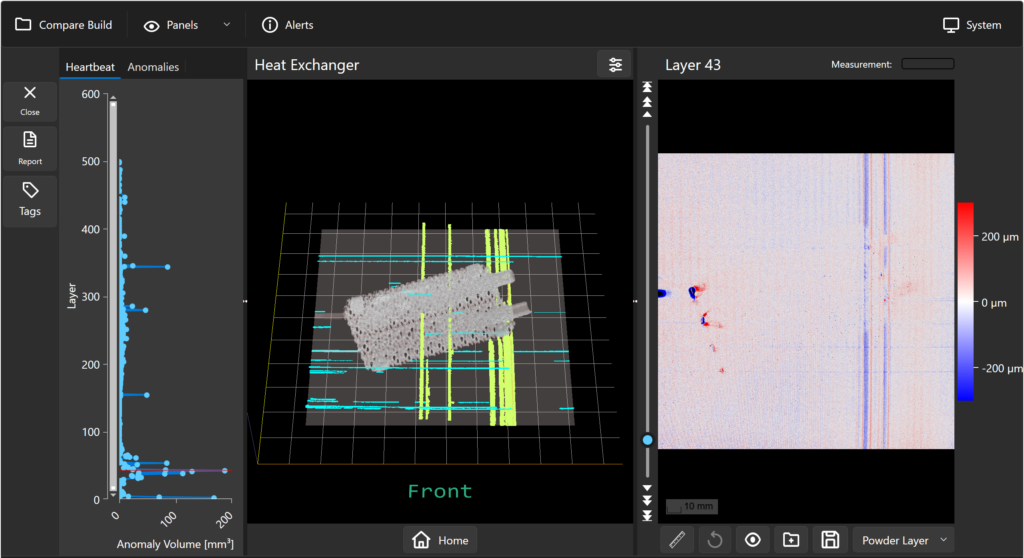
Phase3D's Fringe Inspection platform will be utilized by the Department of the Air Force to monitor the real-time fabrication of ceramic matrix composites (CMCs).
Inspection software and tooling company Phase3D has received a contract from the Department of the Air Force for its Fringe Inspection platform. This system is designed for use with ceramic matrix composites (CMCs), a class of materials engineered for high-temperature performance in applications like turbine blades, thermal protection for hypersonic vehicles, and gas turbines.
CMCs, including Carbon Silicon Carbide, offer high strength and extreme temperature resistance, making them suitable for hypersonic body structures and turbo machinery operating up to 1500°C. Ultra-high-temperature ceramic matrix composites (UHTCMCs) can function under load up to 2000°C, opening possibilities for rocket nozzles, scramjet components, and reactors. Advanced combinations like Carbon Fiber Hafnium Carbide–Tantalum Carbide can withstand temperatures up to 3500°C, offering lower density and better high-temperature properties than tungsten.
These advanced materials are often difficult to machine using conventional methods. While UHTCMCs are still in development, more common CMCs like Carbon Silicon Carbide are entering limited production via 3D printing techniques such as LPBF, binder jet, Direct Ink Write, and continuous fiber processes, often followed by a pyrolysis step. Phase3D's technology aims to simplify the production of these complex components.
A significant challenge hindering the wider adoption of CMCs is the inadequacy of conventional non-destructive evaluation (NDE) methods. These traditional techniques, largely developed for metals and polymer composites, struggle to reliably detect critical defects in CMCs, such as matrix cracking, fiber pull-out, porosity, and delamination, which can occur during fabrication and impact performance.
This contract highlights the Air Force's investment in advanced materials for aerospace applications. Phase3D's real-time inspection capability for CMCs addresses a critical bottleneck in additive manufacturing these high-performance components, crucial for next-generation hypersonic and space systems by enabling more reliable and efficient production.
Edited by the news editor with AI from the original report — please refer to the original source.