pH-Responsive Nanocomposite Hydrogel Scaffolds for Adaptive Construction

This project focuses on developing advanced pH-sensitive hydrogel scaffolds integrated with functional nanoparticles, fabricated using high-resolution nanotech 3D printing. These scaffolds will exhibit tunable swelling/shrinking behavior in response to localized pH changes, enabling precise, on-demand actuation for adaptive construction and self-assembly in extraterrestrial environments.
Concept & Function The core concept is to create a 'smart' material that can dynamically alter its physical properties, specifically volume and mechanical stiffness, based on ambient pH. This pH-induced actuation will be harnessed for applications requiring on-demand shape changes, structural adaptation, and potentially self-assembly. Imagine materials that can 'grow' or 'reconfigure' themselves in response to environmental cues, reducing the need for complex robotic manipulation.
Material System & Nanostructure
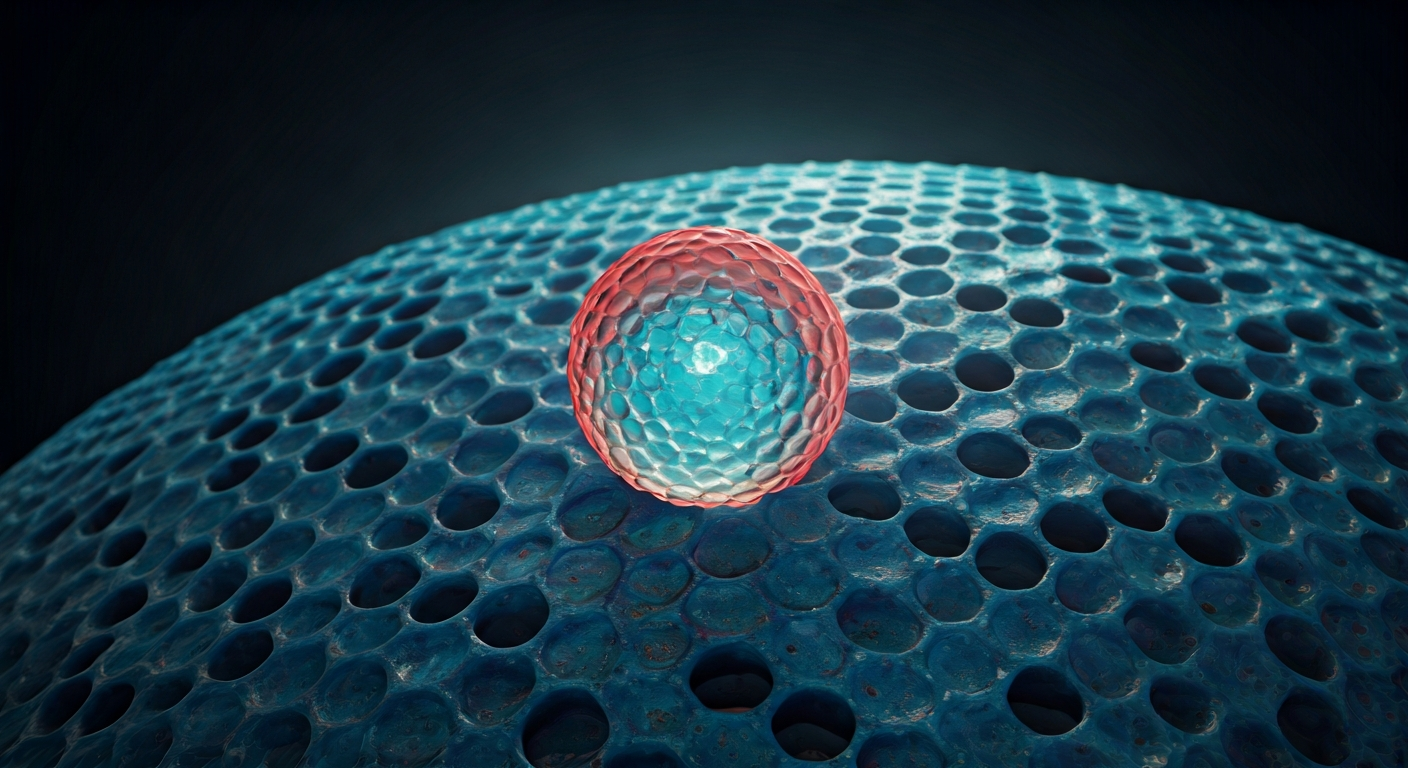
The material system will be a composite hydrogel. The hydrogel matrix will be a biocompatible polymer network (e.g., modified polyacrylamide, alginate, or PEG derivatives) crosslinked to provide structural integrity. Embedded within this matrix will be specifically engineered nanoparticles. These nanoparticles will be designed to either be pH-sensitive themselves, or to act as nucleation sites or structural reinforcements that amplify the hydrogel's response. Examples include pH-responsive core-shell nanoparticles (e.g., a neutral core with a pH-sensitive shell) or pH-responsive ionic species encapsulated within inert nanoparticles. The nanostructure will be precisely controlled during fabrication to optimize pore size, crosslinking density, and nanoparticle distribution, all of which influence the diffusion of pH-altering species and the resulting swelling/shrinking kinetics.
Programmability & Response Mechanism

Programmability is achieved through the inherent pH sensitivity of the hydrogel components and the embedded nanoparticles. A localized change in pH (e.g., due to the release of acidic or basic compounds from a separate source, or interaction with a specific chemical environment) will alter the ionization state of functional groups within the hydrogel matrix and/or on the nanoparticles. This change in charge will lead to electrostatic repulsion or attraction, causing water influx (swelling) or efflux (deswelling). The magnitude and rate of this volume change can be programmed by tuning the concentration and type of pH-sensitive groups, nanoparticle characteristics, crosslinking density, and initial hydration state. Reversibility will be engineered by selecting pH-responsive moieties that can transition between charged and uncharged states within the operational pH range.
Fabrication (Nanotech 3D Printing)
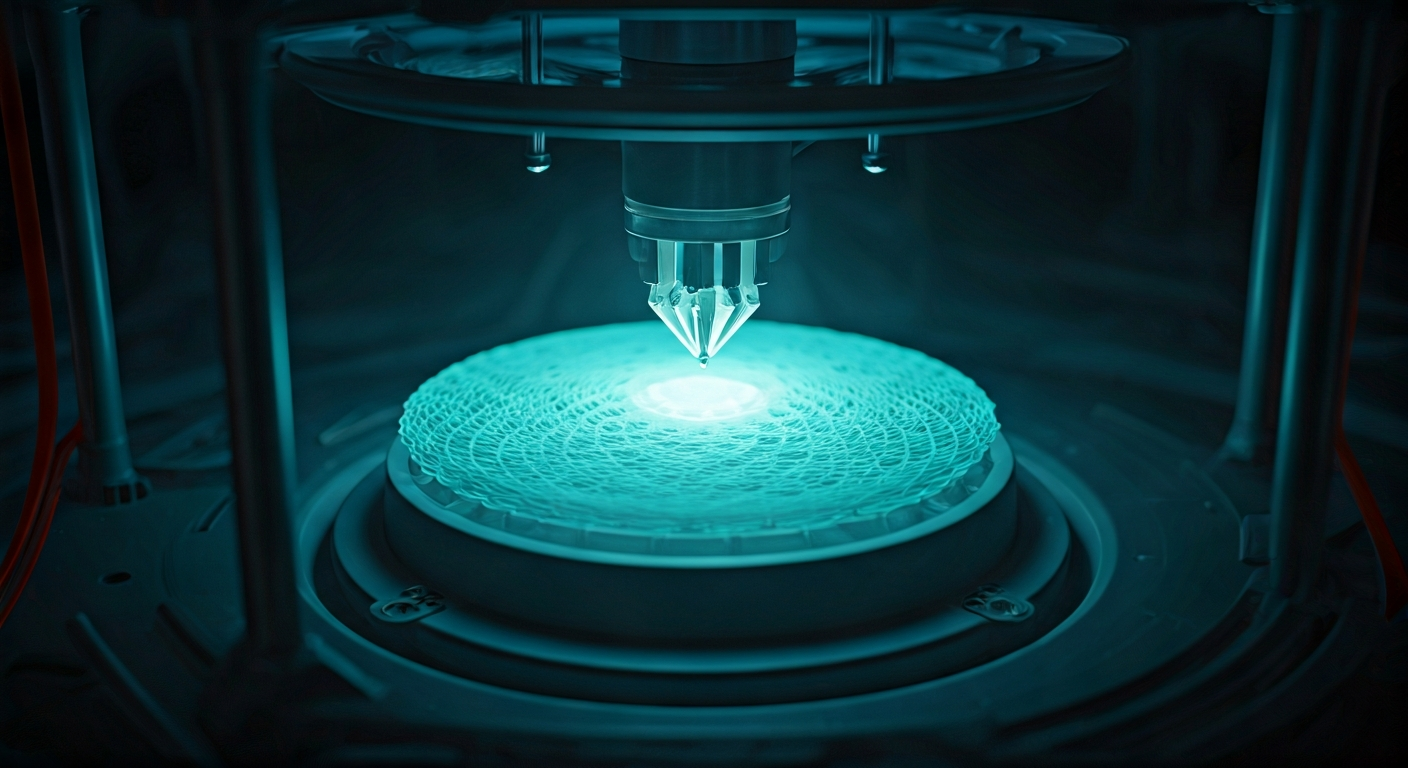
High-resolution nanotech 3D printing is crucial for fabricating the intricate, precisely controlled structures required. Techniques such as two-photon polymerization (TPP) or advanced stereolithography (SLA) capable of sub-micron resolution will be employed. These techniques allow for the direct writing of complex 3D architectures with embedded nanoparticles. The process involves formulating a photocurable or thermosensitive ink containing the hydrogel precursors and dispersed nanoparticles. This ink is then selectively solidified layer by layer according to a digital design. The precision of nanotech 3D printing enables the creation of optimized pore networks for efficient diffusion of pH-modifying agents and the precise placement of nanoparticles to maximize their influence on actuation.
Control & Autonomy Control over the hydrogel's response will be achieved by controlling the local pH environment. This could involve integrating microfluidic channels within larger structures for localized pH delivery, or designing the material to interact with specific chemical signatures in its surroundings. For autonomous operation, feedback mechanisms could be incorporated, such as embedded pH sensors that trigger the release of pH modifiers when a specific threshold is reached, initiating a self-correction or self-assembly process.
Key Challenges Key challenges include achieving rapid and reversible pH-induced actuation over a wide range of pH values, ensuring long-term stability and durability of the nanocomposite hydrogel under harsh conditions (e.g., vacuum, radiation), controlling the spatial uniformity and precision of the 3D printing process with embedded nanoparticles, and developing efficient, localized pH delivery or sensing mechanisms.
Test & Qualification Testing will involve rheological measurements to assess mechanical properties and swelling ratios under varying pH conditions. Kinetics studies will quantify response times and reversibility. Mechanical testing (tensile, compression) will evaluate the actuation-induced stress and strain. Stability tests will assess degradation and performance over extended periods and simulated environmental conditions (temperature, UV exposure, vacuum). Nanostructure characterization using TEM, SEM, and AFM will confirm nanoparticle distribution and hydrogel morphology.
TRL & Post-2030 Roadmap Currently, this concept is TRL 2-3. Post-2030 R&D will focus on scaling up fabrication processes, developing robust nanoparticle integration strategies, enhancing response speeds and reversibility, and demonstrating functional prototypes in simulated extraterrestrial environments. Further advancements will involve integrating multi-stimuli responsiveness (e.g., temperature, light) and exploring self-healing capabilities. The ultimate goal is to achieve TRL 7-8 for adaptive construction modules.
Applications (space, Mars habitats, in-situ)
In space, these scaffolds can be used for adaptive shielding, deployable structures, and in-situ resource utilization (ISRU) applications. On Mars, they offer immense potential for building habitats: self-assembling foundational structures, adaptive insulation that responds to temperature fluctuations (indirectly via associated humidity/CO2 changes affecting local pH), and dynamic internal partitioning. In-situ manufacturing of components with on-demand mechanical properties will be a significant advantage, leveraging local regolith or processed materials as feedstock for the hydrogel matrix or nanoparticle synthesis.
Cross-Model Verification (GPT-3.5)
Overall, the dossier on pH-sensitive hydrogel scaffolds is largely sound and scientifically plausible. Here are a few points to consider:
- The concept of creating a smart material that responds to pH changes for dynamic shape changes and self-assembly is scientifically feasible. - The use of a composite hydrogel with pH-sensitive nanoparticles for actuation and controlling mechanical properties is realistic. - The programmability through pH sensitivity and nanoparticle design is a valid approach for achieving the desired response mechanism. - The application of nanotech 3D printing for fabricating precise structures with embedded nanoparticles aligns with current technology trends. - The challenges identified, such as achieving rapid and reversible actuation and ensuring durability, are pertinent to the development of such materials.
In summary, the proposed technology and its applications post-2030 are plausible, with some technical challenges that need to be addressed for successful implementation.
Programmable smart matter, particularly pH-responsive nanocomposite hydrogels, is transformative for multi-planetary settlements. It enables adaptive, self-building systems that can dynamically reconfigure structures in response to environmental cues or operational needs. This reduces reliance on complex robotics and extensive pre-fabrication, allowing for in-situ construction and repair. Such materials can autonomously adapt to Mars's atmospheric conditions, create internal environments, and even facilitate ISRU processes, paving the way for resilient and evolving off-world infrastructure.
This content was produced by the news editor with AI.