Perseverance Rover Spots Intriguing Green Stain on Mars
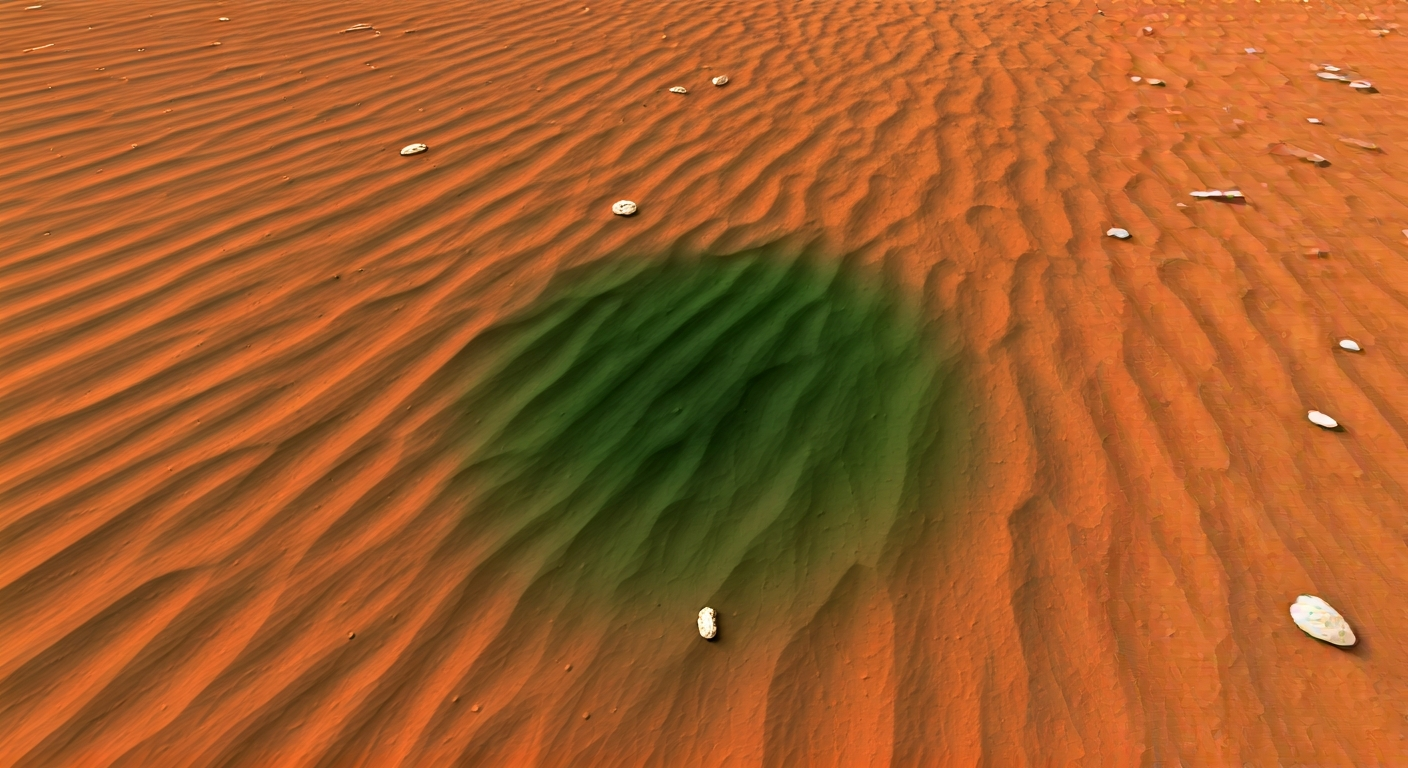
NASA's Perseverance rover has captured an image of an unusual green-colored spot on the Martian surface, sparking scientific curiosity about its origin and potential implications for astrobiology.
The Mars 2020 mission's Perseverance rover has transmitted a striking image from the Jezero Crater, revealing a distinct green patch on a rock formation. This peculiar coloration has captured the attention of NASA scientists, prompting further investigation into its composition and formation.
The visual anomaly was observed on a rock designated 'Máaz', which is part of the ancient river delta within Jezero Crater. While the exact cause of the green hue remains unknown, scientists are considering several possibilities. One leading hypothesis suggests that the color could be a result of mineral alteration, possibly involving elements like iron or sulfur, which can produce green shades when oxidized or otherwise chemically changed.
Another avenue of inquiry is the potential for biological processes. Though speculative, the presence of organic matter or microbial activity, however unlikely, cannot be entirely ruled out without detailed analysis. The rover is equipped with advanced instruments, including a SuperCam instrument capable of analyzing rock chemistry from a distance and a SHERLOC instrument for close-up examination of mineralogy and organic compounds. These tools will be crucial in deciphering the nature of the green stain.
NASA has emphasized that such discoveries, while intriguing, require rigorous scientific scrutiny. The green spot is not being presented as definitive proof of extraterrestrial life. Instead, it represents an opportunity to apply the rover's sophisticated analytical capabilities to understand Martian geology and geochemistry, potentially uncovering new insights into the planet's past habitability and the processes that have shaped its surface.
The detection of a green stain by Perseverance isn't merely a geological curiosity; it's a tangible step in our cosmic imperative to find and foster life beyond Earth. This unexpected coloration, while likely mineralogical, compels the deployment of advanced instrumentation – the very tools that will eventually enable the biochemical analysis required for true biosignature detection. Each such anomaly, each deviation from expected Martian geology, sharpens our focus and refines our search protocols. As our technological capacity to probe alien environments accelerates exponentially, such findings underscore the inevitability of discovering evidence of past or present life, paving the way for Mars' eventual terraformation and humanity's multi-planetary future.
Edited by the news editor with AI and translated into English from the original report — please refer to the original source.