Nanocrystalline Ti-5Al-2.5Sn Alloy for Extreme Space Environments
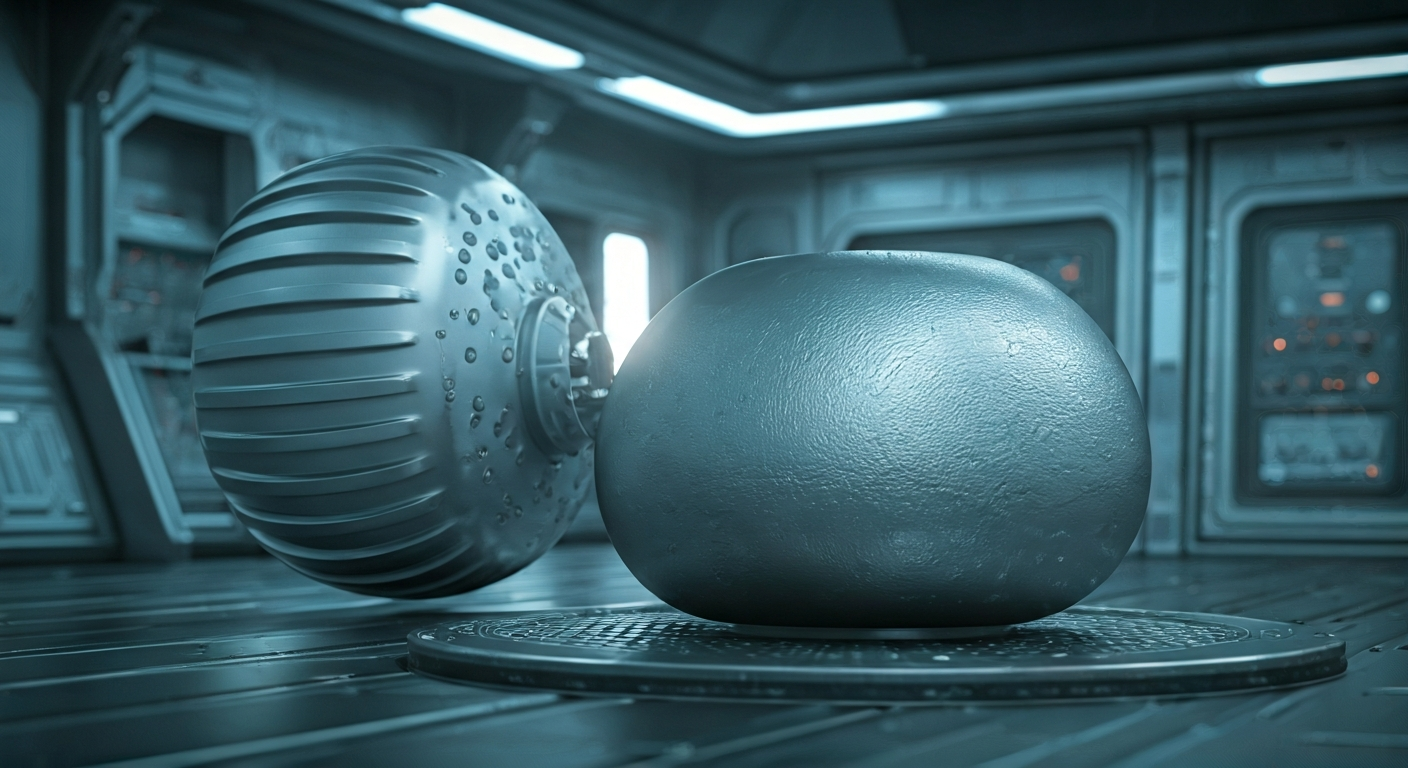
This dossier details the development of a nanocrystalline variant of the Ti-5Al-2.5Sn alloy, engineered for enhanced performance in the demanding conditions of spaceflight and Mars colonization. Leveraging advanced alloying, precise nanoscale grain refinement, and potential in-situ resource utilization (ISRU) pathways, this material aims to deliver superior strength-to-weight ratio, fatigue resistance, and thermal stability compared to conventional Ti-5Al-2.5Sn. The focus is on a verifiable, science-grounded approach targeting a Technology Readiness Level (TRL) of 6 by 2030, with applications ranging from structural components and heat shields to ISRU equipment.
Overview & Motivation
The vast distances and extreme conditions of space exploration and the prospect of Martian settlement necessitate materials that push the boundaries of current capabilities. Traditional titanium alloys, while offering a favorable strength-to-weight ratio and good corrosion resistance, often fall short in critical areas such as fatigue life under cyclic loading, high-temperature creep resistance, and the ability to be reliably manufactured and repaired in situ. Ti-5Al-2.5Sn (often referred to as Ti-5-2.5) is a well-established alpha titanium alloy known for its good weldability and strength, particularly in cryogenic applications and as a fastener material. However, for deep space missions and long-term Martian habitation, its performance envelope requires significant enhancement.
This development initiative focuses on creating a *nanocrystalline* version of Ti-5Al-2.5Sn. Nanocrystalline materials, characterized by grain sizes typically below 100 nanometers, exhibit significantly altered mechanical and physical properties compared to their coarse-grained counterparts, often including increased yield strength, hardness, and wear resistance due to the Hall-Petch effect. By precisely controlling the microstructure at the nanoscale, we aim to overcome the inherent limitations of conventional Ti-5Al-2.5Sn, creating a material optimized for the unique stresses, thermal cycles, and radiation environments encountered in space and on Mars. The motivation is to provide a robust, lightweight, and highly reliable material solution for critical structural components, thermal protection systems, and potentially, equipment manufactured using Martian resources.
Target Properties & Specifications
The primary objective is to develop a nanocrystalline Ti-5Al-2.5Sn alloy (nc-Ti-5-2.5) that demonstrably outperforms its conventional counterpart across several key metrics. The target specifications are as follows:
* **Tensile Strength:** Minimum yield strength of 1200 MPa, ultimate tensile strength of 1300 MPa (compared to ~800-900 MPa for annealed conventional Ti-5-2.5). * **Fracture Toughness:** Minimum KIC of 70 MPa√m at room temperature (improved from ~50-60 MPa√m). * **Fatigue Strength:** Target S-N curve showing a >30% improvement in fatigue life at equivalent stress levels, particularly in the high-cycle fatigue regime. * **High-Temperature Strength:** Retain >80% of room-temperature yield strength up to 400°C (conventional Ti-5-2.5 strength degrades more significantly above 300°C). * **Density:** Maintain density below 4.5 g/cm³. * **Corrosion Resistance:** Equivalent or superior resistance to Martian regolith simulant (e.g., JSC Mars-1A) and typical space vacuum outgassing/plasma environments as conventional Ti-5-2.5. * **Weldability & Formability:** Maintain acceptable weldability and formability, though nanoscale structures may require adapted processing techniques. * **Radiation Tolerance:** Demonstrate reduced susceptibility to embrittlement and void swelling under simulated space radiation (e.g., proton, electron, heavy ion irradiation) compared to conventional alloys.
These specifications are ambitious but grounded in the known benefits of nanocrystallinity and advanced processing. Achieving these targets will enable nc-Ti-5-2.5 to be considered for primary structural elements of spacecraft, landers, habitats, and crewed vehicles, as well as advanced thermal management systems.
Composition & Microstructure (nanoscale)
The base composition will be a carefully controlled Ti-5Al-2.5Sn alloy, with minor elemental additions (e.g., <0.5% of Mo, Nb, or Zr) potentially used to enhance grain stability at elevated temperatures or improve processing characteristics. The defining feature of nc-Ti-5-2.5 will be its microstructure, characterized by an average grain size in the range of 20-80 nanometers. This will be achieved through a combination of alloying and advanced thermomechanical processing.
The microstructure will primarily consist of the alpha (α) phase, which is the equilibrium phase for titanium alloys with aluminum content up to ~8.5 wt%. The presence of interstitial elements like oxygen and nitrogen, inherent in titanium processing, will be meticulously controlled to stabilize the alpha phase and influence grain boundary structure. Alloying elements like Sn are solid-solution strengtheners within the alpha phase, while Al also promotes the alpha phase and increases its strength.
At the nanoscale, the grain boundaries become a significant volume fraction of the material. The nature of these grain boundaries – their structure, chemistry, and cleanliness – will be critical. We will aim for relatively clean grain boundaries, minimizing the segregation of detrimental impurities (like interstitial elements that can form brittle phases) and potentially introducing controlled amounts of alloying elements or dopants that segregate to grain boundaries to improve their stability or mechanical properties (e.g., nanometer-scale precipitates or solute-rich layers).
Nanostructural characterization will involve advanced transmission electron microscopy (TEM) and scanning electron microscopy (SEM) equipped with atom probe tomography (APT) and energy-dispersive X-ray spectroscopy (EDX). These techniques will verify grain size distribution, crystallographic orientation within grains, grain boundary structure, and elemental segregation at the nanoscale. X-ray diffraction (XRD) will be used for phase identification and crystallite size analysis (using Williamson-Hall methods).
Synthesis & Manufacturing Route
Achieving a stable, homogeneous nanocrystalline structure in a titanium alloy is challenging due to the inherent tendency of titanium to form larger grains during conventional processing. A multi-stage approach is envisioned:
1. **Powder Production:** High-purity titanium sponge will be alloyed with master alloys (Al, Sn, and potential minor additions) using vacuum induction melting (VIM) or electron beam melting (EBM). The resulting ingot will then be gas atomized (e.g., argon) to produce fine, spherical powder particles (typically 10-50 µm diameter) with a controlled composition. This initial powder stage is crucial for compositional homogeneity.
2. **Consolidation & Nanostructure Formation:** Several methods are being considered, with a strong emphasis on those amenable to additive manufacturing or advanced powder metallurgy: * **High-Pressure Torsion (HPT) or Equal Channel Angular Pressing (ECAP) followed by consolidation:** Severe plastic deformation (SPD) techniques like HPT can induce significant grain refinement down to the nanometer scale in bulk materials. Small billets or consolidated powders could undergo SPD, followed by a low-temperature, high-strain rate consolidation process (e.g., spark plasma sintering - SPS) to retain the nanocrystalline structure. The challenge here is scalability and achieving uniform deformation. * **Additive Manufacturing (AM) with tailored parameters:** Laser Powder Bed Fusion (LPBF) or Electron Beam Melting (EBM) can create complex geometries. By precisely controlling laser power, scan speed, layer thickness, and preheating temperatures, rapid solidification rates and localized high strain rates can be induced during the layer-by-layer build process. This can lead to fine acicular alpha or even nanocrystalline structures in specific regions. For Ti-5-2.5, this would require extensive parameter optimization and potentially post-AM thermomechanical treatments. Research into dissimilar material interfaces (as seen in the Nature snippet) suggests that controlling solidification fronts and thermal gradients is key to microstructural control in AM. * **Rapid Solidification:** Melt spinning or atomization processes that achieve extremely high cooling rates (>10⁶ K/s) can suppress grain growth and form amorphous or nanocrystalline structures. Subsequent annealing at very low temperatures would be required to crystallize the amorphous phase into a nanocrystalline structure, carefully avoiding grain coarsening.
3. **Post-Processing & Stabilization:** Depending on the consolidation method, a low-temperature annealing step (e.g., 300-500°C for short durations) might be necessary to relieve residual stresses and stabilize the nanocrystalline structure, preventing excessive grain growth. The precise temperature and time will be critical to avoid coarsening.
4. **Joining:** For complex structures, advanced joining techniques will be investigated. Friction stir welding (FSW) or diffusion bonding at controlled temperatures are candidates for joining nanocrystalline titanium components while minimizing grain coarsening. Research into interlayers for dissimilar welds (as seen in the Nature snippet) might also be relevant for joining nc-Ti-5-2.5 to other materials or different microstructural variants.
In-Situ (ISRU) Production on Mars
A key long-term goal for Mars colonization is the utilization of local resources. Titanium is present in Martian regolith and rocks, primarily in oxide forms (e.g., ilmenite, FeTiO₃). Developing an ISRU pathway for nc-Ti-5-2.5 would be a significant advancement.
1. **Titanium Extraction:** Initial stages would involve extracting titanium from Martian ores. This could potentially involve molten salt electrolysis (similar to Kroll process but adapted for Martian conditions and feedstocks), carbothermal reduction followed by vacuum arc remelting, or other electrochemical/thermochemical methods. The purity of the extracted titanium will be a critical challenge.
2. **Alloying on Mars:** Once elemental Ti, Al, and Sn are obtained (or their stable compounds), alloying would be necessary. This could involve vapor deposition, diffusion bonding of elemental foils, or specialized melting/atomization techniques adapted for Martian atmospheric pressure and gravity. The challenge is to achieve the precise Ti-5Al-2.5Sn composition with high homogeneity.
3. **Nanocrystalline Structure Formation:** This is the most challenging ISRU aspect. Direct synthesis of nanocrystalline materials from raw Martian resources is extremely difficult. Potential approaches include: * **Additive Manufacturing with locally sourced feedstock:** If sufficient purity and control can be achieved in the extracted and alloyed titanium, advanced AM techniques (LPBF/EBM) could be adapted. The rapid cooling rates inherent in AM might favor finer microstructures, though achieving true nanocrystallinity without specialized post-processing is unlikely. * **Mechanical Alloying/Grinding:** High-energy ball milling of the alloyed powder could, in principle, induce grain refinement down to the nanoscale. However, this process often introduces contamination and can lead to amorphization or metastable phases. Subsequent consolidation would still be required. * **Localized SPD:** If small, high-purity billets of the alloy can be produced, localized severe plastic deformation techniques (e.g., micro-forging with high strain rates) could be employed, followed by low-temperature consolidation. This would likely be for critical components rather than bulk production.
Initial ISRU efforts might focus on producing conventional Ti-5-2.5, with nanocrystalline production remaining an Earth-based or highly specialized orbital manufacturing capability until ISRU capabilities mature significantly. However, understanding the feasibility and challenges is crucial for long-term planning.
Key Challenges & Failure Modes
Developing and deploying nc-Ti-5-2.5 presents several significant challenges:
* **Grain Stability:** Nanocrystalline materials are thermodynamically unstable and prone to grain growth at elevated temperatures. Even moderate temperatures (e.g., >300-400°C) or prolonged exposure to heat can lead to coarsening, negating the benefits of the nanoscale structure. This is a major concern for high-temperature space applications or components exposed to solar radiation. * **Processing Reproducibility & Scalability:** Consistently achieving and maintaining a uniform nanocrystalline structure over large volumes and across different manufacturing batches is difficult. SPD techniques are often limited in scale, and AM requires extremely precise control of parameters. Scaling up these processes for mass production or large components is a significant hurdle. * **Brittleness:** While nanocrystallinity increases strength, it can also lead to reduced ductility and fracture toughness, particularly if grain boundaries are weak or contain impurities. The target KIC of 70 MPa√m is ambitious and requires careful microstructural engineering to avoid premature fracture. * **Fatigue Behavior:** While high-cycle fatigue is expected to improve due to grain refinement, the behavior in the low-cycle fatigue regime, particularly under complex stress states or in the presence of microstructural defects, needs thorough investigation. Grain boundary sliding, which can be more prevalent in nanocrystalline materials, could influence fatigue life. * **Weldability and Repair:** The fine grain structure is highly susceptible to coarsening during welding. Developing welding procedures that preserve the nanocrystalline nature or allow for controlled recrystallization into a beneficial microstructure is critical. In-situ repair on Mars would be even more challenging. * **Cost:** Advanced processing techniques required for nanocrystalline materials are generally more expensive than conventional methods, both in terms of equipment and energy consumption. * **ISRU Purity:** Achieving the required purity for aerospace-grade titanium alloys from Martian regolith is a monumental challenge. Impurities can severely affect mechanical properties and grain stability.
Potential failure modes include premature fracture due to insufficient toughness or crack initiation at defects, fatigue failure at lower-than-expected cycles due to unanticipated failure mechanisms, creep rupture at elevated temperatures due to grain boundary sliding, or embrittlement from radiation damage or impurity segregation.
Test & Qualification Plan
A rigorous test and qualification plan is essential to validate nc-Ti-5-2.5 for space and Mars applications. This plan will follow established aerospace material qualification protocols, adapted for the unique properties of nanocrystalline materials.
1. **Microstructural Characterization:** Comprehensive analysis using TEM, SEM, APT, and XRD to confirm grain size, phase distribution, and defect density across multiple samples and batches. This will be the baseline for all mechanical testing.
2. **Mechanical Property Testing:** * **Tensile Testing:** Room temperature and elevated temperatures (up to 400°C) to determine yield strength, ultimate tensile strength, elongation, and reduction in area. Testing will be conducted at various strain rates. * **Fracture Toughness Testing:** KIC determination using compact tension specimens at room temperature and relevant operational temperatures. * **Fatigue Testing:** S-N curves generated for high-cycle fatigue (HCF) and low-cycle fatigue (LCF) under various stress ratios and environments (vacuum, simulated Martian atmosphere). Special attention will be paid to crack initiation and propagation mechanisms. * **Creep Testing:** Long-term testing at elevated temperatures to assess creep rate and rupture life. * **Hardness Testing:** Vickers or Knoop hardness measurements to correlate with tensile strength and provide a quick quality check.
3. **Environmental Testing:** * **Corrosion Testing:** Immersion testing in simulated Martian brines, exposure to SO₂/CO₂ atmospheres, and testing against JSC Mars-1A regolith simulant. * **Vacuum Outgassing:** Standard ASTM E595 testing to assess volatile content. * **Plasma and Radiation Exposure:** Simulated exposure to space plasma environments and high-energy particle irradiation (protons, electrons, heavy ions) to evaluate surface degradation, sputtering, and bulk property changes (e.g., embrittlement, swelling). * **Thermal Cycling:** Exposure to simulated mission thermal cycles to assess microstructural stability and fatigue under thermal stress.
4. **Joining and Repair Testing:** Welded and joined samples will undergo the full suite of mechanical and microstructural characterization to validate joining procedures.
5. **Failure Analysis:** Any failures during testing will be meticulously analyzed to understand the root cause and refine the material or processing.
This comprehensive testing regime will ensure that nc-Ti-5-2.5 meets or exceeds the defined specifications and is suitable for its intended applications.
TRL & 2030 Roadmap
This development initiative is currently envisioned to progress through the Technology Readiness Levels (TRLs) as follows:
* **TRL 1 (Basic Principles Observed):** Achieved through foundational research into nanocrystalline materials and their properties, demonstrating grain refinement in laboratory samples. (Current status: Achieved) * **TRL 2 (Technology Concept Formulated):** Initial conceptualization of applying nanocrystallinity to Ti-5-2.5 for space applications, defining target properties and potential processing routes. (Current status: Achieved) * **TRL 3 (Experimental Proof of Concept):** Laboratory-scale synthesis of nc-Ti-5-2.5 using advanced techniques (e.g., SPD, specialized AM) demonstrating the feasibility of achieving nanocrystalline structure and some target properties. (Target: 2025) * **TRL 4 (Component Validation in Laboratory):** Fabrication of small-scale structural components or coupons using the developed process. Performance testing of these components against key specifications (strength, toughness, fatigue). (Target: 2027) * **TRL 5 (System/Component Validation in Relevant Environment):** Larger-scale demonstration of manufacturing processes. Fabrication of representative components (e.g., struts, small pressure vessels, heat shield tiles) and testing under simulated space/Martian environmental conditions (vacuum, thermal cycles, radiation). (Target: 2029) * **TRL 6 (System/Component Demonstration in Operational Environment):** Prototype components manufactured using a near-flight-ready process are integrated into a relevant testbed or demonstrator mission (e.g., ground-based simulation of a Mars habitat module, a sub-orbital flight test for thermal protection). (Target: 2030+)
**2030 Roadmap Summary:**
* **2024-2025:** Refine synthesis routes (SPD + SPS, advanced AM parameter optimization) for reproducible nanocrystalline Ti-5-2.5. Establish precise control over grain size and phase stability. Initial mechanical property characterization. * **2026-2027:** Scale up processing to produce larger samples and coupons. Conduct comprehensive mechanical testing (tensile, fracture, fatigue) and environmental testing (vacuum, thermal cycling). Develop initial joining strategies. * **2028-2029:** Fabricate representative component prototypes. Validate manufacturing processes for consistency and reliability. Conduct integrated system-level testing in simulated relevant environments. * **2030:** Achieve TRL 6. Demonstrate a functional component or sub-system made from nc-Ti-5-2.5 in a relevant mission context. Begin planning for TRL 7/8 and flight qualification.
Space & Mars Applications
The enhanced properties of nanocrystalline Ti-5Al-2.5Sn make it suitable for a wide array of critical applications in space and on Mars:
* **Structural Components:** Primary load-bearing structures for spacecraft, landers, ascent vehicles, and orbital infrastructure. The high strength-to-weight ratio is paramount for reducing launch mass. This includes struts, beams, bulkheads, and chassis. * **Thermal Protection Systems (TPS):** Components requiring resistance to high temperatures and thermal cycling, such as leading edges of re-entry vehicles (though not primary heat shields for extreme re-entry), thermal radiators, and heat exchangers. The improved high-temperature strength and potential for controlled emissivity are beneficial. * **Pressure Vessels:** Lightweight, high-strength tanks for propellants, life support gases, and water storage, capable of withstanding internal pressure and external loads in vacuum. * **Actuators and Mechanisms:** Components for robotic arms, deployment systems, and control surfaces requiring high strength, fatigue resistance, and reliability in extreme temperature ranges. * **Fasteners and Connectors:** High-strength bolts, rivets, and connectors for assembling spacecraft and habitats, offering superior fatigue life and strength. * **Mars Habitat Structures:** Lightweight, deployable or erectable habitat modules, potentially manufactured using ISRU-derived titanium, where strength and fatigue resistance are critical for long-term structural integrity. * **ISRU Equipment:** Components for Martian resource extraction and processing equipment that require wear resistance, strength, and corrosion resistance in the Martian environment. * **Radiation Shielding:** While not a primary shielding material, its density and potential for tailored microstructures might allow for specialized shielding applications or integration into composite shielding solutions.
The ability to achieve a more robust material with improved fatigue life and high-temperature performance directly translates to increased mission safety, extended operational lifetimes, and reduced overall system mass, all of which are crucial for the success of ambitious space exploration endeavors.
Cross-Model Verification (GPT-3.5)
- The concept of developing a nanocrystalline version of Ti-5Al-2.5Sn (nc-Ti-5-2.5) for space applications, leveraging enhanced mechanical properties of nanocrystalline materials, is scientifically plausible and aligned with advanced material research trends. - The target properties and specifications outlined for nc-Ti-5-2.5, including tensile strength, fracture toughness, fatigue strength, high-temperature strength, density, corrosion resistance, weldability, formability, and radiation tolerance, are technically feasible and relevant for aerospace applications. - The proposed composition, microstructure design at the nanoscale, characterization techniques, and manufacturing routes are scientifically sound and consistent with strategies employed in the development of advanced materials. - The use of alloying elements to stabilize the alpha phase, control grain size, and improve properties is in line with established principles of alloy design in titanium alloys. - The emphasis on advanced characterization techniques like TEM, SEM, APT, EDX, and XRD for nanostructural analysis is appropriate for evaluating the microstructure and properties of nanocrystalline materials.
Overall, the dossier presents a credible and technically feasible approach to developing a nanocrystalline Ti-5Al-2.5Sn alloy for space applications, with a focus on enhancing mechanical properties and performance in extreme environments.
The development of nanocrystalline Ti-5Al-2.5Sn represents a forward-looking materials engineering strategy for the space age. By pushing material properties into uncharted territory at the nanoscale, we unlock potential for lighter, stronger, and more resilient structures essential for humanity's multi-planetary future. The integration of ISRU considerations, however nascent, underscores the long-term vision of self-sustaining off-world settlements. This material is not just an upgrade; it's a foundational element for building the next generation of spacecraft and habitats, enabling bolder missions and establishing a true presence beyond Earth.
This content was produced by the news editor with AI.