Perseverance Rover Hints at Ancient Martian Life
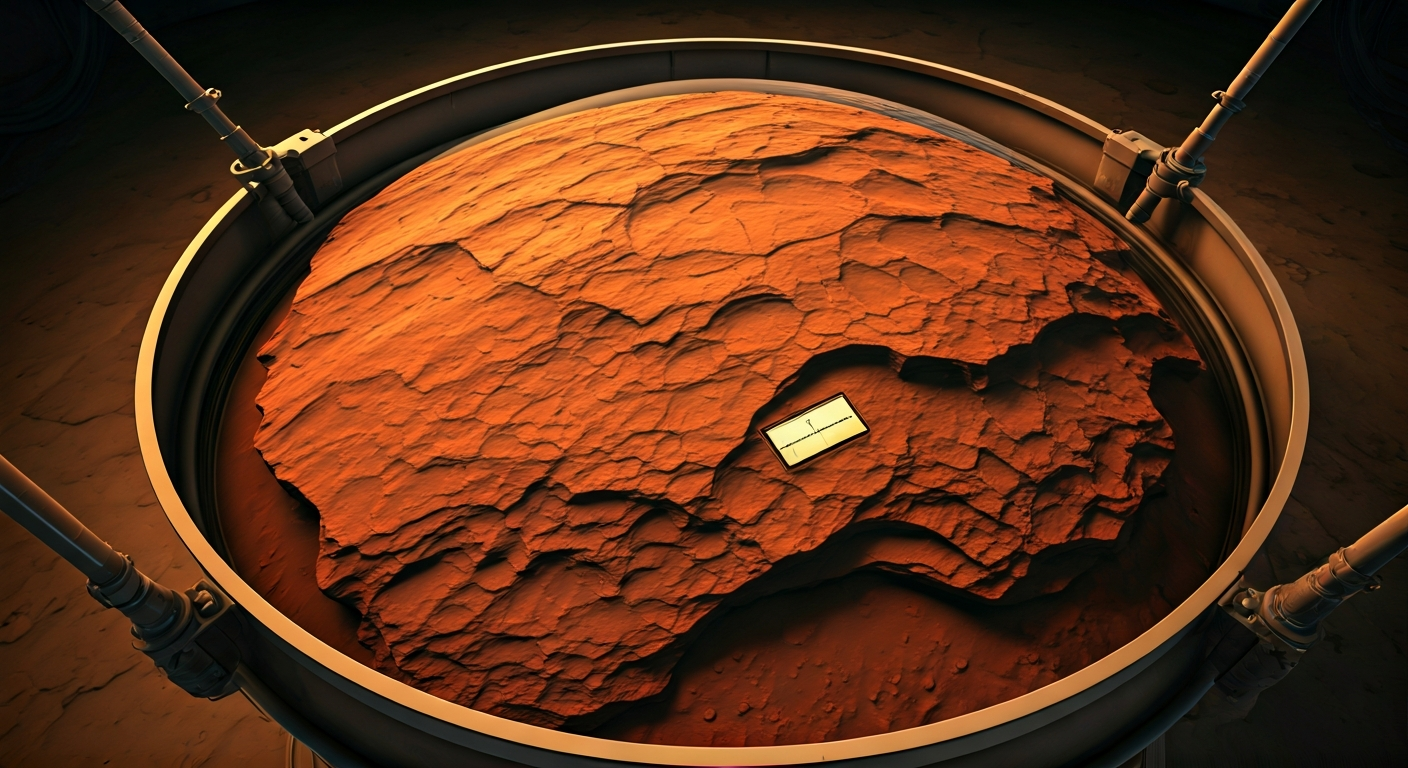
NASA's Perseverance rover has identified potential biosignatures in Martian rock samples, fueling speculation about ancient microbial life on the Red Planet.
The Mars rover Perseverance has identified what are being considered potential traces of ancient life on the Red Planet. These findings come from analysis of rock samples collected by the rover.
Scientists are cautiously optimistic about the implications of these discoveries. The samples contain specific chemical compounds and structural formations that, on Earth, are typically associated with biological processes. These potential biosignatures were found within sedimentary rocks in the Jezero Crater, an area believed to have once held a lake and river delta.
The rover's instruments, including the SHERLOC (Scanning Habitable Environments with Raman & Luminescence for Organics & Chemicals) instrument, played a crucial role in detecting these substances. SHERLOC is designed to identify organic molecules and minerals that could indicate past habitability and potential signs of life.
While these findings are promising, researchers emphasize that further analysis is required to confirm them as definitive evidence of life. The samples collected by Perseverance are slated for return to Earth on future missions, where more advanced laboratory equipment can conduct in-depth studies. This return-to-Earth campaign is a critical step in definitively answering questions about Mars's past habitability and the potential for extraterrestrial life.
Perseverance's potential detection of ancient biosignatures is a monumental step toward confirming Mars as a cradle for life beyond Earth. The rover's sophisticated instruments, like SHERLOC, are precisely the kind of advanced AI-driven analytical tools essential for navigating complex extraterrestrial environments. This discovery accelerates our understanding of Mars's past habitability, a prerequisite for establishing a self-sustaining human presence. Each such finding validates the exponential progress in astrobiology and robotics, pushing us closer to the inevitable expansion of human civilization and life's footprint across the solar system, transforming Mars from a scientific curiosity into a future home.
Edited by the news editor with AI and translated into English from the original report — please refer to the original source.