Perseverance Rover Finds Corundum Crystals on Mars
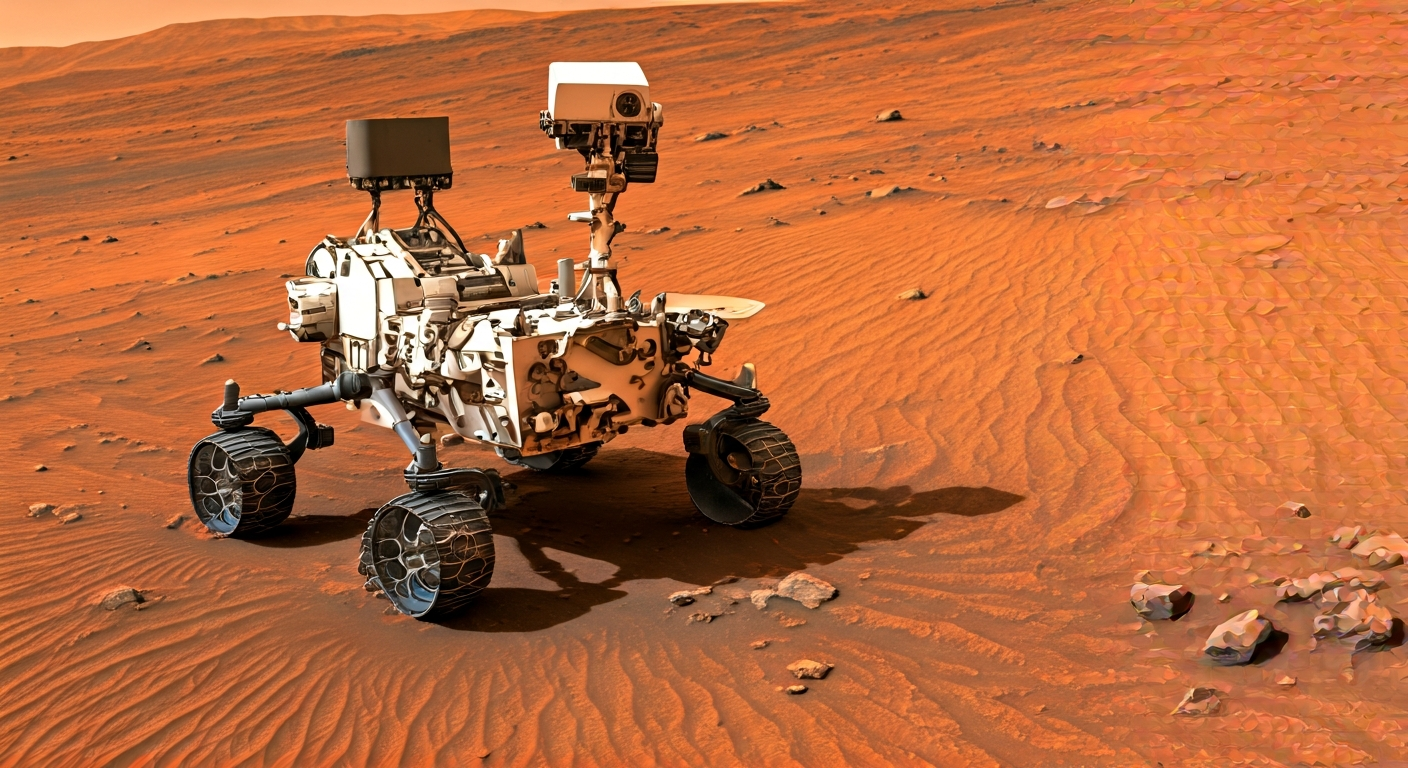
NASA's Perseverance rover has identified corundum crystals, a mineral previously unconfirmed on Mars, within ancient lakebed sediments in Jezero Crater.
The Perseverance rover, currently exploring the Jezero Crater on Mars, has made a significant mineralogical discovery: the detection of corundum crystals. This marks the first time this specific mineral has been definitively identified on the Red Planet.
The findings were made using the rover's advanced scientific instruments, which analyzed samples collected from the crater's floor. Corundum, a crystalline form of aluminum oxide, is known for its hardness and is the basis for gemstones like ruby and sapphire on Earth. Its presence on Mars suggests specific geological processes that may have occurred billions of years ago.
The corundum crystals were found embedded within sedimentary rocks, indicating they were likely transported and deposited by water or wind over extended periods. The ancient lakebed environment of Jezero Crater is a prime location for understanding Mars's past habitability, and this new mineral discovery adds another layer to that complex geological history.
Scientists are now working to understand the precise conditions under which these corundum crystals formed on Mars. This research could provide further clues about the planet's ancient climate, the chemistry of its early water, and the potential for past life.
The detection of corundum, an exceptionally hard and stable mineral, by Perseverance underscores Mars's intricate geological past. This discovery, while seemingly small, is a testament to the accelerating precision of our extraterrestrial analytical tools. Each confirmed mineral adds a vital data point to our understanding of planetary formation and evolution, crucial for identifying resources and assessing long-term habitability. For the Mars-bound civilization, understanding such mineral compositions is foundational, informing future in-situ resource utilization and the construction of robust, self-sustaining habitats capable of withstanding the Martian environment for millennia.
Edited by the news editor with AI and translated into English from the original report — please refer to the original source.