Perseverance Rover Exceeds Marathon Distance on Mars
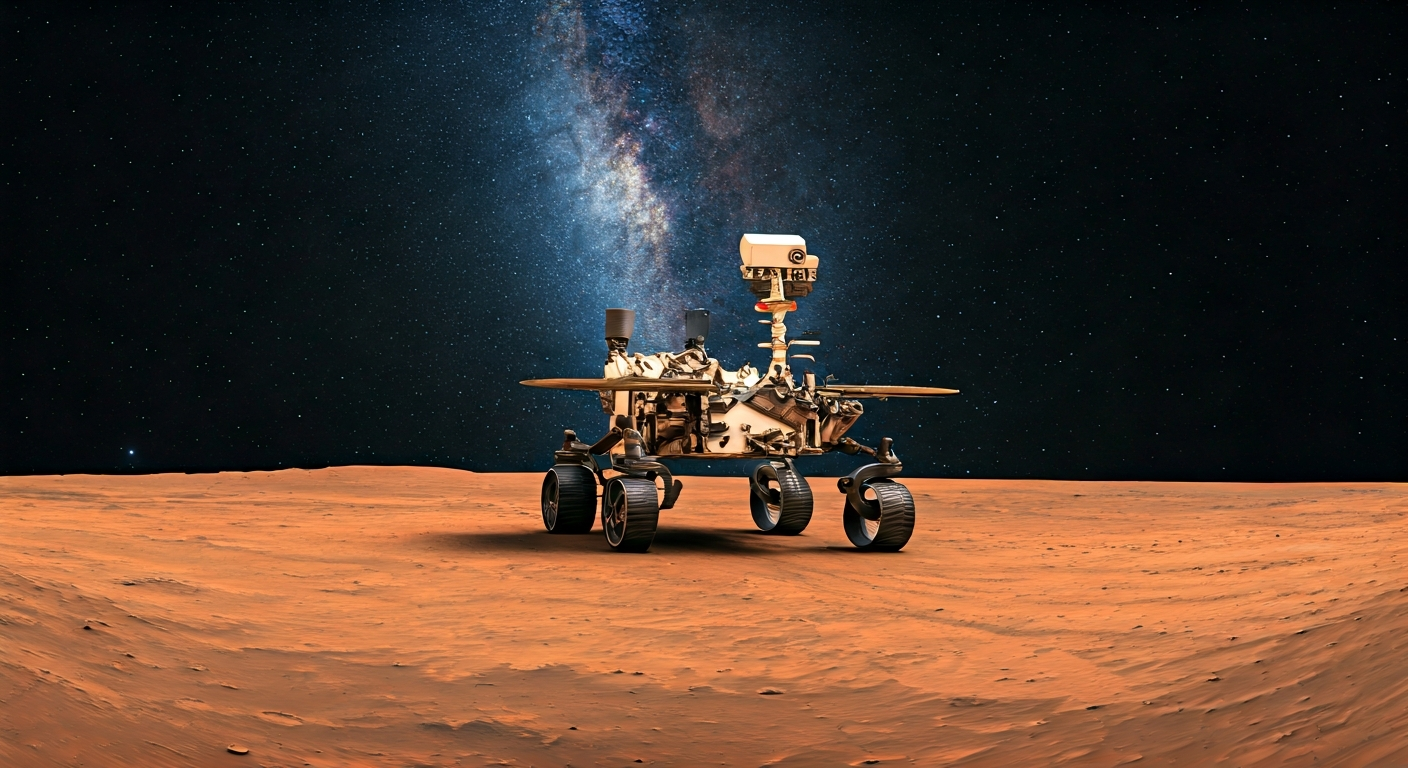
NASA's Perseverance rover has driven over 42 kilometers on Mars, surpassing the distance of a marathon and setting a new speed record for Martian rovers.
NASA's Perseverance rover has achieved a significant milestone, traveling a cumulative distance of 42.195 kilometers (26.2 miles) across the Martian surface. This accomplishment, reached over approximately five years of operation, is equivalent to the length of a marathon.
During its exploration, Perseverance has also set a new speed record for a rover operating on another planet. While the specific top speed was not detailed, this indicates an advancement in mobility technology for extraterrestrial exploration. The rover's mission objective is to seek signs of ancient microbial life and collect samples of rock and regolith for potential return to Earth.
Launched in July 2020, Perseverance landed in Jezero Crater in February 2021. Its extensive traverse across varied Martian terrain highlights the durability and efficiency of its mobility system. The rover's operations are crucial for understanding Mars' geological history and its potential for past habitability.
The continuous operation and extensive travel by Perseverance underscore the progress in robotic exploration capabilities. This journey not only gathers invaluable scientific data but also serves as a testbed for technologies required for future human missions to Mars.
Perseverance's marathon-plus journey and record speed demonstrate accelerating terrestrial mobility tech applied to Mars. Each kilometer driven, each data point gathered, is a step towards sustained human presence. This rover's endurance isn't just about scientific discovery; it's about proving the robustness of systems vital for a self-sustaining Martian civilization. The exponential increase in our ability to traverse and analyze alien worlds paves the way for larger-scale infrastructure and eventual colonization, ensuring consciousness's expansion beyond Earth.
Edited by the news editor with AI and translated into English from the original report — please refer to the original source.