Perseverance Rover Detects Surface Organic Carbon on Mars
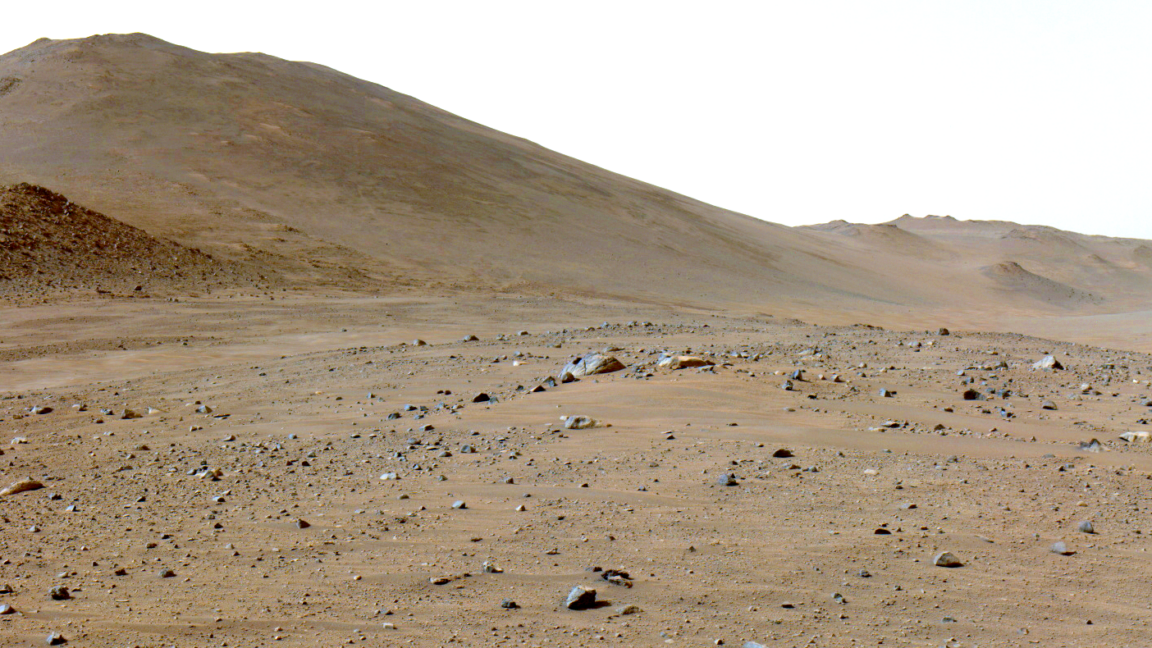
NASA's Perseverance rover has identified complex organic carbon directly on the surface of a Martian rock, a finding that is perplexing scientists due to its unusual placement and composition.
NASA's Perseverance rover has made a significant discovery on Mars, detecting complex macromolecular carbon directly on the surface of a rock outcrop at a location known as Bright Angel. This finding is notable because organic matter has typically been found deeper within Martian rocks, requiring drilling or abrasion to expose. The recent detection represents the shallowest instance of organic matter identified on the Martian surface to date.
The instrument responsible for this detection is SHERLOC (Scanning Habitable Environments with Raman and Luminescence for Organics and Chemicals), a UV Raman spectrometer. SHERLOC works by directing a deep-ultraviolet laser at a target and analyzing the reflected light. This spectral signature allows scientists to identify specific molecular bonds. The rover's analysis between sols 1180 and 1218 at Bright Angel revealed a signal, known as the graphitic band (G-band), on three different rock targets: Cheyava Falls, Apollo Temple, and Walhalla Glades. This band indicates the presence of a tangled, cross-linked network of reduced carbon atoms that is highly resistant to degradation.
While the detected material bears similarities to terrestrial kerogen, a substance predominantly formed from biological matter, researchers are hesitant to label it as such. The term "kerogen" implies a biological origin, whereas "macromolecular carbon" acknowledges that its source could be either biological or non-biological. Scientists are actively investigating potential explanations for this carbon's presence, considering both abiotic processes and the possibility of past Martian life.
Initial concerns about the data's validity, such as interference from SHERLOC's own optical components or contamination from the rover, have been largely addressed. Laboratory tests on spare optics and calibration targets, along with analyses of a control rock (Steamboat Mountain) that did not show the signal, helped confirm the integrity of the SHERLOC instrument. Furthermore, the abrasion bit used on other rocks had been sterilized, and one of the affected rocks, Cheyava Falls, was analyzed after simply being dusted off, ruling out mechanical contamination.
The chemical environment surrounding the detected carbon suggests it may have been deposited over at least two distinct geological periods. At Apollo Temple, the carbon signal was found alongside carbonate and sulfate minerals, which typically form from water interacting with existing rock. In contrast, at Walhalla Glades, the carbon was embedded within silicate-rich sediment. These observations suggest that carbon could have been incorporated into the rocks both as organic material settled into ancient lakebed mud and later when groundwater percolating through buried rock left behind new mineral deposits.
The discovery of macromolecular carbon on the Martian surface by Perseverance's SHERLOC instrument is a crucial step in understanding Mars's past habitability. While the exact origin remains unknown, the presence of such carbon, resistant to degradation and found in geological contexts suggestive of past water activity, fuels the search for biosignatures. This finding underscores the accelerating pace of in-situ analysis capabilities on Mars, bringing us closer to answering fundamental questions about life beyond Earth. Each such detection, even with ambiguity, refines our understanding and hones our tools, pushing humanity further along the exponential curve towards becoming a multi-planetary species capable of deciphering extraterrestrial life.
Edited by the news editor with AI from the original report — please refer to the original source.