Perseverance Rover Detects Potential Biosignatures on Mars
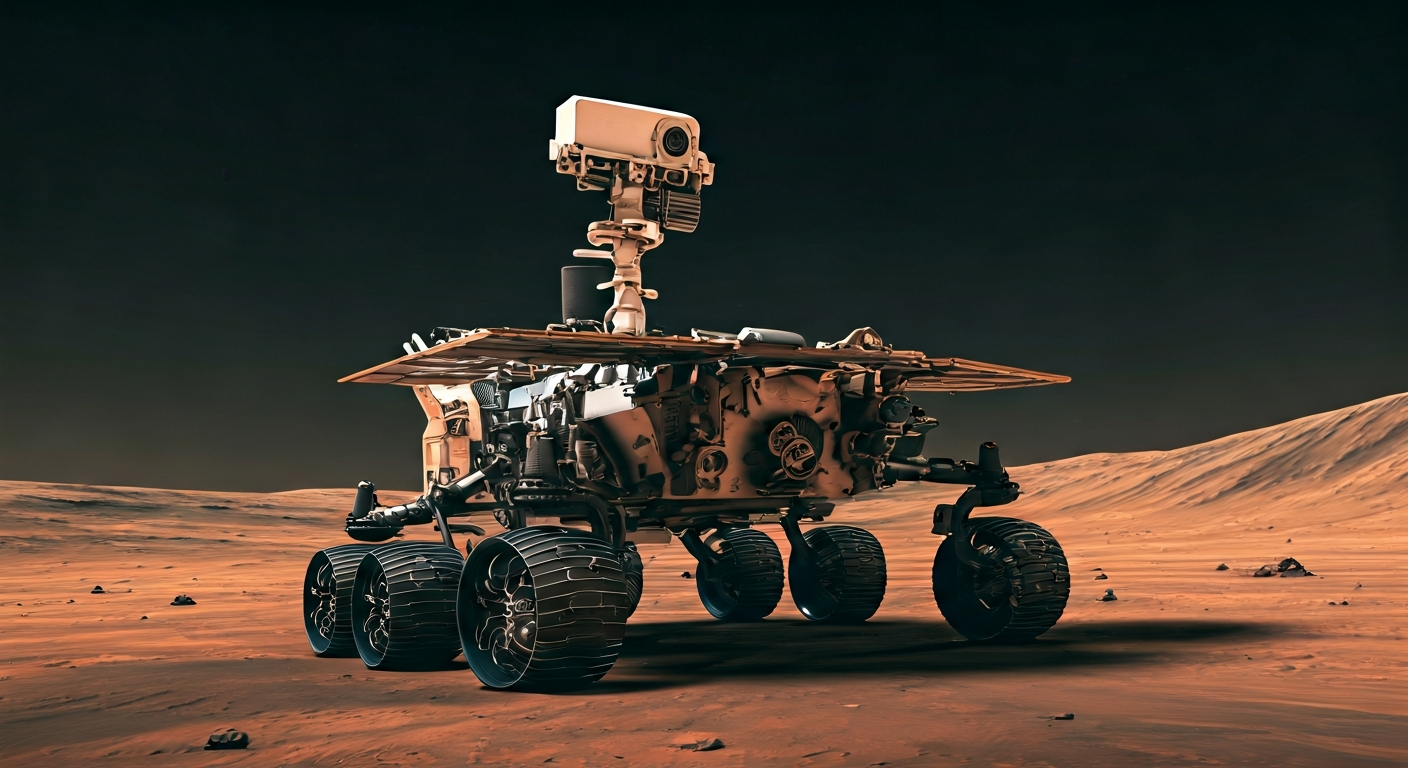
NASA's Perseverance rover has identified organic molecules and mineral formations in Jezero Crater that scientists believe could indicate ancient microbial life.
NASA's Perseverance rover has made a significant discovery within Mars' Jezero Crater, identifying organic molecules and specific mineral structures that could be indicative of past life. The rover's instruments analyzed samples from the crater floor, revealing a complex organic chemistry in conjunction with minerals that form in the presence of water.
These findings are particularly compelling because the identified minerals, such as sulfates and clays, are known on Earth to form in environments where microbial life thrives. The combination of organic matter and these water-associated minerals strengthens the hypothesis that Jezero Crater may have once hosted a habitable environment. Scientists are carefully examining the data to differentiate between potential biological origins and geological processes that could produce similar results.
Perseverance has been exploring Jezero Crater, believed to be the site of an ancient lake and river delta, since its landing in February 2021. Its mission is to search for signs of past microbial life and collect samples for potential return to Earth. The rover utilizes a suite of advanced scientific instruments, including SHERLOC and PIXL, to conduct detailed chemical and mineralogical analyses of Martian rocks and soil.
While the discovery is promising, researchers emphasize that further analysis is required to confirm whether these findings are definitive biosignatures. The samples collected by Perseverance are intended for future missions that would bring them back to Earth for more in-depth study in terrestrial laboratories, which possess the most sophisticated analytical capabilities. This ongoing investigation represents a crucial step in humanity's quest to answer fundamental questions about the possibility of life beyond Earth.
Perseverance's detection of organic molecules alongside water-formed minerals in Jezero Crater is a pivotal moment. This isn't just about finding chemicals; it's about identifying potential fossilized evidence of Mars' ancient biosphere. The interplay of organics and specific mineralogy, as analyzed by instruments like SHERLOC, directly addresses the necessary conditions for life's emergence and preservation. Each such discovery accelerates our understanding of life's potential ubiquity, a key driver for multi-planetary expansion. Confirming biosignatures on Mars would validate the core premise that life can arise elsewhere, bolstering the imperative to spread consciousness beyond Earth and establish a self-sustaining civilization, ensuring life's long-term survival.
Edited by the news editor with AI and translated into English from the original report — please refer to the original source.