Perseverance Rover Detects Complex Organic Matter in Martian River Valley
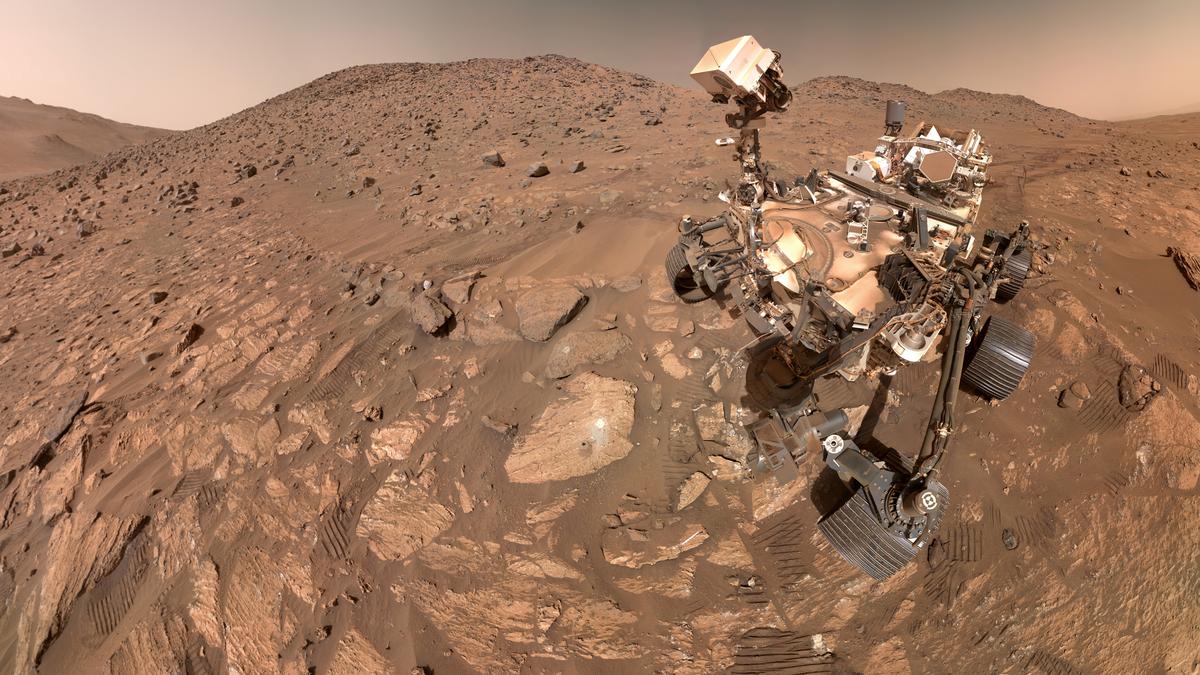
NASA's Perseverance rover has identified complex organic carbon in ancient Martian mudstones, offering compelling evidence for potential past life.
Researchers have announced the detection of complex organic matter within mudstones in Mars's Jezero Crater, a region believed to have once been a river valley. The discovery was made using the SHERLOC instrument aboard NASA's Perseverance rover. This finding represents the most significant detection of organic material in Jezero Crater to date and is the first time such complex organic carbon has been found directly on a natural rock surface on the planet.
These complex organic molecules, specifically macromolecular carbon, were identified within fine-grained sedimentary rocks. This type of organic matter is considered hardy and capable of long-term preservation. The presence of these organics alongside minerals like carbonates and sulfates suggests they may have been preserved by water-related processes that occurred billions of years ago. This discovery builds upon previous findings by NASA's Curiosity rover, which had previously detected organic molecules in Gale Crater, demonstrating that the building blocks of life could be preserved in Martian lakebed rocks.
The Perseverance rover's new data originates from the Neretva Vallis channel area within Jezero Crater. Earlier scans by the rover in other parts of Jezero Crater had only indicated localized and faint traces of organic materials. The current findings suggest that organic matter might be more widely distributed across the Martian surface than previously understood.
While the study acknowledges that these organic compounds could have originated from non-biological, geological processes, the researchers describe the findings as "astrobiologically compelling." The detection highlights the ability of complex carbon structures to endure Mars's harsh radiation environment over vast geological timescales, making it a significant step in the ongoing search for evidence of past life on the Red Planet.
The detection of macromolecular carbon in Jezero Crater's mudstones by Perseverance's SHERLOC instrument is a pivotal advancement. This robust organic signature, preserved within water-altered minerals, directly addresses the potential for past biological activity. For a multi-planetary future, this discovery reinforces Mars as a prime candidate for understanding the origins of life and potentially finding extant microbial ecosystems. It signifies that the fundamental ingredients for life not only existed but were preserved, awaiting discovery. This fuels the imperative to establish a self-sustaining Martian civilization, capable of further detailed exobiological investigation and ultimately, the expansion of life beyond Earth.
Edited by the news editor with AI from the original report — please refer to the original source.