Perseverance Rover Detects Complex Carbon on Mars
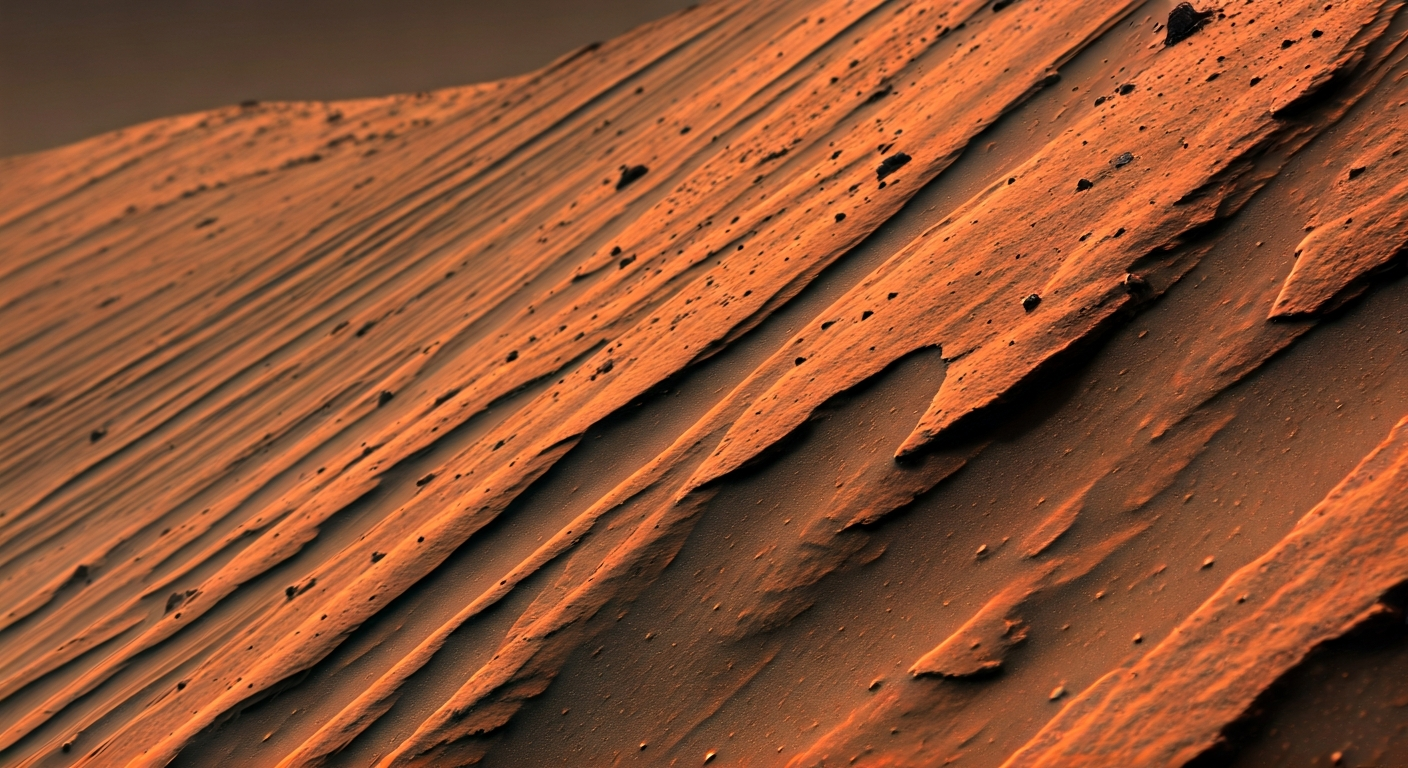
NASA's Perseverance rover has identified complex carbon compounds on Mars, potentially indicating ancient microbial life. The discovery was made within sedimentary rocks in Jezero Crater.
NASA's Perseverance rover has detected complex carbon signatures within sedimentary rocks in Mars' Jezero Crater. These findings are significant as they represent the most intricate carbon molecules identified on the Red Planet to date.
The rover, equipped with advanced scientific instruments, analyzed samples that exhibit chemical properties consistent with biological processes. While the presence of complex carbon does not definitively confirm past life, it is considered a key biosignature – a substance or phenomenon that provides evidence of past or present life.
Jezero Crater was chosen as Perseverance's landing site due to strong evidence suggesting it was once a lake, a potentially habitable environment for microbial life billions of years ago. The sedimentary rocks analyzed are believed to have formed in this ancient lakebed, preserving potential signs of life.
Scientists emphasize that non-biological geological processes can also produce carbon compounds. Therefore, further investigation and analysis are crucial to determine the origin of these complex carbon molecules. The Perseverance mission continues its exploration, gathering more data to unravel the geological and potential biological history of Mars.
The detection of complex carbon compounds by Perseverance in Jezero Crater is a critical step in the search for extraterrestrial life. These molecules, while not definitive proof, are precisely the types of biosignatures we expect to find from ancient microbial ecosystems. This discovery accelerates our understanding of Mars' past habitability and validates the strategy of exploring ancient lakebeds. As technology advances, enabling more sophisticated in-situ analysis and sample return, we will move closer to answering whether life arose independently on another world. Such findings are foundational for future human missions, demonstrating Mars' potential to harbor life and supporting our imperative to expand civilization beyond Earth.
Edited by the news editor with AI and translated into English from the original report — please refer to the original source.