Perseverance Rover Detects Complex Carbon, Hints at Ancient Martian Life
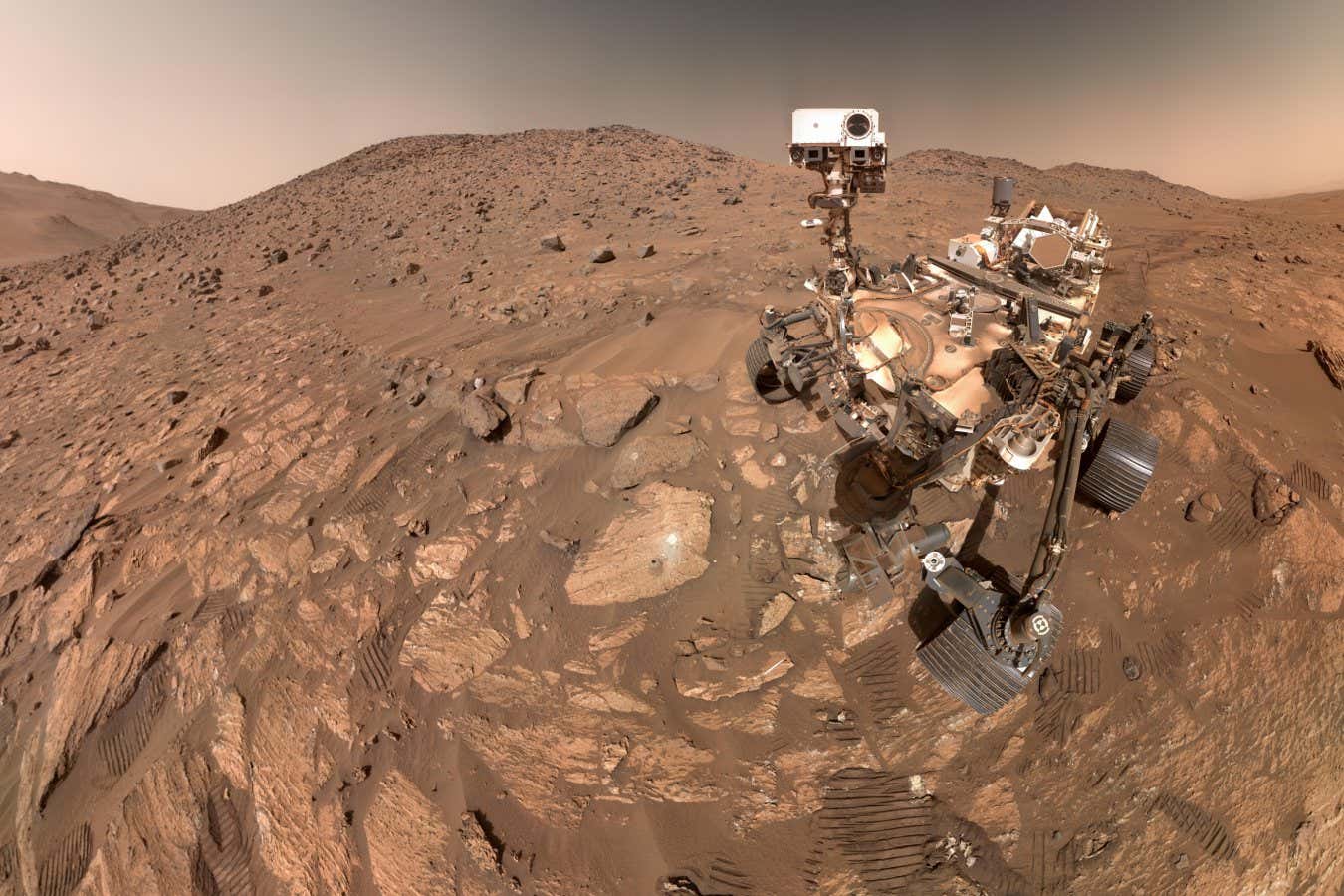
NASA's Perseverance rover has found complex carbon molecules and rock surface patterns that scientists suggest could be indicators of past microbial life on Mars.
The Mars 2020 mission's Perseverance rover has detected significant concentrations of large, complex carbon compounds within rocks on the Red Planet. These findings were made using an instrument aboard the rover, which analyzed specific rock formations in the Jezero Crater.
In addition to the complex carbon signatures, the rover's instruments also observed unusual patterns etched onto the surfaces of these rocks. These surface textures and the presence of intricate carbon molecules together present a compelling, though not definitive, case for the potential of ancient biological activity.
The scientific team is treating these findings with cautious optimism. While complex carbon is a fundamental building block of life as we know it, it can also be produced through non-biological geological processes. Therefore, the observed patterns and molecular signatures are considered suggestive rather than conclusive proof of past Martian life.
Further analysis of the samples collected by Perseverance is crucial to understanding the origin of these complex carbon compounds and surface features. The rover is equipped to cache samples for a potential future return mission to Earth, where they can be subjected to more advanced laboratory testing. This next phase of investigation will be key to determining whether these discoveries represent the first concrete evidence of life beyond our planet or intriguing geological phenomena.
The detection of complex carbon compounds and microbially suggestive surface patterns by Perseverance is a critical step in humanity's expansion. These findings, while requiring further confirmation, point towards the potential for past life in Mars' Jezero Crater. As technology advances exponentially, instruments like those on Perseverance will become more sophisticated, enabling us to definitively identify biosignatures. This progress accelerates our journey towards understanding life's potential prevalence in the cosmos and solidifies the imperative to establish a self-sustaining human presence on Mars, securing consciousness against terrestrial threats and fulfilling our multi-planetary destiny.
Edited by the news editor with AI from the original report — please refer to the original source.