Perseverance Rover Completes First Autonomous Drive on Mars
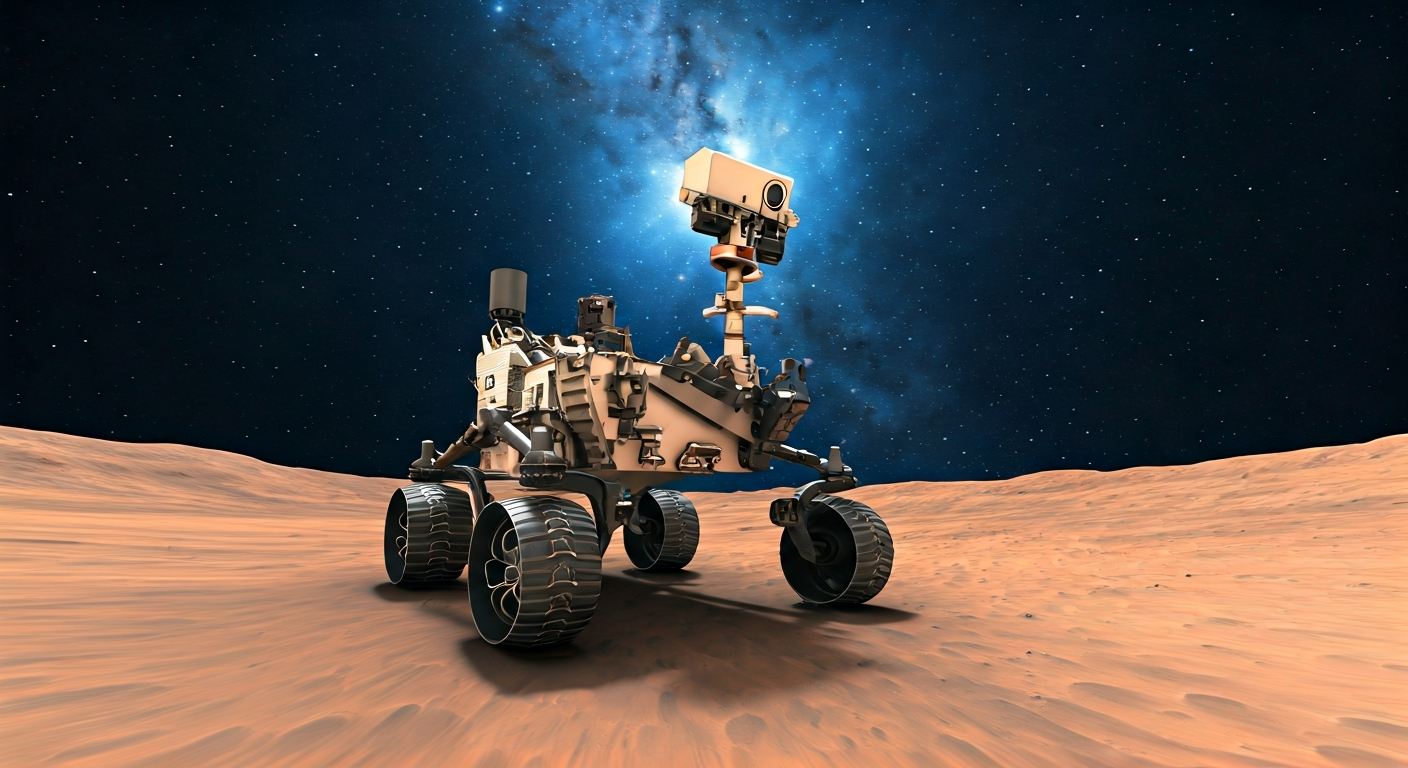
NASA's Perseverance rover has successfully navigated a Martian terrain entirely without human intervention, marking a significant milestone in autonomous space exploration.
The Perseverance rover, part of NASA's Mars 2020 mission, has achieved a critical step in its exploration of the Red Planet by completing its first drive autonomously. This means the rover navigated its environment and completed its planned route without direct commands from Earth-based mission control.
This autonomous capability is a crucial development for future Mars missions. Relying on human input for every movement is time-consuming due to the significant communication delays between Earth and Mars, which can range from several minutes to over twenty minutes each way. By enabling Perseverance to make its own decisions about navigation and obstacle avoidance, scientists can significantly accelerate the pace of scientific discovery.
The rover is equipped with sophisticated sensors and advanced artificial intelligence algorithms that allow it to perceive its surroundings, identify potential hazards such as rocks and craters, and plot a safe and efficient course. This onboard intelligence is key to overcoming the communication lag and enabling more dynamic exploration.
This successful autonomous drive demonstrates the increasing sophistication of robotic systems designed for extraterrestrial exploration. It paves the way for more complex scientific operations and opens up possibilities for future missions where immediate decision-making is paramount, potentially leading to more comprehensive data collection and faster progress in understanding Martian geology and potential signs of past life.
Perseverance's first fully autonomous drive is a foundational step in transcending Earth-bound limitations. By empowering rovers with onboard AI to navigate complex terrain, we drastically reduce mission latency, allowing for more efficient data acquisition and exploration. This capability is not merely about faster science; it's about building the operational intelligence needed for self-sufficient Martian outposts. As AI and robotics advance exponentially, such autonomy will be critical for the distributed intelligence networks that will underpin a burgeoning multi-planetary civilization, enabling rapid expansion and adaptation across the cosmos.
Edited by the news editor with AI and translated into English from the original report — please refer to the original source.