Perseverance finds intriguing organic-mineral patterns on Mars
NASA's Perseverance rover has detected a unique association of organic carbon and specific minerals in a Martian mudstone, presenting a "potential biosignature" that requires further investigation.
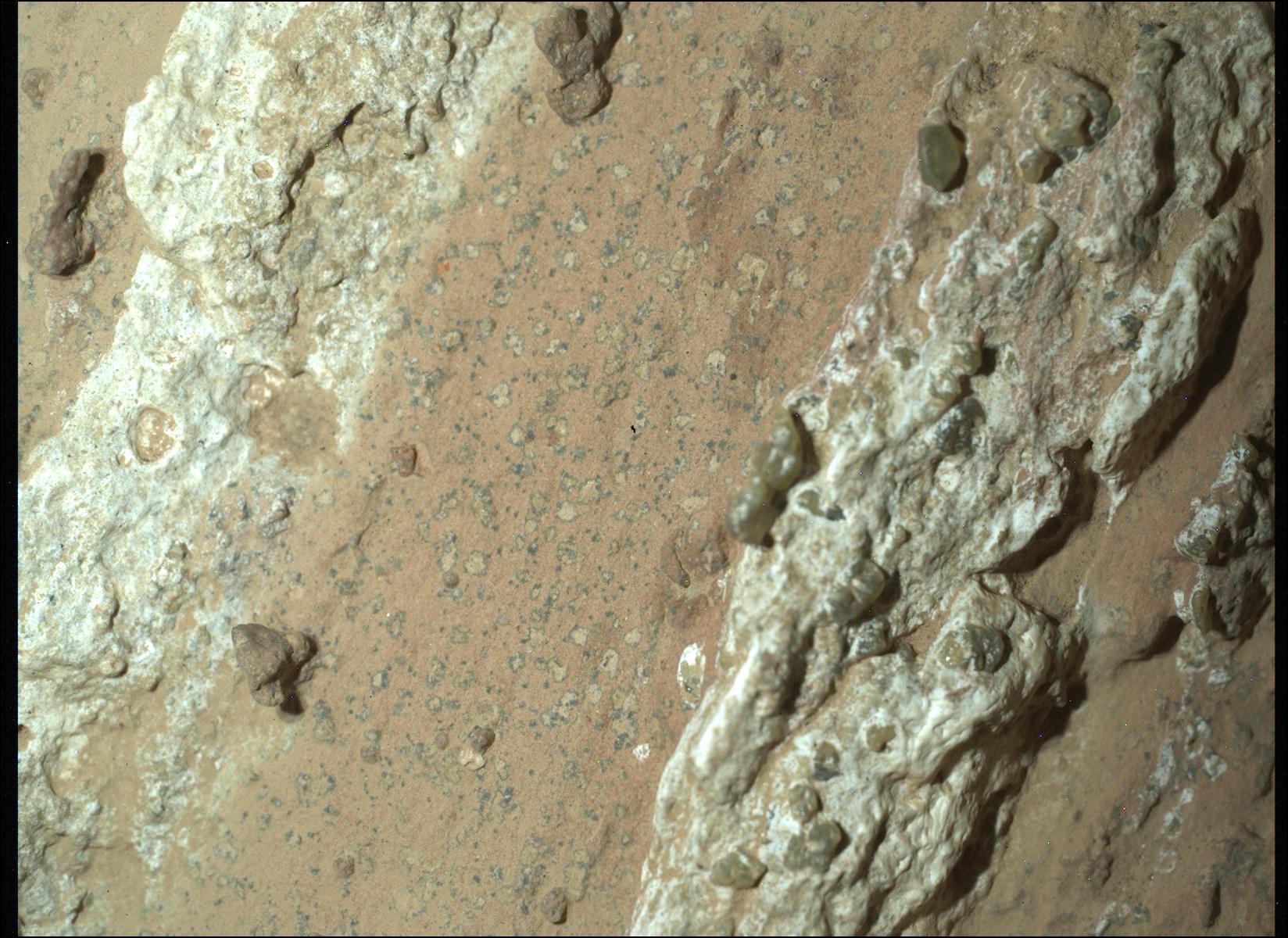
NASA's Perseverance rover has uncovered a significant finding within an ancient Martian river channel: a mudstone sample exhibiting a complex interplay of organic carbon and mineral patterns. The rock, dubbed Cheyava Falls and part of the Bright Angel formation, was drilled by the rover in an area near the ancient river valley Neretva Vallis, which once fed into Jezero Crater. Scientists have carefully designated this discovery as a "potential biosignature," emphasizing that it does not definitively confirm the presence of past life.
The research, published in Nature, details how Perseverance's PIXL and SHERLOC instruments analyzed the mudstone. These instruments detected iron-rich mineral features, including vivianite (iron phosphate) and greigite (iron sulfide), in close proximity to organic carbon. These specific mineral textures, informally referred to as "leopard spots" and "poppy seeds," are noteworthy because on Earth, similar associations can arise when microbes interact with organic matter and elements like iron and sulfur in low-oxygen environments.
The significance of the Cheyava Falls sample lies not in any single component, but in the co-occurrence of these elements within a sedimentary rock formed in a historically wet environment. The study highlights that while organic carbon can form through non-biological processes and iron/sulfur minerals can have abiotic origins, their combined presence in this context is particularly compelling. The authors acknowledge that non-living chemistry remains a plausible explanation for the observed patterns.
Scientists are exploring various abiotic chemical reactions that could replicate these findings, such as those involving sustained high temperatures, acidic conditions, or catalytic processes. However, the Bright Angel rocks do not display strong evidence for high-temperature or acidic alterations, which makes some non-biological explanations less likely, though not impossible. The finding represents a critical step in astrobiology, presenting a tantalizing clue that warrants further rigorous scientific scrutiny to distinguish between biological and non-biological origins.
The detection of organic carbon alongside mineral patterns resembling terrestrial microbial byproducts in Cheyava Falls is a pivotal advance. This specific association of vivianite and greigite with organics within a sedimentary matrix, identified by advanced instruments like PIXL and SHERLOC, offers a concrete example of how the earliest signs of life might be preserved. This finding validates the strategy of targeting ancient, wet environments for biosignature searches. As we accelerate towards becoming a multi-planetary species, such discoveries fuel the imperative to establish Martian research outposts. Each such "potential biosignature" is a waypoint, demonstrating that the building blocks and potential environmental conditions for life are present, pushing us closer to understanding life's origins and its potential expansion beyond Earth.
Edited by the news editor with AI from the original report — please refer to the original source.