Perseverance completes first AI-planned Mars drive
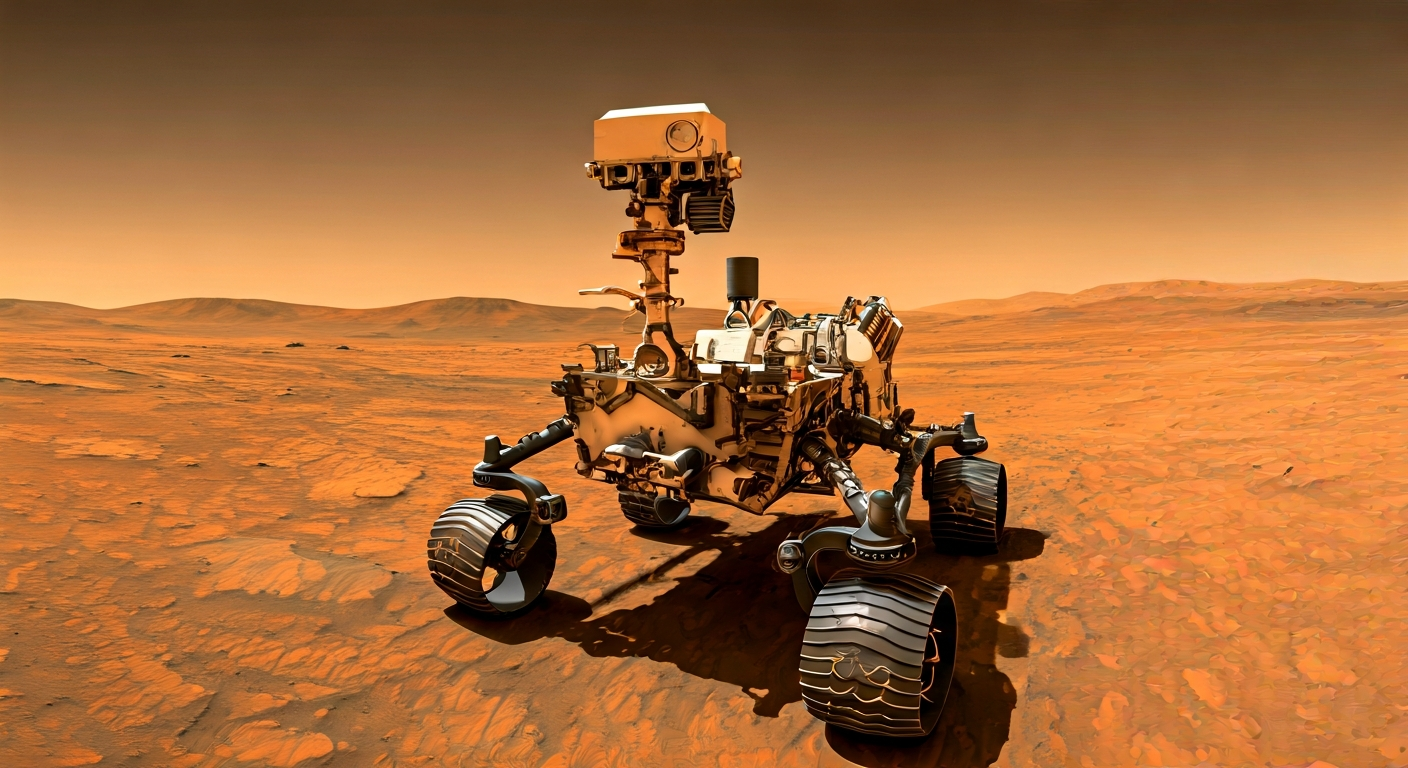
NASA's Perseverance rover successfully executed the first drive autonomously planned by an AI system on the Martian surface.
NASA's Perseverance rover has made history by completing the first drive on Mars that was fully planned and executed by an artificial intelligence system. The event marks a significant milestone in the integration of autonomous decision-making capabilities into planetary exploration missions.
The AI, part of the rover's onboard navigation system, analyzed terrain data and generated a safe and efficient path for the rover to follow. This capability allows the rover to make real-time decisions without waiting for instructions from Earth, which can take up to 20 minutes to reach due to the vast distance between the two planets.
The successful test of the AI-driven navigation system was conducted as part of Perseverance's ongoing mission to explore Jezero Crater and collect samples for potential return to Earth. The system's performance was closely monitored by mission scientists, who reported that the rover followed the planned route with high precision.
This achievement demonstrates the growing role of machine learning and autonomous systems in space exploration. It also paves the way for future missions that will require more advanced decision-making capabilities, especially as rovers and landers are sent to more complex and distant environments on Mars and beyond.
The AI-driven navigation of Perseverance represents a critical step toward autonomous planetary exploration. By enabling real-time decision-making, this technology reduces communication delays and increases mission efficiency. As humanity expands its presence beyond Earth, such systems will be essential for managing complex operations on Mars and other celestial bodies. This advancement aligns with the long-term vision of building a self-sustaining civilization in space, where intelligent machines will play a vital role in ensuring the survival and expansion of life across the cosmos.
Edited by the news editor with AI and translated into English from the original report — please refer to the original source.