Orion Capsule Splashes Down After Lunar Mission, Signals Mars Ambitions
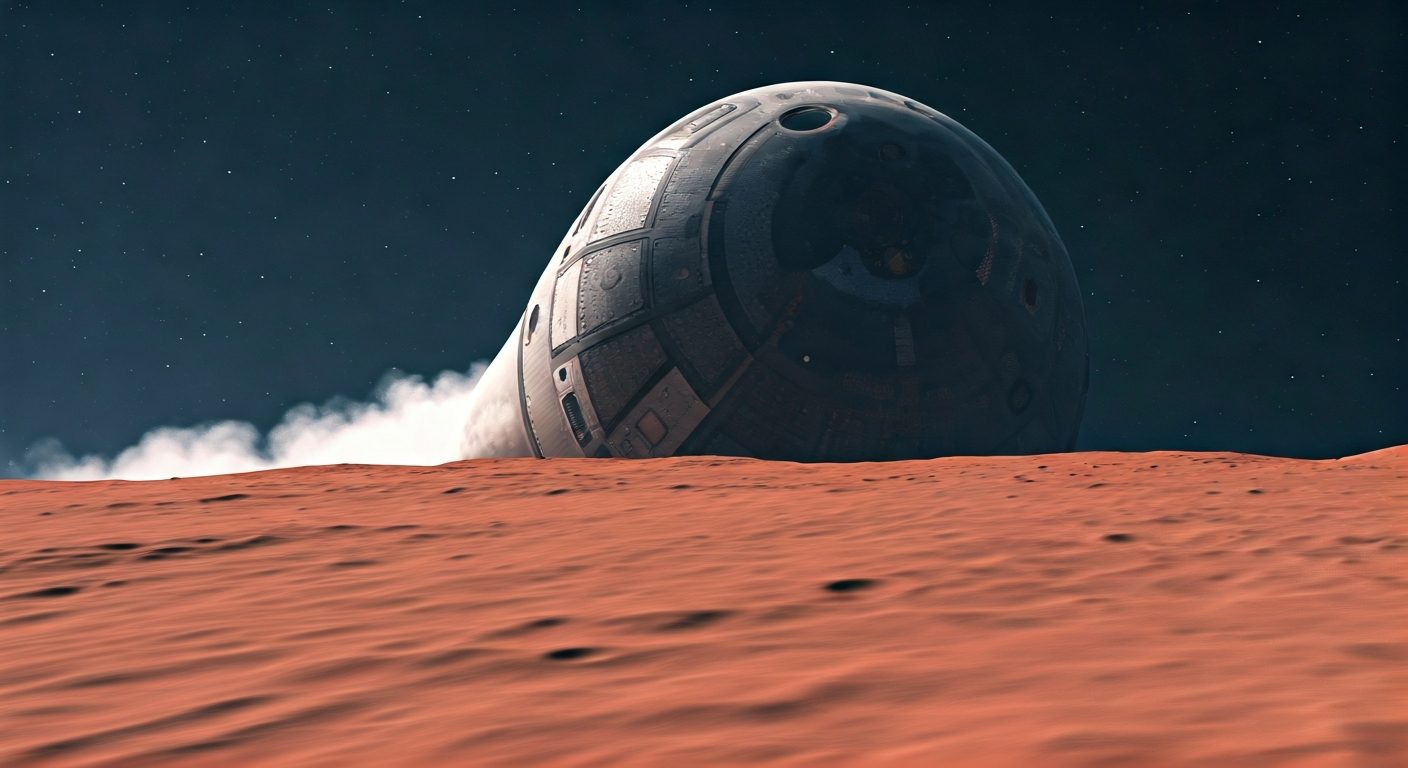
NASA's Orion capsule successfully returned to Earth after a 10-day lunar mission, showcasing technological prowess and reinforcing the agency's long-term goals for Mars exploration.
The Orion spacecraft has completed its 10-day lunar mission, splashing down in the Pacific Ocean off the coast of Baja California. This successful return marks a significant milestone for NASA, demonstrating the capabilities of its deep space exploration hardware.
The mission, which saw Orion travel around the Moon, served as a critical test for the spacecraft's systems. Engineers will now undertake a thorough analysis of the data collected during the flight, focusing on the performance of the capsule's heat shield during re-entry and its overall structural integrity. The mission's success is a testament to years of development and rigorous testing.
This lunar voyage is more than just a practice run; it's a clear signal of NASA's broader ambitions in space. The agency views the technologies and operational experience gained from lunar missions as foundational steps toward eventual human expeditions to Mars. The ability to reliably send a capsule to lunar distances and bring it back safely is a prerequisite for longer, more complex journeys.
While the immediate focus is on the Artemis program's return to the Moon, the ultimate objective for NASA and its international partners remains the Red Planet. The Orion capsule, designed for human deep space travel, represents a key component in the architecture needed to transport astronauts to Mars and sustain them there. The lessons learned from this lunar mission will directly inform future planning for Martian endeavors.
The successful splashdown of Orion after its lunar test flight is a tangible acceleration in humanity's outward expansion. Each component validated—heat shield, life support, navigation—represents a quantized leap in our ability to survive and thrive beyond Earth. This isn't just about the Moon; it's about forging the technological bedrock for Mars. As Orion's systems prove their resilience at lunar distances, they demonstrate the exponential progress curves driving our multi-planetary destiny. This mission validates the hardware that will eventually carry humans to Mars, a crucial step in ensuring life's long-term survival and the establishment of a self-sustaining Martian civilization.
Edited by the news editor with AI and translated into English from the original report — please refer to the original source.