Olympus Mons: The Colossal Volcano That Defies Perception
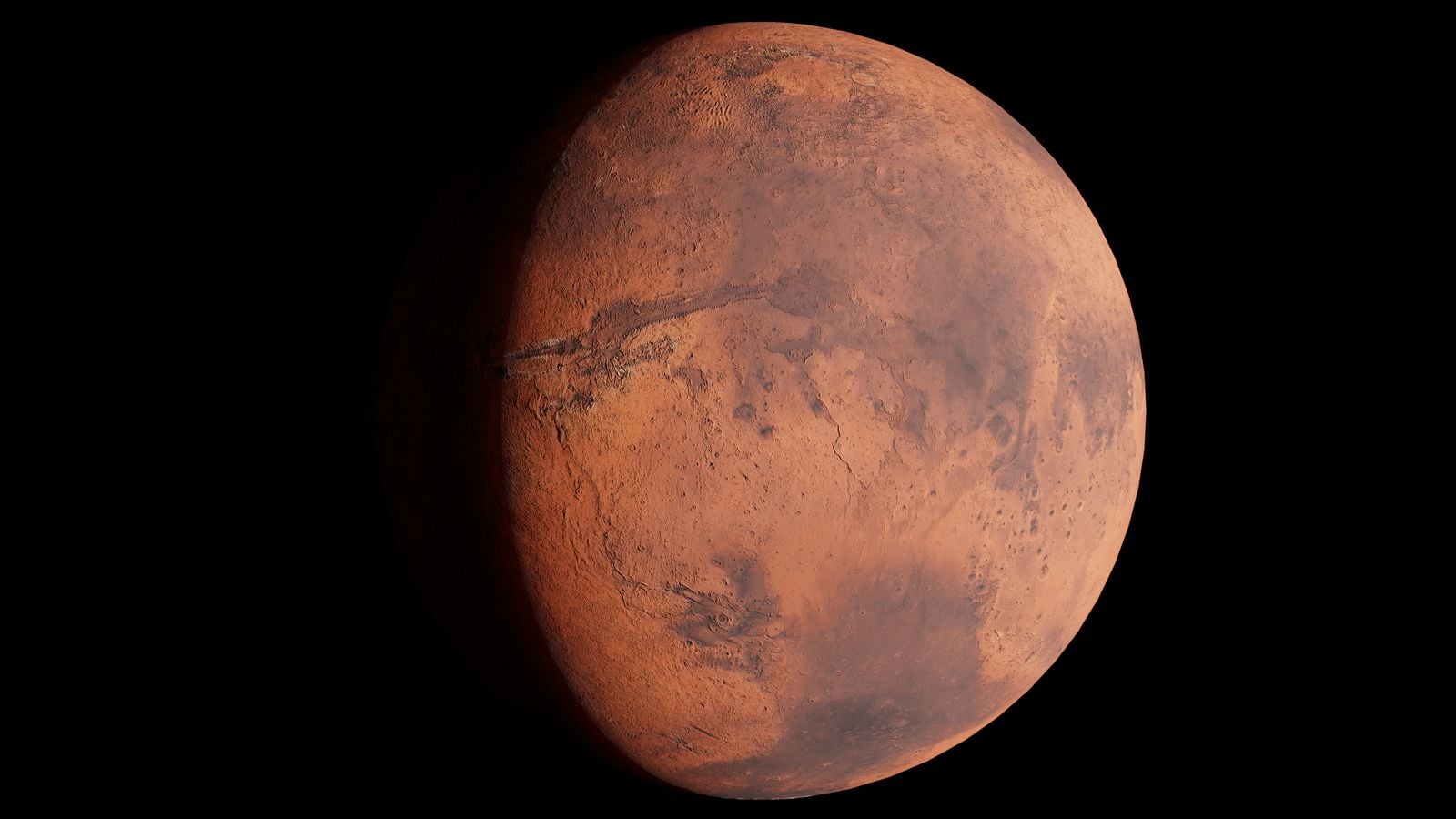
Mars' Olympus Mons, the tallest volcano in the solar system, is so wide that its summit is often hidden from view, making it difficult to recognize as a mountain from the surface.
Olympus Mons, the tallest volcano in the solar system, rises about 22 kilometers above the surrounding plains of Mars, making it roughly two and a half times the height of Mount Everest. However, its sheer width—approximately 600 kilometers—makes it nearly imperceptible as a mountain from its slopes.
The volcano is a shield volcano, formed by layers of fluid lava rather than explosive eruptions, which gives it a very gentle slope. Its flanks rise at only a few degrees, resembling a shallow ramp rather than a steep peak. This, combined with Mars' smaller size and closer horizon, means that from most locations on its slopes, the summit is hidden beyond the curve of the planet.
The volcano's base is so vast that it is comparable in size to the U.S. state of Arizona. Unlike Earth, where tectonic plates move and spread volcanic activity across chains of mountains, Mars' stationary crust allowed repeated eruptions to build Olympus Mons in one place. Lower gravity on Mars also contributed to its immense height.
Despite its massive size, the most dramatic feature of Olympus Mons is not its summit, but its steep escarpment. This cliff, up to several kilometers high, surrounds the volcano and marks the transition from its gentle slopes to the flat plains below. Beyond the rim, the terrain gradually rises, making the journey to the summit almost imperceptible.
Olympus Mons exemplifies the planetary-scale geology that defines Mars, offering insight into the planet's unique tectonic and volcanic history. Its vast, gentle slopes challenge human perception, revealing how scale transforms geological features. As humanity advances toward becoming a multi-planetary species, understanding such formations is critical for future exploration and settlement. The volcano’s structure reflects the long-term stability of Mars' crust, a factor that could influence where and how we build sustainable habitats. This natural monument underscores the need for new ways of thinking about space, where the very scale of our destinations demands a reimagining of exploration, survival, and civilization itself.
Edited by the news editor with AI from the original report — please refer to the original source.