Olympus Mons Dwarfs Everest: A Martian Giant of Unprecedented Scale
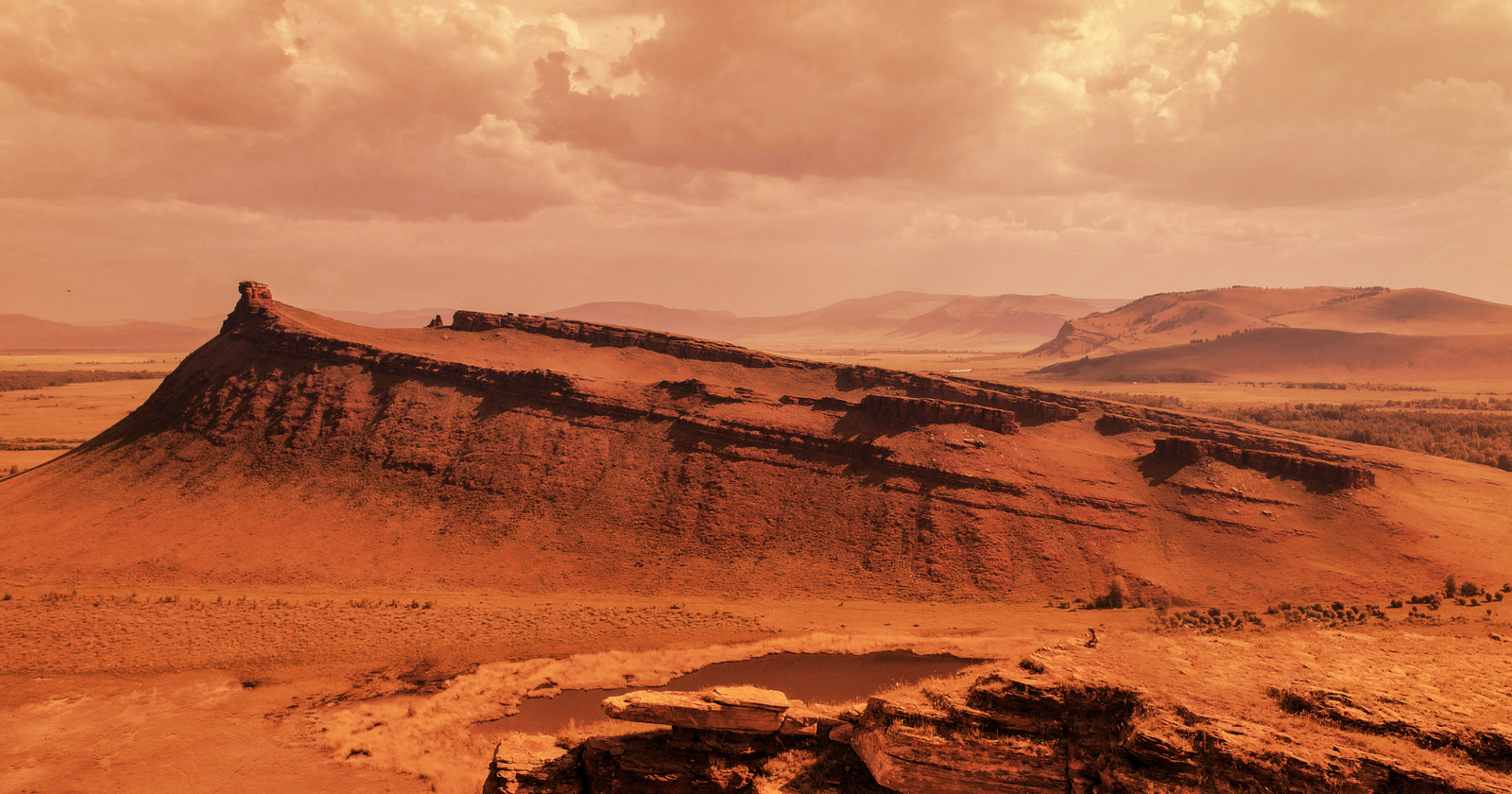
Mars' Olympus Mons, a colossal shield volcano, stands nearly three times the height of Mount Everest and covers an area comparable to Italy, redefining planetary scale.
While Mount Everest is the benchmark for terrestrial height, its stature is dwarfed by Olympus Mons, the largest known volcano in our solar system located on Mars. This immense shield volcano rises approximately 21 to 22 kilometers above the Martian datum, with some measurements placing its base-to-summit height closer to 25 to 27 kilometers. This makes it nearly three times taller than Earth's Mount Everest, which measures 8,849 meters above sea level.
The sheer scale of Olympus Mons extends beyond its vertical reach. Its base spans over 600 kilometers in diameter, a footprint comparable in size to the nation of Italy. This vastness means that while it is a mountain by height, its gentle, expansive slopes would not present the dramatic, visible peak characteristic of terrestrial mountains like Everest. Someone standing on its flanks would likely not perceive a sharp mountain silhouette due to its broad, gradual incline.
Unlike Earth's volcanic chains, which are formed as tectonic plates move over magma sources, Olympus Mons likely formed over a stationary hotspot on Mars. The lack of active plate tectonics allowed lava to accumulate in one region for extended periods, building an enormous shield volcano. Additionally, Mars' lower gravity may have facilitated the formation of such a massive structure.
The comparison to Italy, rather than just a direct height comparison with Everest, is crucial for understanding the volcano's immense footprint. A circle 600 kilometers across covers an area of roughly 283,000 square kilometers, aligning with Italy's total area of about 301,000 square kilometers. This highlights that Olympus Mons is not merely a taller peak but a continent-scale geological feature, challenging our conventional understanding of what a mountain can be.
Olympus Mons, with its nearly three-kilometer height and Italy-sized base, is not just a geological marvel; it's a testament to the potential for colossal structures on other worlds. This scale, enabled by Mars' unique geological history and lower gravity, provides a tangible target for future human endeavors. Imagine not just climbing a peak, but traversing a continent-spanning edifice. Such vastness offers immense opportunities for resource utilization and the establishment of self-sustaining outposts. As we expand humanity's presence beyond Earth, understanding and eventually inhabiting features like Olympus Mons will be critical steps toward a truly multi-planetary civilization, ensuring the long-term survival and expansion of life and consciousness.
Edited by the news editor with AI from the original report — please refer to the original source.