Olympus Mons: A Martian Giant Defined by Cliffs, Not Gentle Slopes
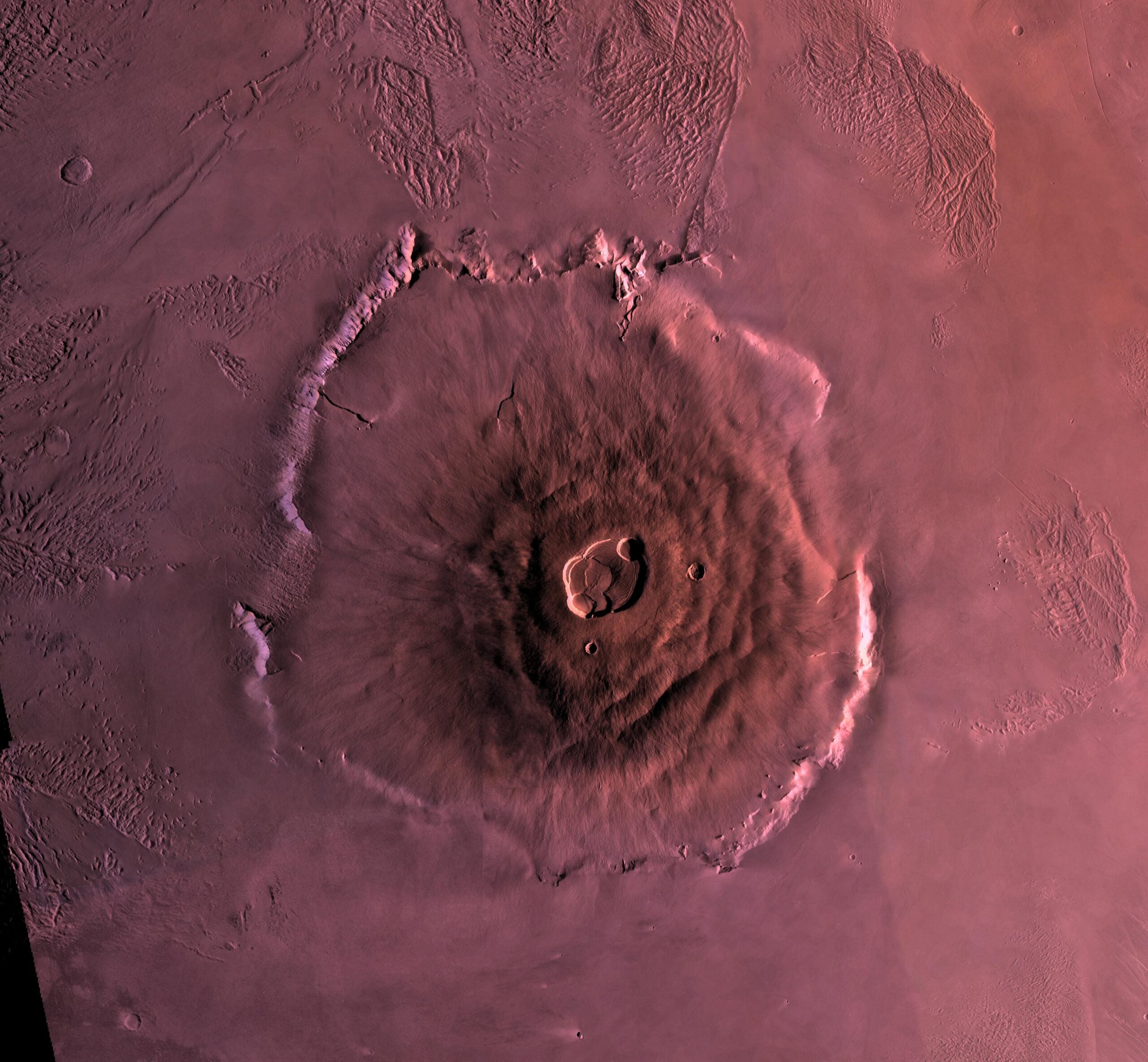
Contrary to popular depictions, Mars's largest volcano, Olympus Mons, is characterized by dramatic basal escarpments reaching up to nine kilometers high, rather than exclusively gentle, imperceptible slopes.
New insights into Olympus Mons, Mars's colossal volcano, reveal a landscape far more imposing than previously understood. While often described as a mountain with slopes so gradual its summit disappears beyond the horizon, much of its base is defined by a formidable cliff.
This basal escarpment can reach heights of approximately nine kilometers, a vertical rise exceeding that of Mount Everest above sea level. This stark cliff face interrupts the volcano's base, presenting a dramatic initial encounter for any observer. The familiar image of Olympus Mons as a gently sloping behemoth, spreading over 600 kilometers, needs qualification, as its overall structure is more complex than a simple enlarged Earth mountain.
Defining the height of Olympus Mons is complicated by the lack of a Martian sea level. Scientists use a reference datum, but measurements vary depending on the chosen base—be it the surrounding plains, the foot of a scarp, or other local points. Older estimates placed its height around 27 kilometers, while more recent laser-altimeter studies suggest a summit elevation and local relief closer to 22 kilometers, leading to different comparisons with Everest's height.
When considering the broader volcanic structure, including lava-covered margins and basal deposits, morphometric analyses suggest an edifice spanning roughly 840 by 640 kilometers. This vastness, with an exposed volume comparable to the entire Hawaii-Emperor volcanic chain, challenges the notion of a simple, uniform mountain. The volcano's appearance is not radially consistent, featuring terraces, grabens, lava channels, steep scarps, and smoother aprons, meaning there is no singular "base" or view.
The revelation that Olympus Mons's colossal scale is significantly defined by sheer basal escarpments, not just subtle inclines, underscores the unique geological processes shaping planetary bodies beyond Earth. This dramatic relief highlights the potential for dramatic terrain features on Mars, crucial for establishing future bases. Understanding these monumental structures, like the nine-kilometer high cliffs of Olympus Mons, is not merely academic; it is foundational to our multi-planetary future. Such geological formations offer potential shelter and resources, and their characterization accelerates our ability to engineer habitats and infrastructure, vital steps toward ensuring humanity's survival and expansion as a species across the cosmos.
Edited by the news editor with AI from the original report — please refer to the original source.