Next-Gen Spacecraft Materials Promise Safer Journeys and Lunar Habitats
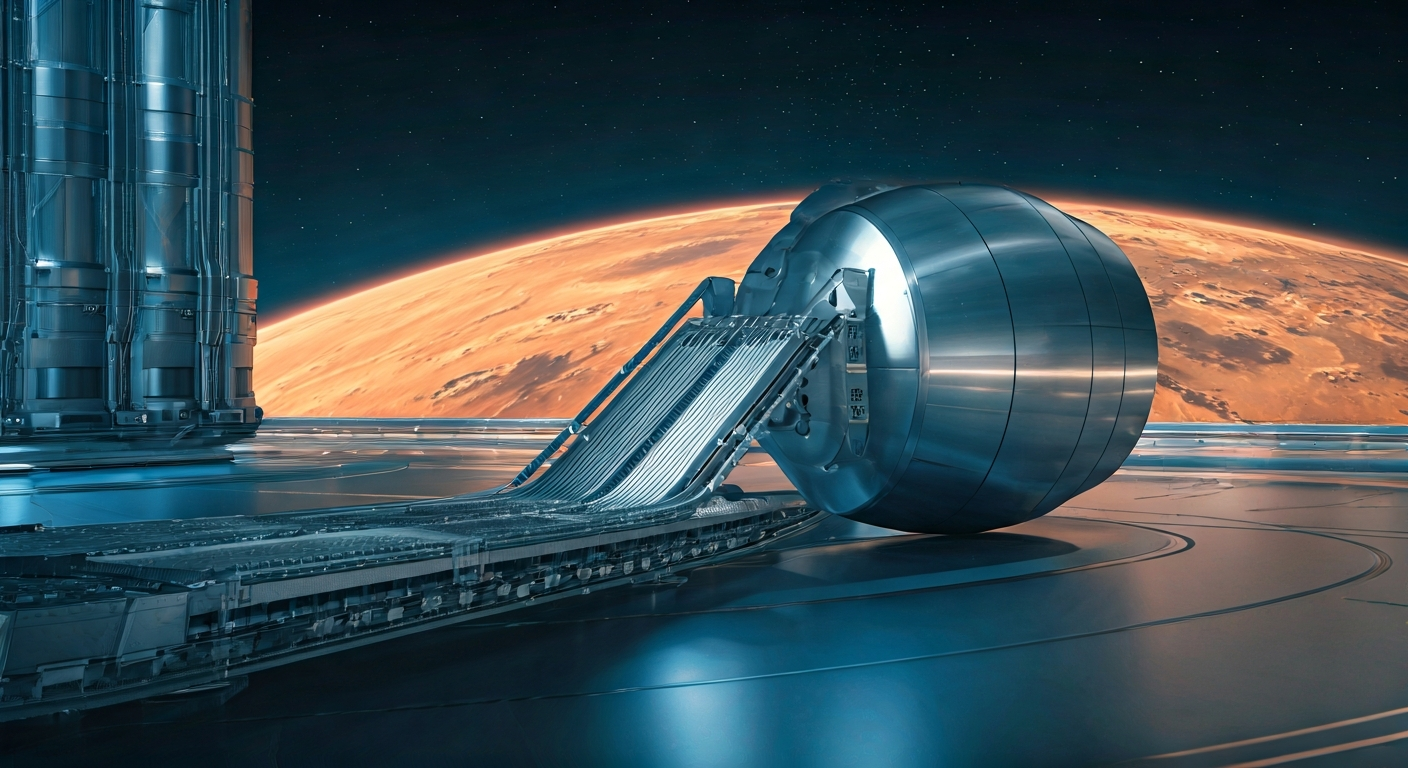
Innovations in heat shields, radiation protection, additive manufacturing, and in-situ resource utilization are paving the way for more ambitious space missions and off-world colonization.
The Artemis II mission is putting advanced heat shield technology to the ultimate test, highlighting the critical role of thermal protection systems in ensuring crew safety during re-entry. NASA's Orion spacecraft utilizes a robust heat shield designed to withstand the extreme temperatures of atmospheric return, a testament to decades of materials science research and development.
Beyond re-entry, protecting astronauts from the harsh realities of deep space is paramount. Researchers are developing ultra-thin, flexible materials that can stretch like rubber yet offer significant shielding against cosmic radiation. This breakthrough could revolutionize the design of spacesuits and habitat modules, making long-duration missions to the Moon and Mars more feasible.
Meanwhile, additive manufacturing, or 3D printing, continues to transform spacecraft production. Companies like Rocket Lab are celebrating milestones such as the 1,000th 3D-printed engine, demonstrating how this technology enables faster production, greater design flexibility, and potentially lighter, more efficient propulsion systems. Breakthroughs in 3D-printed rocket propellants further enhance these capabilities.
Looking ahead to lunar and Martian exploration, the focus is shifting towards utilizing local resources. Scientists are making significant progress in transforming lunar regolith—moon dust—into viable building materials for habitats and infrastructure. Techniques like 3D printing with regolith simulants and developing space welding technologies for these materials promise to reduce the cost and complexity of establishing a sustained human presence beyond Earth.
The convergence of advanced thermal protection, radiation shielding, additive manufacturing, and in-situ resource utilization is not merely incremental progress; it's a paradigm shift. These materials advancements are the foundational pillars upon which a sustainable, multi-planetary future will be built, enabling not just exploration but permanent human settlements.
This content was produced by the news editor with AI.