Next-Gen Spacecraft Forge Ahead with Advanced Materials
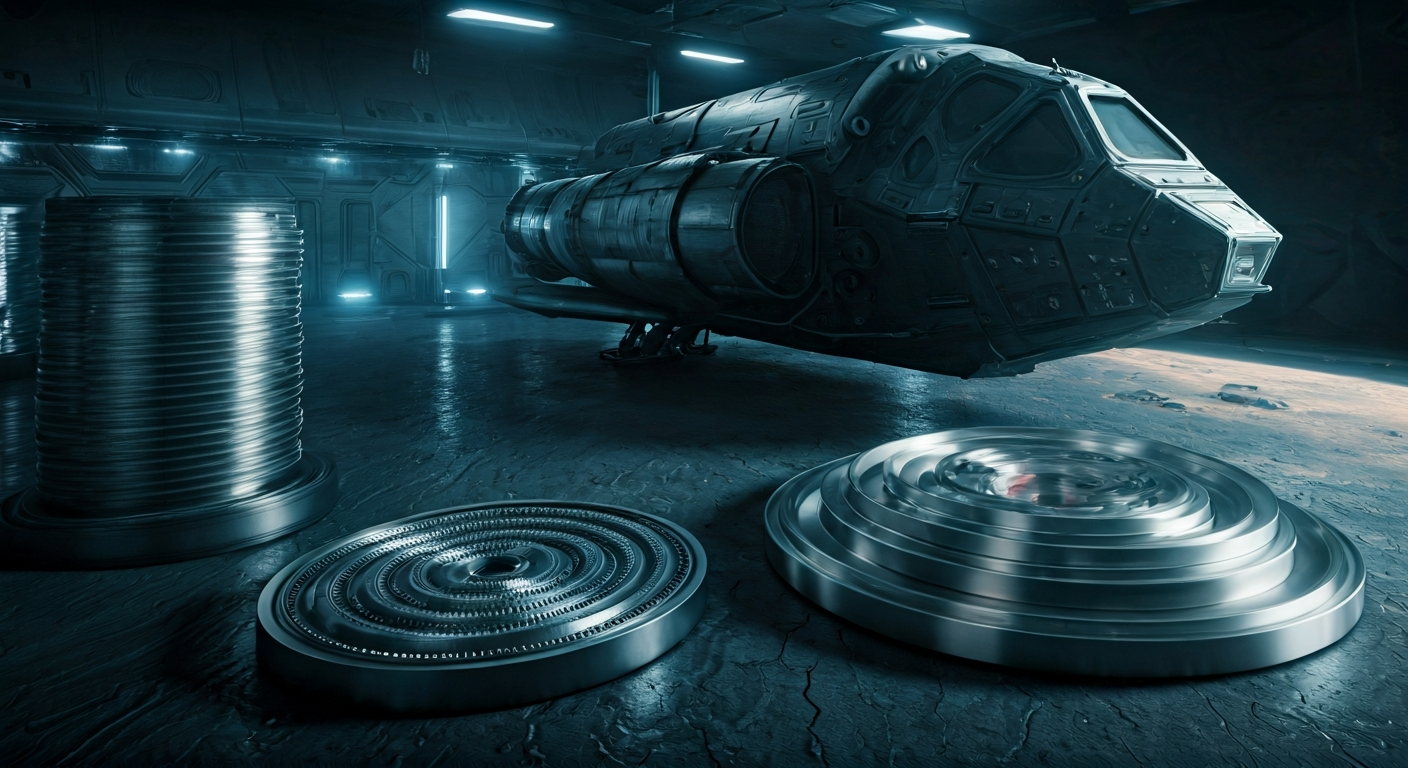
From resilient heat shields and self-healing composites to 3D-printed engines and radiation-blocking nanomaterials, materials science is rapidly evolving to meet the demands of ambitious space exploration.
The quest for more capable and durable spacecraft is driving significant advancements in materials science. For missions like NASA's Artemis program, the integrity of heat shields is paramount. The Orion spacecraft's heat shield, designed to withstand the extreme temperatures of Earth re-entry, is a critical component ensuring crew safety, with ongoing testing and confidence in its performance.
Beyond protection, resilience is being engineered directly into spacecraft structures. European researchers are developing self-healing composite materials that can autonomously repair minor damage, extending the lifespan and reliability of components in the harsh space environment. Simultaneously, novel nanomaterials, described as thinner than a human hair and as stretchy as rubber, are emerging as potential shields against deep-space radiation, a major hurdle for long-duration human missions.
The manufacturing landscape is also being revolutionized. Additive manufacturing, or 3D printing, is enabling the rapid production of complex rocket engine components and even rocket propellants. Companies like Rocket Lab have produced over 1,000 3D-printed Rutherford engines, showcasing the efficiency and competitive advantage of this technology. Breakthroughs in 3D-printed rocket fuel promise lighter, faster-to-produce propulsion systems.
Furthermore, the development of advanced alloys continues to be crucial. Scientists are forging new superalloys capable of withstanding extreme temperatures, essential for propulsion systems and other high-stress applications. NASA has licensed a 3D-printable superalloy, aiming to boost domestic manufacturing capabilities for aerospace components.
The synergy between additive manufacturing, advanced alloys, and novel composites is fundamentally reshaping spaceflight. These material innovations are not just improving current capabilities but are foundational for enabling sustained human presence beyond Earth. Lighter, stronger, and more resilient materials will reduce launch costs, enhance mission safety, and pave the way for the infrastructure needed for a multi-planetary future.
This content was produced by the news editor with AI.