New Mars Rover Mission Aims to Uncover Past Life
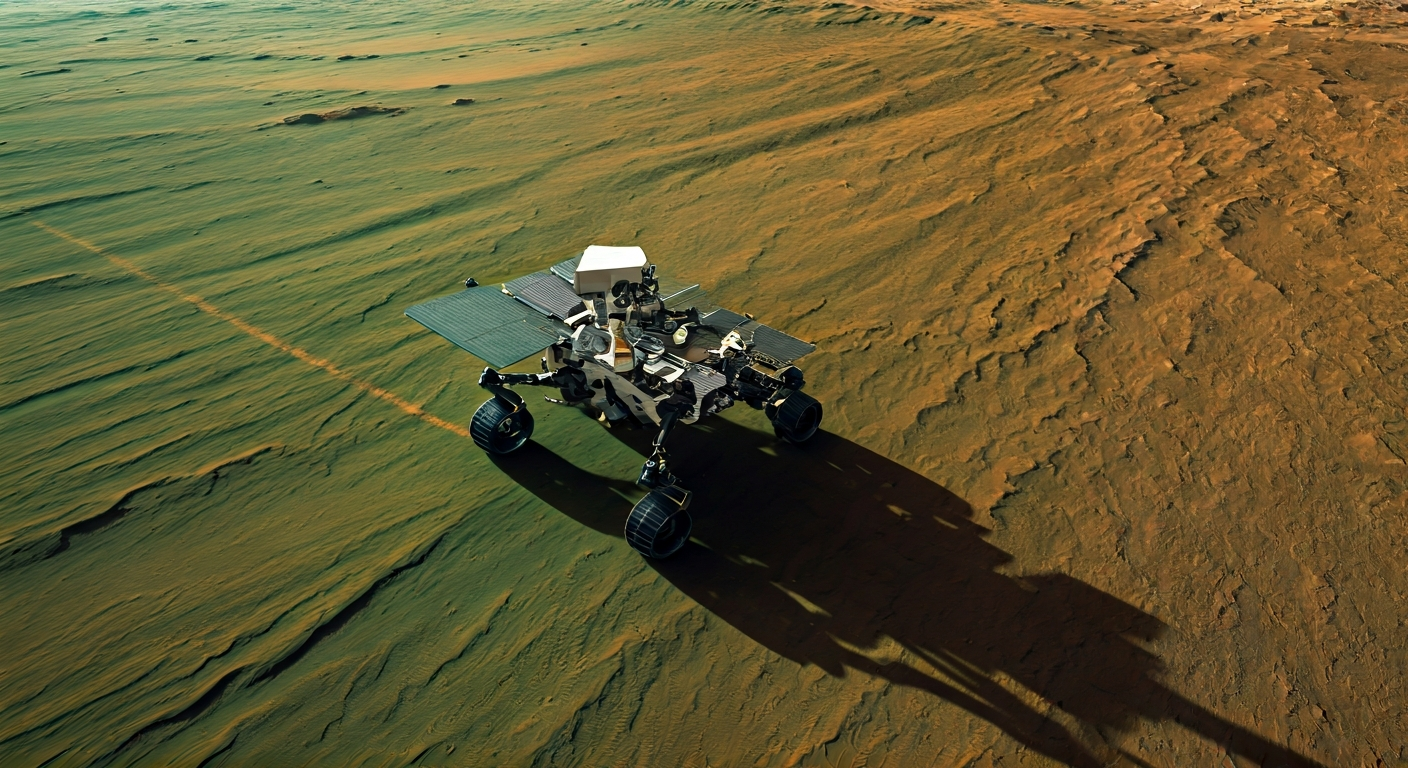
A new rover mission is slated to launch to Mars with the primary objective of searching for evidence of past life.
A forthcoming mission will dispatch a new rover to the Martian surface, driven by the ambition to investigate the planet's potential for past biological activity. The scientific community is preparing for this endeavor, which represents a significant step in humanity's ongoing quest to understand whether life ever existed beyond Earth.
The rover's sophisticated instrumentation will be specifically designed to detect biosignatures, the telltale signs left behind by ancient organisms. This targeted approach is crucial for advancing our understanding of Mars's geological and climatic history, and how it may have once harbored conditions suitable for life.
Scientists involved in the mission emphasize that the search for evidence of life, even microbial, would be a monumental discovery. Such a finding would not only revolutionize astrobiology but also profoundly impact our perception of life's prevalence in the universe.
The mission's success hinges on the rover's ability to analyze Martian soil and rock samples in situ, looking for organic molecules or other indicators that point to a biological origin. The data gathered will be meticulously analyzed to determine the most promising areas for future exploration and sample return.
This new rover's quest for ancient Martian life is a crucial step in our cosmic expansion. Detecting biosignatures, even fossilized microbial remnants, would validate the hypothesis that life is not unique to Earth and can arise under suitable conditions. This discovery would accelerate technological development for more ambitious missions, paving the way for human presence and self-sustaining settlements. Each piece of evidence for extraterrestrial life reinforces the imperative of becoming a multi-planetary species, safeguarding consciousness and life's future against terrestrial catastrophes.
Edited by the news editor with AI and translated into English from the original report — please refer to the original source.