New 'Hycean' Worlds Could Host Life Beyond Earth
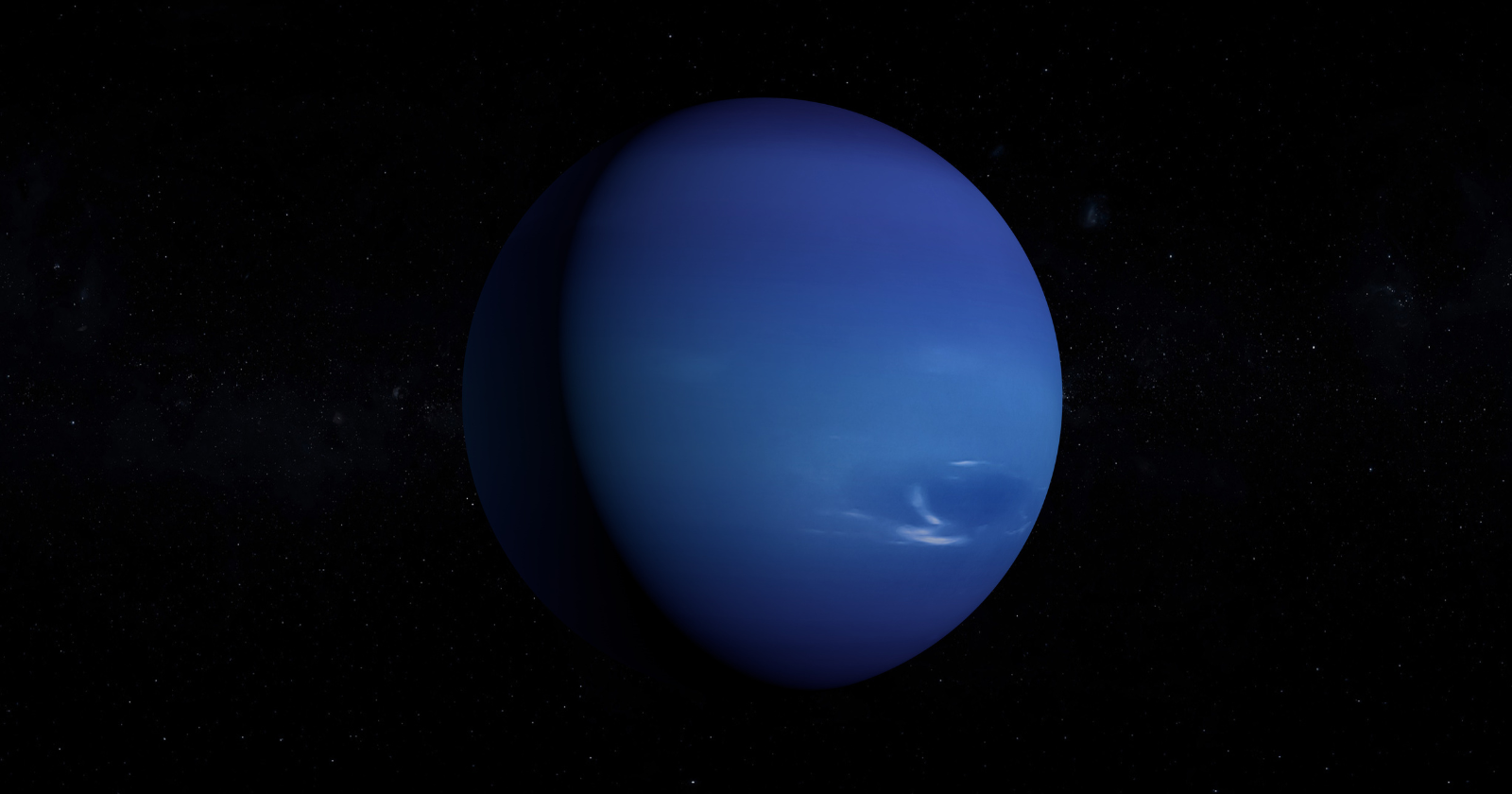
Astronomers propose a new class of 'Hycean' planets, featuring global oceans under hydrogen-rich atmospheres, expanding the search for extraterrestrial life.
For decades, the search for life beyond Earth has largely mirrored our own planet, focusing on rocky worlds with Earth-like temperatures and stable stars. This paradigm, however, may be significantly limiting.
A recent proposal from the University of Cambridge suggests a broader definition of habitability, introducing "Hycean" planets. These worlds are characterized by a global ocean of liquid water entirely covered by a thick hydrogen atmosphere. This unique combination, researchers Nikku Madhusudhan, Anjali Piette, and Savvas Constantinou argue, could exist across a much wider range of stellar conditions than previously considered.
Hycean planets are estimated to have masses between one and ten times that of Earth, with radii ranging from 1.1 to 2.6 times Earth's. The critical factor is the thickness of their hydrogen-dominated atmosphere, which provides sufficient greenhouse warming to maintain liquid water while remaining thin enough to avoid the extreme pressures found on mini-Neptunes. This allows for diverse subtypes, including tidally locked "dark Hycean" worlds and "cold Hycean" planets warmed by their hydrogen atmospheres even with low stellar radiation.
This new framework dramatically expands the potential locations for life. The "Hycean habitable zone" extends much further from stars, particularly around dim red dwarf stars which constitute about 75% of the Milky Way's stellar population. Many such stars, previously dismissed as inhospitable to Earth-like planets, could now host these water-rich, hydrogen-shrouded worlds.
Furthermore, Hycean planets offer a significant advantage for detection. Their substantial hydrogen atmospheres create deeper absorption features when they transit their stars, making their atmospheric chemistry easier to analyze with current telescope technology compared to smaller, rocky exoplanets. This increased detectability could accelerate the search for biosignatures beyond our solar system.
The identification of Hycean worlds represents a crucial expansion of our cosmic search parameters. By recognizing that life could thrive under hydrogen-rich atmospheres and global oceans, even around dimmer stars, we are exponentially increasing the potential real estate for life's emergence. This is a vital step in the multi-planetary imperative. These worlds, being more detectable, accelerate our ability to find evidence of life, a critical precursor to establishing off-world settlements. As our technological capacity for exoplanet atmospheric analysis grows, the data from these Hycean planets will inform not just the search for life, but also the engineering principles for future Martian and extraterrestrial habitats, paving the way for humanity's inevitable expansion across the cosmos.
Edited by the news editor with AI from the original report — please refer to the original source.