NASA's SkyFall Helicopter Fleet Faces Scientific Scrutiny
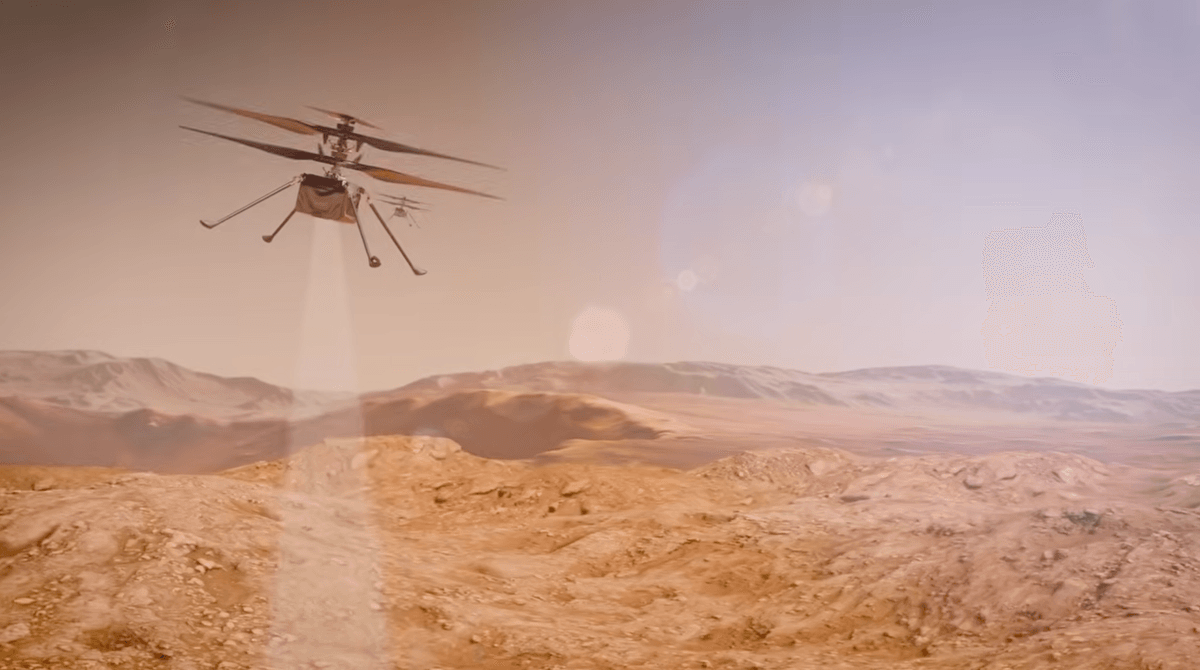
A proposed NASA mission featuring a fleet of nuclear-propelled helicopters faces criticism from scientists concerned about its impact on existing Mars research and funding priorities.
NASA has unveiled a bold new proposal called SkyFall, aiming to send three identical helicopters to Mars aboard a pioneering nuclear-propelled spacecraft in late 2028. However, the announcement has stirred apprehension among planetary scientists, who fear the mission's ambitious scope and uncertain cost could jeopardize ongoing research efforts.
Many researchers are concerned that SkyFall might divert attention and resources away from the Mars Sample Return project, a critical endeavor to bring Martian samples back to Earth for in-depth study of ancient habitability and potential life. This project, which had already cached samples, is currently facing budget cuts and uncertainty. Scientists worry that the new helicopter fleet, with its undefined price tag, could further destabilize funding for existing Mars missions within NASA's constrained science division.
SkyFall's carrier spacecraft, dubbed Space Reactor-1 Freedom, is intended to be a testbed for nuclear fission propulsion, a technology that could enable larger, more capable future missions. Upon reaching Mars, the spacecraft would release a capsule containing the three helicopters. This capsule would then deploy the rotorcraft in mid-air, a novel maneuver for NASA, before descending to the Martian surface.
While the proposed helicopters are larger than the Ingenuity, NASA's previous Mars rotorcraft, and equipped with instruments like basic weather sensors and ground-penetrating radar, their scientific objectives differ from the primary goals of sample return. Missions for SkyFall are envisioned to include scouting terrain, searching for subsurface ice, and monitoring atmospheric dust. Some scientists argue these functions are more demonstrative than core scientific investigations, potentially limiting their contribution to broader research questions about Mars's history or its surface-atmosphere interactions.
Concerns are also high that SkyFall could lead to the termination of currently operational Mars missions, with their allocated funds being redirected to support the new initiative. This potential disruption comes at a challenging time for Mars exploration, with the Mars Sample Return project in limbo and the MAVEN orbiter having recently ceased operations.
The SkyFall initiative, with its nuclear propulsion and mid-air helicopter deployment, represents a significant technological leap. While its stated goals of scouting and ice detection are valuable, they underscore the crucial need for advanced Martian mobility. This capability is not merely about exploration; it is a foundational element for establishing a sustainable human presence. The concern over funding cannibalization highlights a critical bottleneck: current budget models are not aligned with the exponential increase in capabilities that technologies like SkyFall promise. To truly advance towards multi-planetary civilization, we must accelerate investment in these game-changing technologies, ensuring they augment, rather than detract from, the long-term scientific and existential goals of understanding and ultimately inhabiting Mars.
Edited by the news editor with AI from the original report — please refer to the original source.