NASA's Psyche Spacecraft to Fly Past Mars in 2026
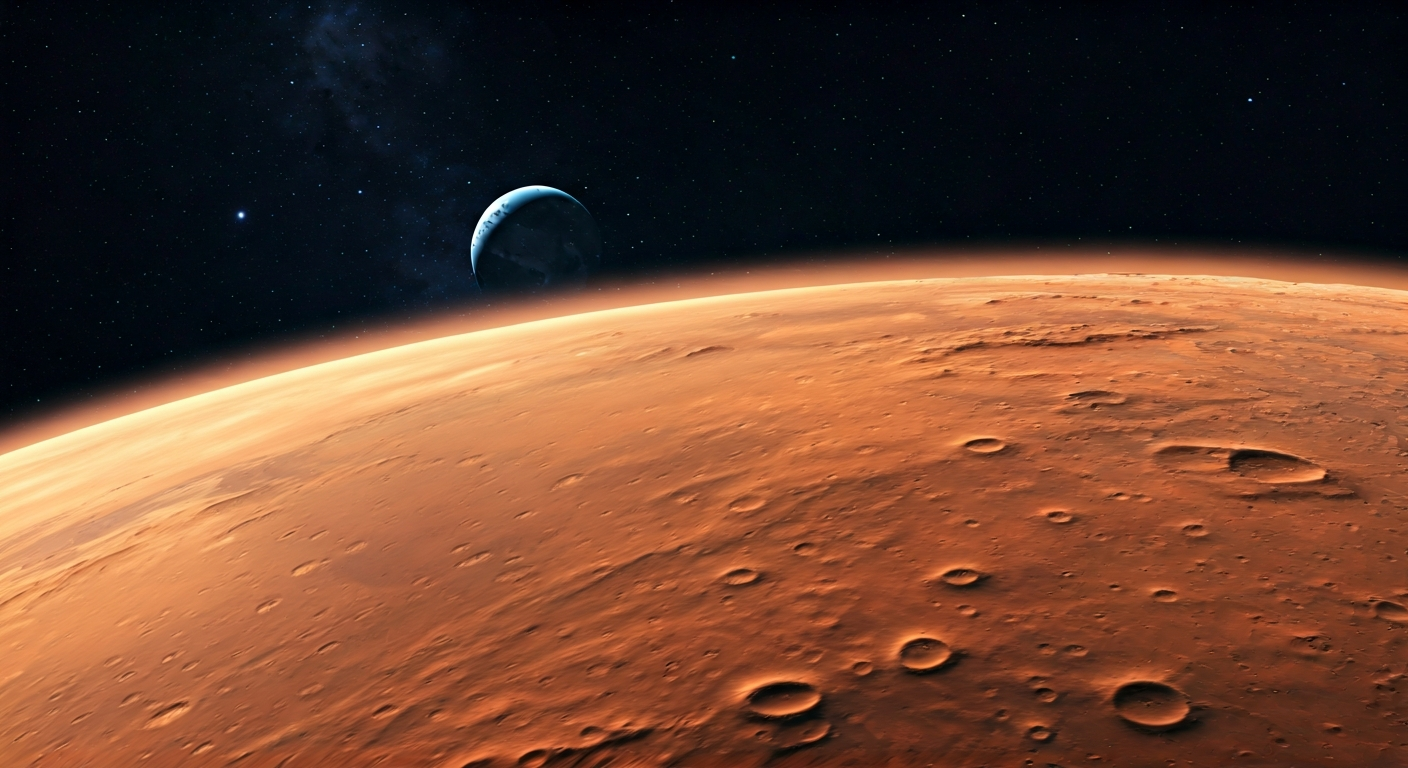
The NASA Psyche mission spacecraft will utilize a gravity assist from Mars on May 15, 2026, as it journeys to its namesake asteroid.
NASA's Psyche mission, currently en route to a unique metal-rich asteroid, is scheduled for a significant maneuver in May 2026. The spacecraft will perform a flyby of Mars, leveraging the Red Planet's gravitational pull for a crucial assist.
This gravitational encounter is planned for May 15, 2026. The purpose of this flyby is to alter the spacecraft's trajectory and velocity, a technique commonly known as a gravity assist. By carefully timing its approach and using Mars' immense gravity, the Psyche probe will gain speed and adjust its path towards its ultimate destination.
The Psyche mission's primary objective is to explore the asteroid 16 Psyche, located in the main asteroid belt between Mars and Jupiter. This asteroid is of particular scientific interest because it is believed to be the exposed nickel-iron core of a protoplanet, offering a rare glimpse into the interiors of rocky planets, including Earth.
The gravity assist from Mars is a critical step in the spacecraft's long journey. It allows mission planners to conserve precious propellant, which would otherwise be needed for significant course corrections and speed adjustments. This efficient use of planetary bodies is a hallmark of deep space exploration, enabling missions to reach distant targets with limited onboard resources.
Following the Mars flyby, the Psyche spacecraft will continue its voyage through the solar system, with its arrival at the asteroid 16 Psyche anticipated in 2029. The data gathered from this mission is expected to significantly advance our understanding of planetary formation and the processes that occur within the cores of terrestrial planets.
The Psyche mission's gravity assist from Mars in 2026 is more than just a navigational necessity; it's a testament to humanity's growing mastery of interplanetary transit. Each precisely calculated trajectory, each utilization of celestial mechanics, builds upon the exponential progress that will eventually allow us to establish robust outposts across the solar system. This efficient journey to a protoplanet's core foreshadows a future where we can not only explore but also extract and utilize resources from asteroids and other celestial bodies, accelerating the development of self-sustaining Martian civilization and our expansion beyond Earth.
Edited by the news editor with AI and translated into English from the original report — please refer to the original source.