NASA’s Psyche spacecraft captures stunning Mars images during high-speed flyby
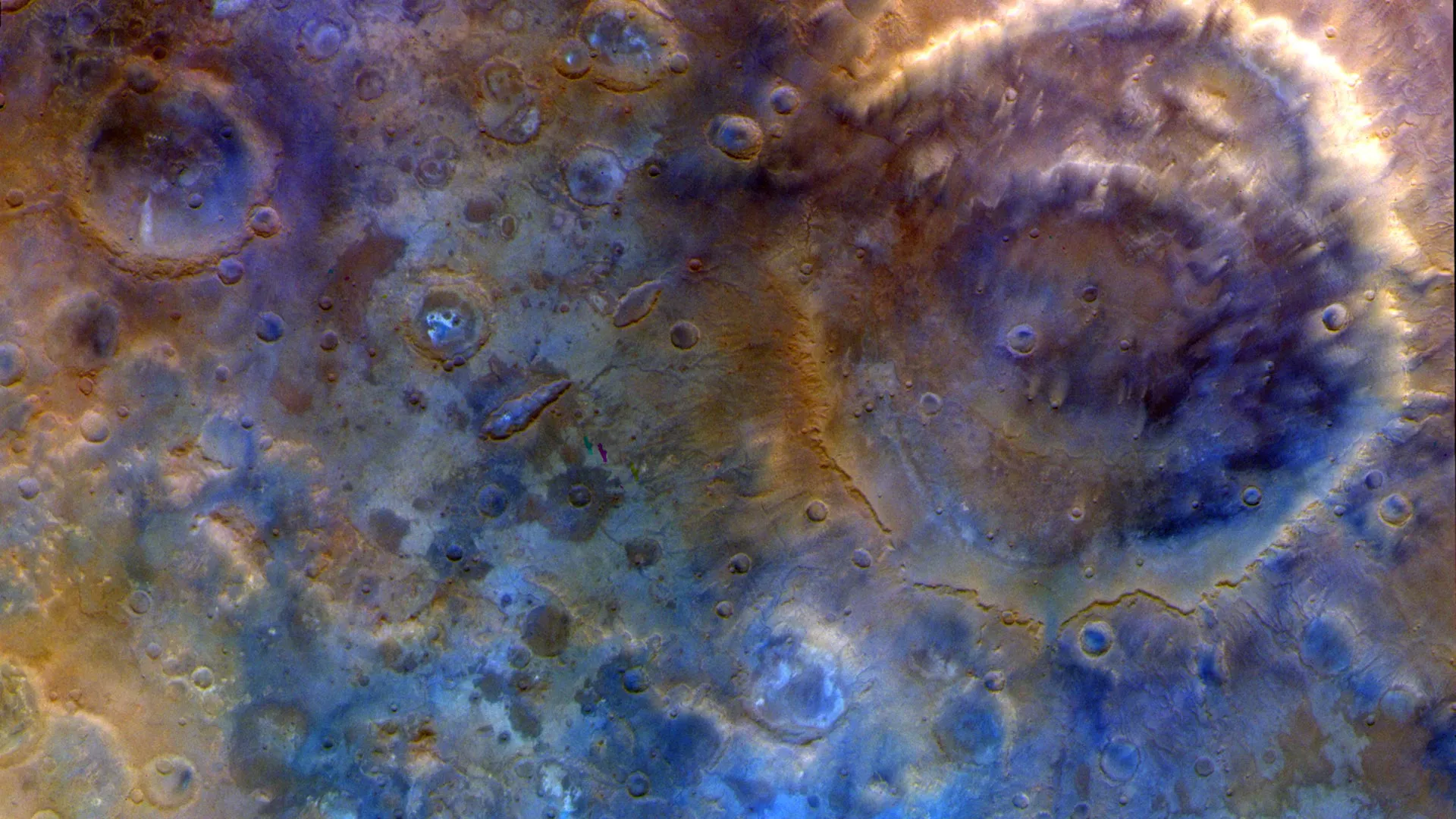
The Psyche spacecraft snapped detailed images of Mars during a close flyby, using the planet's gravity to boost its journey toward a metal-rich asteroid.
NASA’s Psyche spacecraft conducted a high-speed flyby of Mars on May 15, passing within 2,864 miles (4,609 kilometers) of the planet's surface. During the encounter, the spacecraft captured a series of images, including a striking view of the Huygens crater, which features a double-ring structure, set against the heavily cratered southern highlands of Mars. These images were taken using Psyche’s multispectral imager, offering a glimpse into the ancient, rugged terrain of the Red Planet.
The flyby was not just a chance to take pictures. NASA utilized Mars’ gravity to increase the spacecraft’s speed and adjust its trajectory, a method known as a gravity assist. This maneuver allowed the spacecraft to conserve fuel while positioning it on the correct path toward its destination: the metal-rich asteroid Psyche. The spacecraft is expected to arrive at the asteroid in August 2029.
Once in orbit, Psyche will begin mapping the asteroid’s surface and collecting scientific data. Scientists are particularly interested in the asteroid because it may be the exposed metallic core of an ancient planetesimal, a type of early solar system building block. If confirmed, this could provide a rare opportunity to study materials typically found deep within rocky planets like Earth.
The Mars flyby was part of a larger mission to explore the unique composition of the Psyche asteroid. The data collected during the encounter will contribute to a broader understanding of planetary formation and the early history of the solar system.
Edited by the news editor with AI from the original report — please refer to the original source.