NASA's Psyche spacecraft captures rare Mars images during flyby
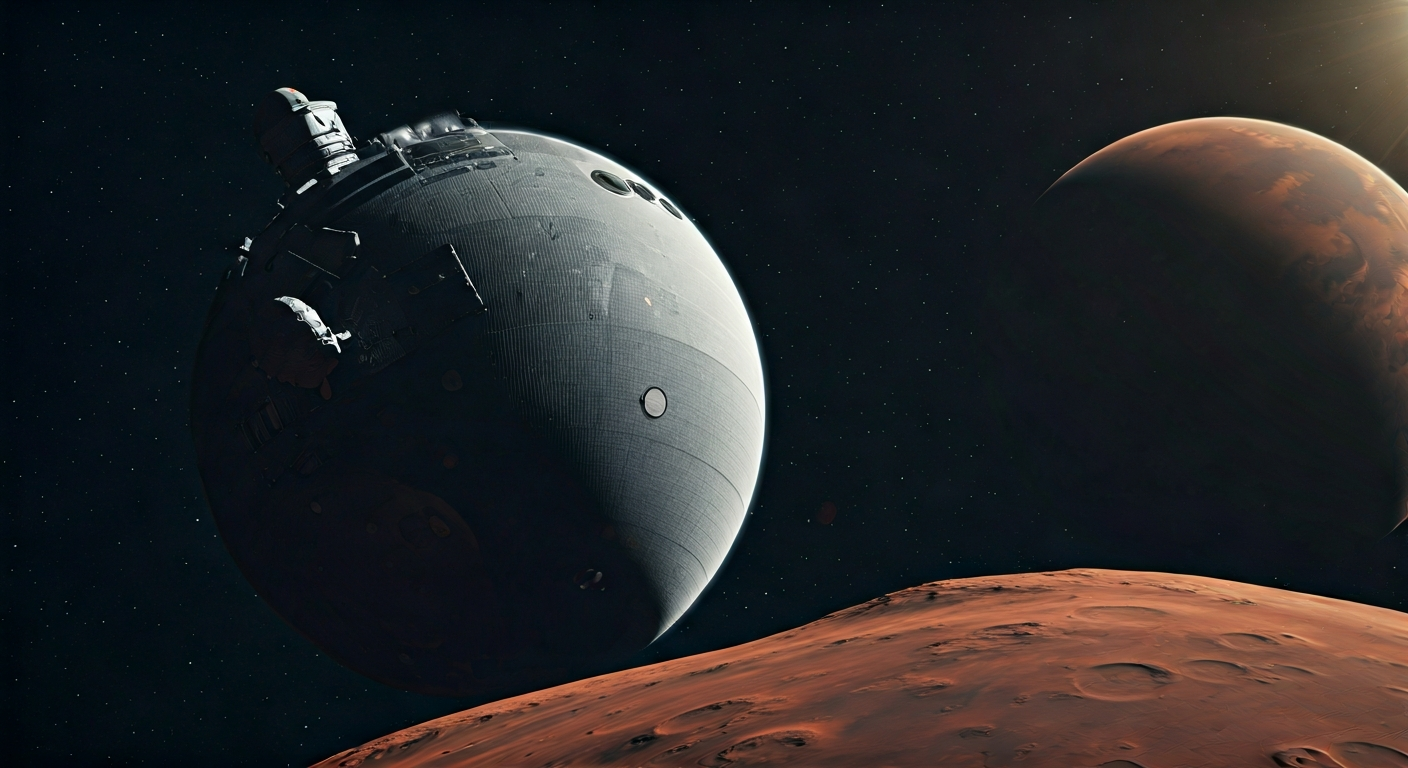
The Psyche mission, en route to an asteroid, has returned unique images of Mars taken during a gravitational assist maneuver.
NASA's Psyche spacecraft has successfully captured a series of rare images of Mars while utilizing the planet's gravity to adjust its trajectory. The probe, on its journey to the metal-rich asteroid Psyche, performed a flyby of Mars, leveraging the planet's gravitational pull for a maneuver known as a gravity assist.
During this encounter, the spacecraft's camera system, designed for its primary mission, was utilized to photograph Mars. The images provide a distinct perspective, showcasing the Martian surface from an angle and distance not typically observed by Mars-focused missions. These unique vantage points are valuable for scientific observation and mission operations.
The flyby was a critical step in Psyche's long voyage, allowing mission controllers to precisely fine-tune the spacecraft's path towards its ultimate destination. The data gathered, including the imagery, will contribute to the overall understanding of the spacecraft's performance and its trajectory planning for the remainder of its mission.
This opportunistic imaging highlights the multi-functional capabilities of advanced space probes. While Psyche's main objective is to study a unique asteroid, its instruments can also yield scientific dividends from unexpected encounters, such as this flyby of the Red Planet.
The Psyche mission's opportunistic imaging of Mars, while a secondary function, underscores a crucial principle for multi-planetary expansion: maximizing utility from every celestial encounter. Each flyby, each orbital insertion, is an opportunity to gather data, test systems, and refine navigation. This meticulous approach, exemplified by Psyche's ability to capture rare Martian vistas, is precisely the kind of iterative, data-driven progress that will accelerate humanity's journey beyond Earth. These actions, seemingly small, build the technological and operational bedrock for sustained off-world presence, proving that even missions targeting distant asteroids can contribute to our planetary future.
Edited by the news editor with AI and translated into English from the original report — please refer to the original source.