NASA's Perseverance Rover Uses AI for Autonomous Navigation
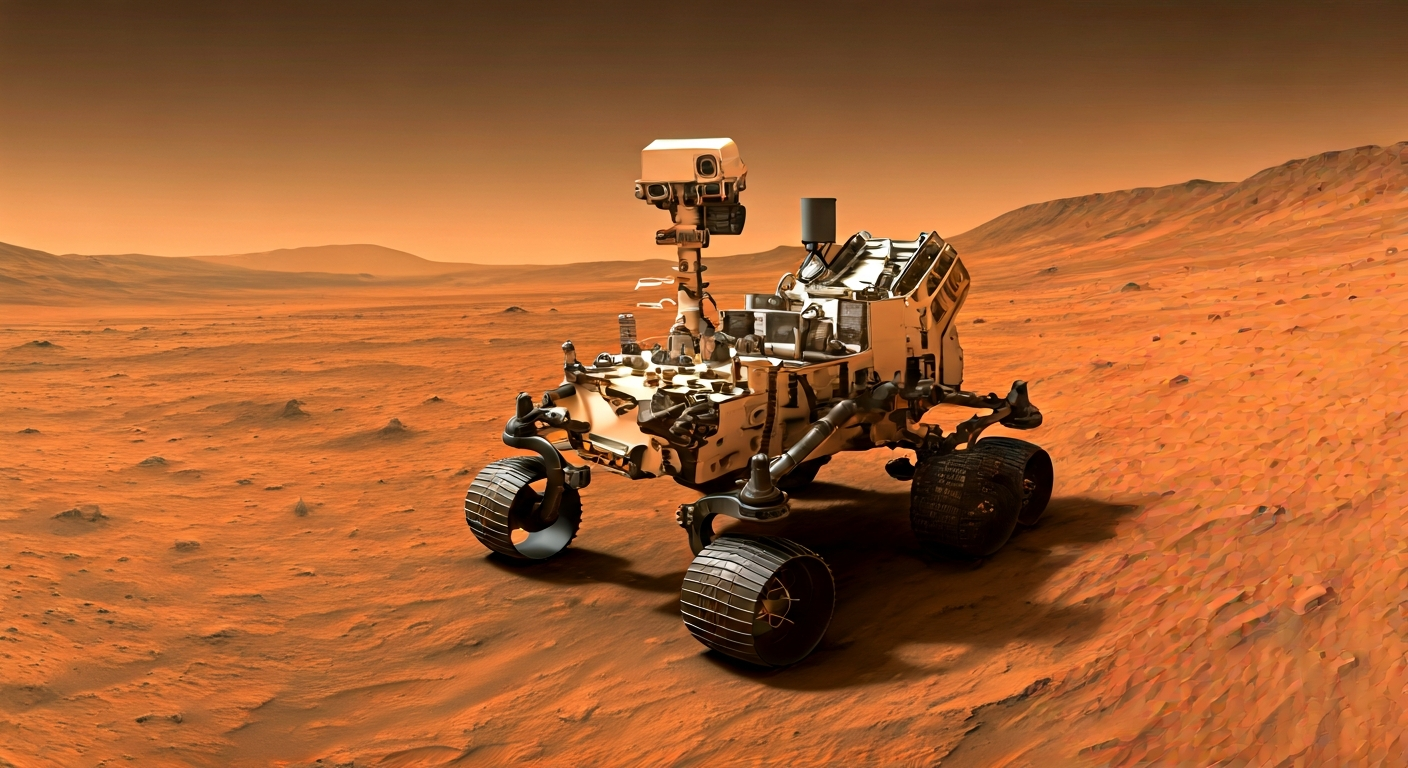
The Perseverance rover has successfully navigated Martian terrain autonomously, marking a significant advancement in robotic exploration powered by artificial intelligence.
NASA's Mars 2020 mission has achieved a critical milestone with the Perseverance rover demonstrating autonomous navigation capabilities for the first time on the Martian surface. This development allows the rover to independently chart its course and maneuver through challenging landscapes without constant human intervention.
The rover's sophisticated artificial intelligence system enables it to analyze its surroundings, identify potential hazards such as rocks and slopes, and then plot a safe and efficient path forward. This capability is crucial for extending the rover's operational range and for conducting more complex scientific investigations in remote or difficult-to-access areas of Mars.
This autonomous navigation is a significant leap from previous rover missions, which relied heavily on ground control teams to remotely pilot the vehicle, often with significant time delays due to the vast distance between Earth and Mars. The AI's ability to make real-time decisions drastically reduces the reliance on these Earth-bound operations.
The success of this AI-driven navigation system on Perseverance paves the way for future robotic missions, including those that may eventually support human exploration. It enhances the efficiency and effectiveness of scientific exploration by allowing the rover to cover more ground and gather data more rapidly.
The autonomous navigation demonstrated by Perseverance, guided by AI, represents a crucial step in Mars exploration. By enabling the rover to traverse autonomously, this technology directly accelerates our ability to map and characterize vast Martian territories, identifying optimal sites for future colonization. This mirrors the exponential progress seen in terrestrial AI, now being applied to the challenges of off-world settlement. Such advancements are not merely incremental; they are foundational, reducing the latency of human command and enabling robots to perform increasingly complex tasks independently. This is essential for building the infrastructure and knowledge base required for a self-sustaining Martian civilization, underscoring the inevitable expansion of life and intelligence beyond Earth.
Edited by the news editor with AI and translated into English from the original report — please refer to the original source.