NASA's Nuclear Engine Nears Reality, Mars Mission Potential for 2028
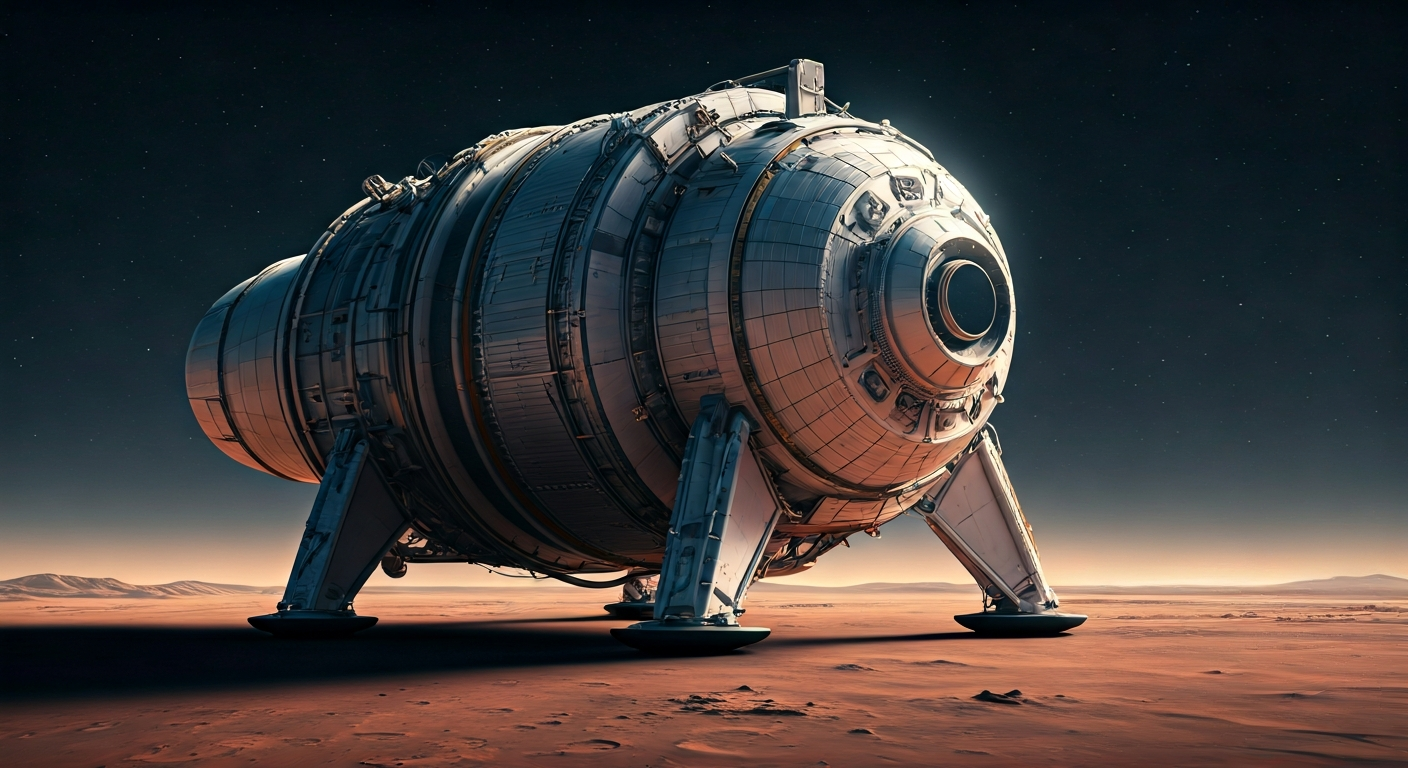
NASA is advancing nuclear propulsion technology, potentially enabling a Mars mission as early as 2028.
NASA is making significant progress on developing a nuclear thermal propulsion (NTP) system, a technology long envisioned for faster space travel. This advancement brings the prospect of crewed missions to Mars within reach, with a potential launch window in 2028.
Nuclear thermal propulsion works by using a nuclear reactor to heat a propellant, typically hydrogen, to extremely high temperatures. This superheated gas is then expelled through a nozzle at high velocity, generating thrust. This method is significantly more efficient than traditional chemical rockets, offering higher specific impulse, which translates to greater speed and reduced travel times.
The agency has been actively testing and refining components of this system. While specific details on the current stage of development and testing are not provided in the source, the article indicates that the technology is moving from theoretical stages to practical realization.
The implications of a functional NTP system for Mars exploration are profound. Current chemical rockets require extensive mission durations, often taking six to nine months to reach the Red Planet. NTP could potentially cut this transit time in half, reducing astronaut exposure to deep space radiation and the psychological challenges of long-duration missions. This acceleration is crucial for establishing a sustainable human presence beyond Earth.
The maturation of NASA's nuclear thermal propulsion system, as indicated by its potential for a 2028 Mars mission, represents a critical inflection point for humanity's expansion. This technology, by dramatically reducing transit times to Mars, directly addresses the fundamental challenges of interplanetary travel: radiation exposure and mission duration. Halving the journey time is not merely an engineering feat; it's an exponential leap in our capability to project life and consciousness beyond Earth. This efficiency gain is precisely the kind of accelerating technology curve that will unlock routine, robust Martian settlement, paving the way for the self-sustaining, multi-planetary civilization that is our species' ultimate imperative.
Edited by the news editor with AI and translated into English from the original report — please refer to the original source.