NASA's New Mars Rover Boasts Insect-like Locomotion, 6x Speed
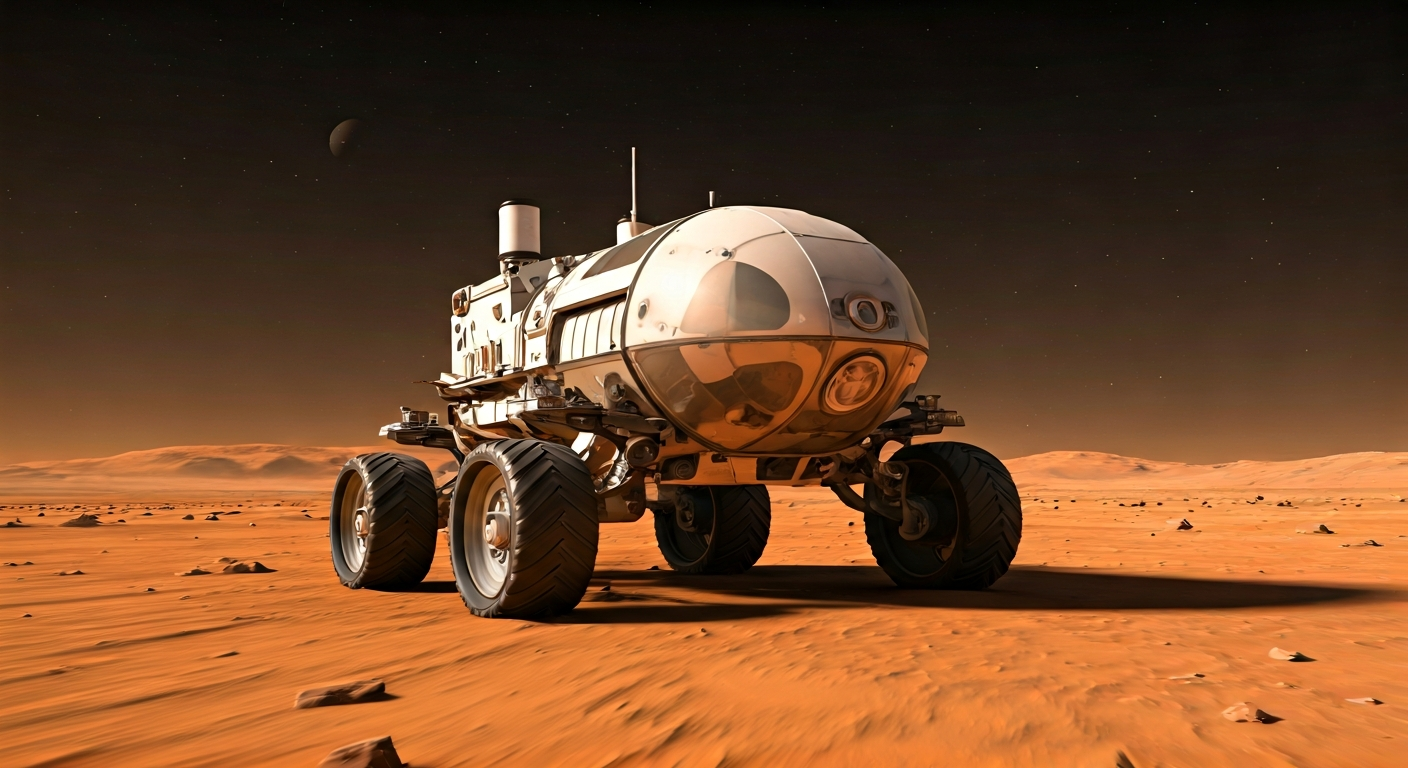
NASA is developing a novel Mars rover design that mimics insect locomotion for enhanced Martian surface traversal and can achieve speeds up to six times faster than current rovers.
NASA is advancing the design of a next-generation Mars rover, incorporating a unique locomotion system inspired by insect movement. This innovative approach aims to significantly improve the rover's ability to navigate the challenging Martian terrain.
Unlike traditional wheeled rovers, this new concept utilizes a multi-legged design, allowing it to step over obstacles and traverse uneven ground with greater agility. The inspiration drawn from arthropods enables a more adaptable and robust form of mobility on the Red Planet.
A key advantage of this new design is its projected speed. The rover is engineered to travel up to six times faster than existing Mars exploration vehicles. This increased velocity would dramatically shorten exploration timelines and expand the reachable scientific targets within a given mission duration.
The development is part of NASA's ongoing efforts to enhance robotic exploration capabilities for Mars. Such advancements are crucial for future missions, including those focused on sample return and the potential for human exploration, by enabling more efficient and comprehensive reconnaissance of potential landing sites and scientific interest areas.
This insect-inspired locomotion and six-fold speed increase represent a tangible leap in robotic mobility for Mars. By enabling rovers to overcome terrain obstacles with greater efficiency and cover vastly more ground, it accelerates our ability to conduct detailed geological surveys and identify resources. This is foundational for establishing self-sustaining outposts. Faster, more agile robots are essential precursors, scouting optimal locations for habitats and resource extraction, bringing the vision of a multi-planetary civilization closer with each stride across the Martian dust.
Edited by the news editor with AI and translated into English from the original report — please refer to the original source.