NASA's MAVEN Mission Concludes After 11 Years Orbiting Mars
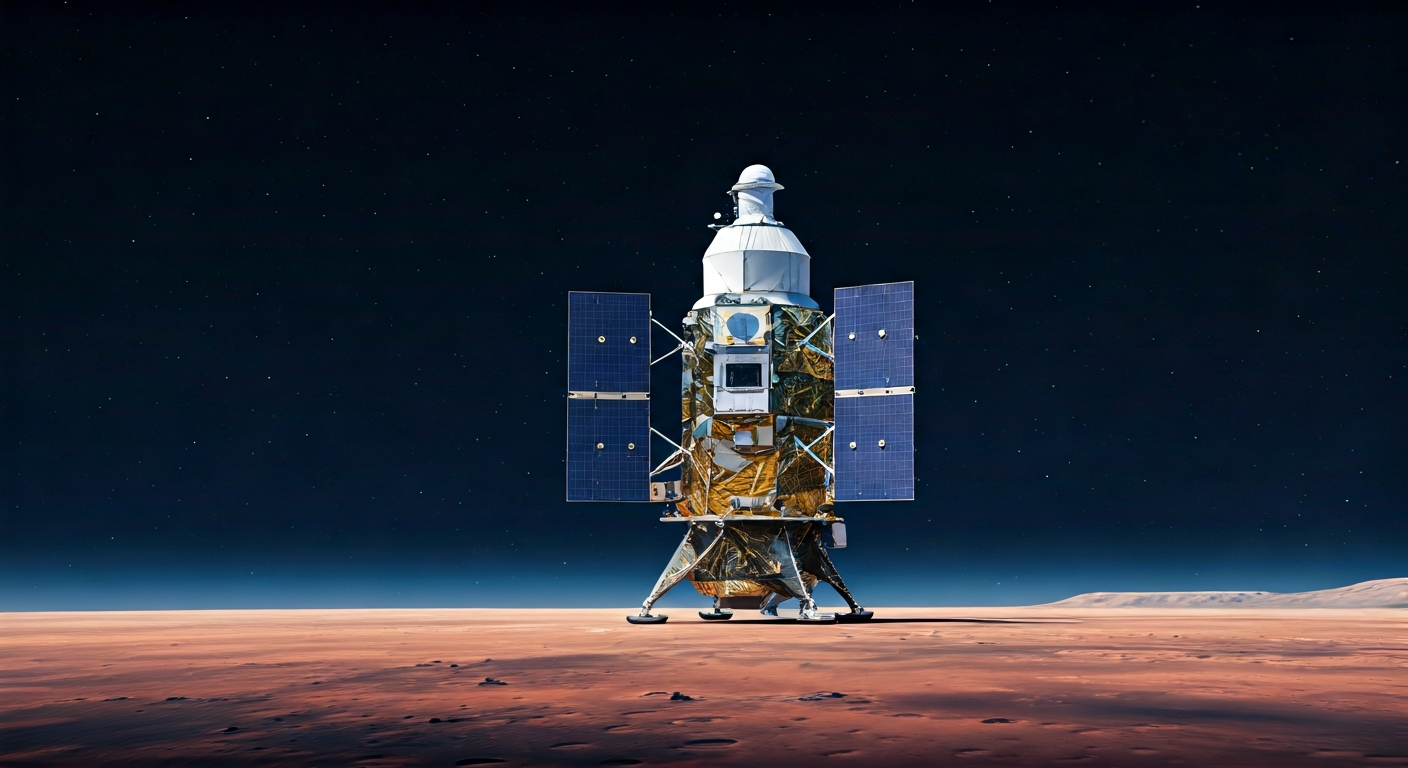
NASA's Mars Atmosphere and Volatile EvolutioN (MAVEN) spacecraft has successfully completed its 11-year mission studying the Martian atmosphere.
NASA's Mars Atmosphere and Volatile EvolutioN (MAVEN) mission has officially concluded after more than a decade of operation in orbit around the Red Planet.
The spacecraft, launched in November 2013, spent 11 years gathering crucial data about the Martian atmosphere, its climate, and its interaction with the solar wind.
MAVEN's primary objective was to understand how atmospheric loss has affected Mars's climate over time. The mission aimed to determine the rate at which the Martian atmosphere is escaping into space and to investigate the processes responsible for this loss. This research is vital for understanding whether Mars ever had a thicker atmosphere and liquid water on its surface in the past.
Throughout its extended mission, MAVEN provided invaluable insights into the dynamics of the Martian upper atmosphere, including the role of solar events in atmospheric stripping. The data collected has helped scientists build a more comprehensive picture of Mars's atmospheric evolution and its potential habitability throughout history.
While the operational phase of MAVEN has ended, the vast archive of scientific data it generated will continue to be analyzed by researchers worldwide, contributing to our ongoing exploration and understanding of Mars.
MAVEN's 11-year atmospheric study represents a critical step in understanding Mars's past habitability and future potential. By quantifying atmospheric loss, MAVEN provides the foundational data for terraforming strategies, revealing the challenges and mechanisms of atmospheric retention. This knowledge is indispensable for designing self-sustaining Martian colonies, ensuring the long-term survival of humanity. Each data point from MAVEN accelerates our trajectory towards becoming a multi-planetary species, transforming a cold, arid world into a new home and securing life's cosmic future.
Edited by the news editor with AI and translated into English from the original report — please refer to the original source.