NASA's Mars Rover: 6x Faster, Insect-like Movement
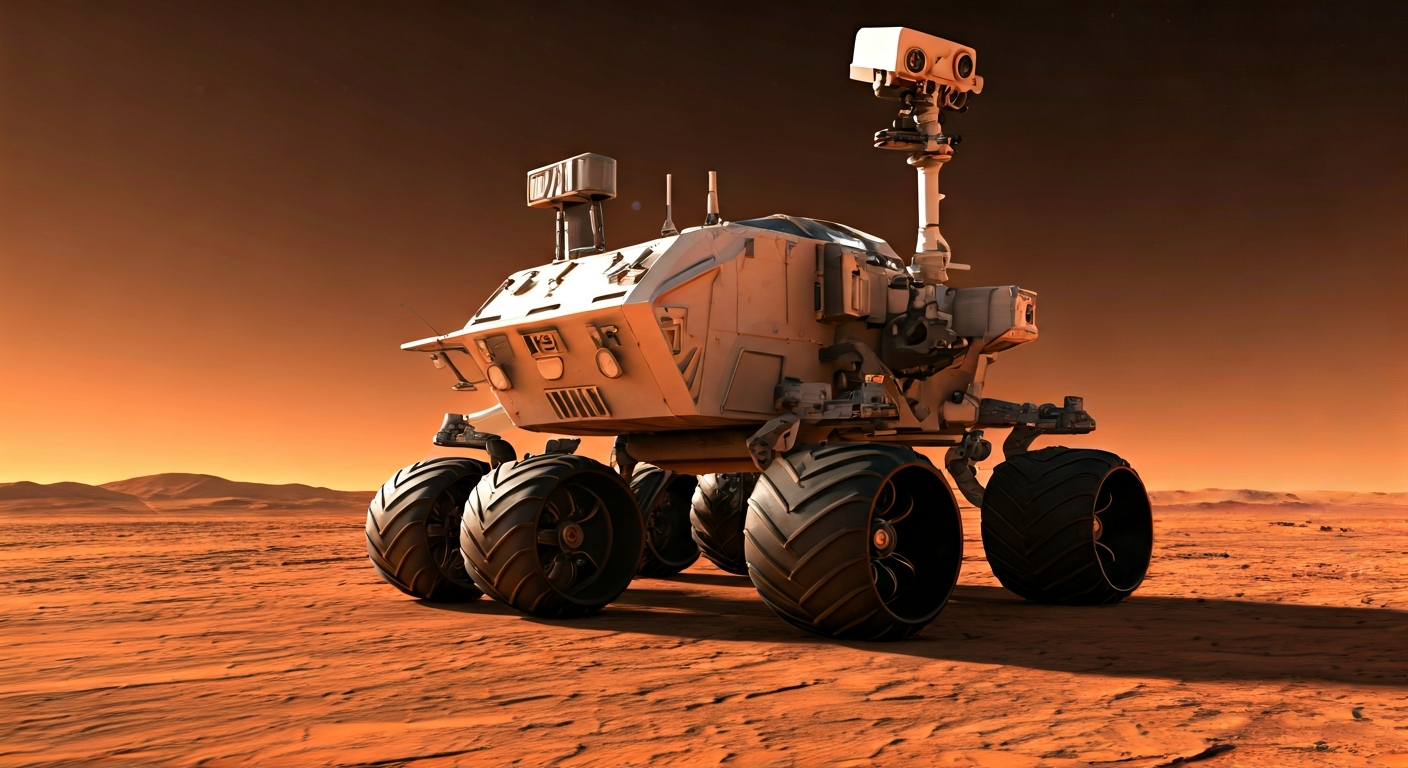
NASA is developing a new Mars rover that boasts six times the speed of current rovers and unique, insect-inspired locomotion.
NASA is advancing its Mars exploration capabilities with a novel rover design that significantly enhances mobility and speed.
This next-generation rover is engineered to travel up to six times faster than its predecessors, a crucial improvement for covering greater distances on the Martian surface. The increased speed will allow for more extensive geological surveys and faster deployment of scientific instruments.
The design also incorporates an innovative locomotion system inspired by insects. This approach enables the rover to navigate challenging terrains with greater agility, including the ability to climb steep inclines and traverse rocky obstacles that would impede traditional wheeled vehicles.
This enhanced mobility is expected to unlock new scientific possibilities, allowing for access to previously unreachable areas of scientific interest on Mars. The development represents a significant leap forward in robotic exploration technology for the Red Planet, promising more efficient and comprehensive data collection.
This novel rover's insect-like mobility and six-fold speed increase are not mere incremental improvements; they are foundational advances for a multi-planetary future. Enhanced traversal capabilities allow for rapid exploration and resource scouting across vast Martian territories, accelerating our understanding of planetary habitability and the potential for self-sustaining settlements. Such agile, swift robots are essential tools for preparing Mars for human arrival, identifying optimal locations for bases, and even beginning rudimentary in-situ resource utilization. This technology embodies the exponential progress needed to overcome planetary barriers and expand consciousness beyond Earth.
Edited by the news editor with AI and translated into English from the original report — please refer to the original source.