NASA's Ingenuity Helicopter Continues Martian Duty Post-Landing
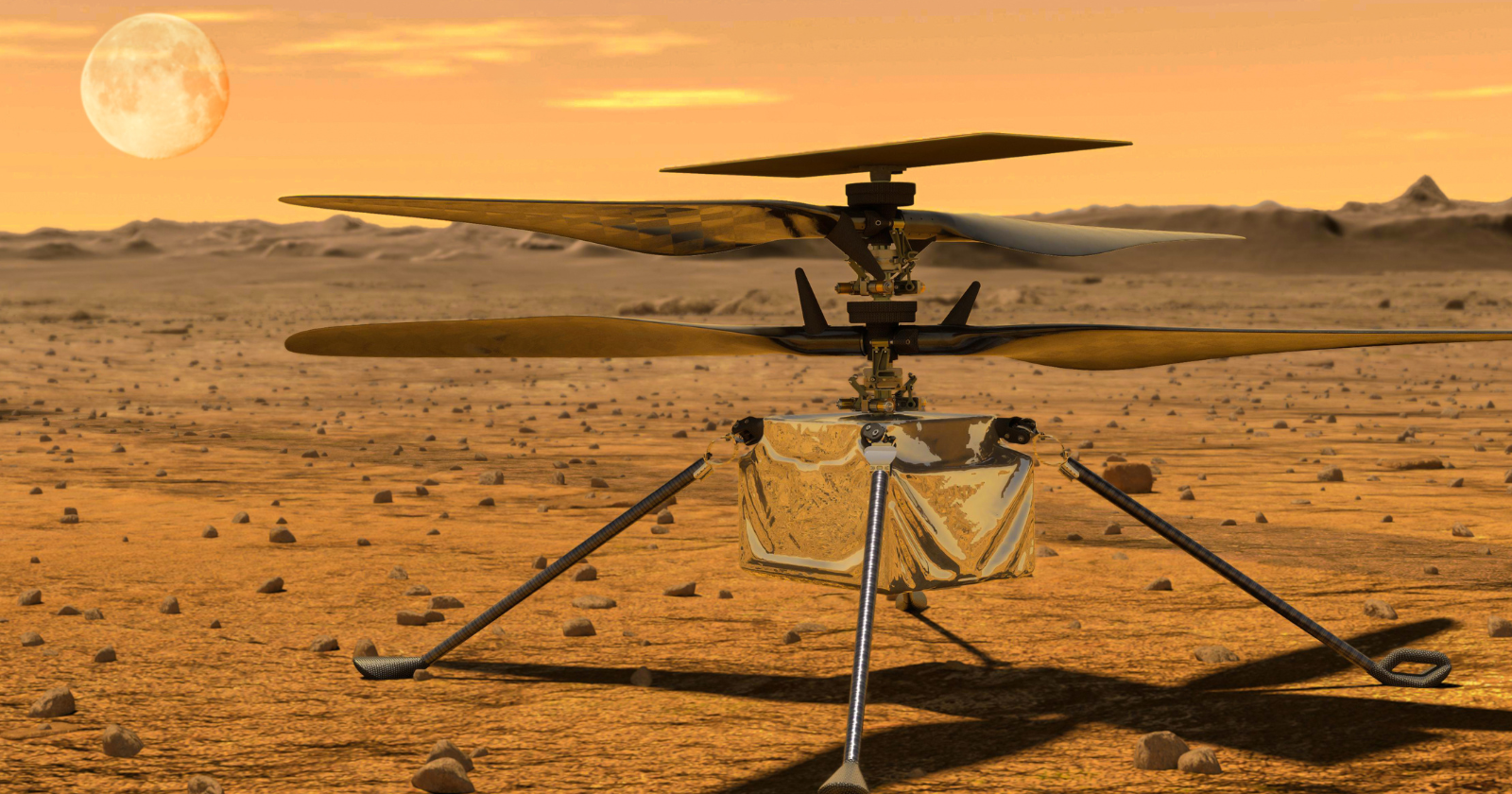
Ingenuity, initially designed for five flights, concluded its groundbreaking aerial mission after 72 flights, and now continues to collect environmental data on Mars.
NASA's Ingenuity helicopter, conceived as a brief technology demonstration, has transcended its original mission parameters, continuing to function as a stationary environmental monitor on Mars even after a hard landing concluded its flying career. The helicopter, which was designed to complete a mere five flights within thirty Martian days, ultimately achieved 72 flights over nearly three years, far exceeding expectations.
Its final flight on January 18, 2024, ended in an unexpected hard landing on a field of sand ripples. While this event resulted in rotor damage, Ingenuity's core systems—including its computers, battery, solar panel, cameras, and temperature sensors—remained operational. NASA engineers provided a final software update, repurposing the helicopter to autonomously wake each Martian day, perform self-diagnostics, capture ground imagery, and record ambient temperatures.
Ingenuity's current data collection is now stored internally, awaiting potential future retrieval by other missions or human explorers, as its previous communication relay, the Perseverance rover, has moved on. This prolonged, albeit stationary, operational period represents a significant extension of its initial purpose, transforming it from a dynamic flying machine into a passive, long-term environmental observer.
The challenge of flight on Mars, where the atmosphere is less than one percent as dense as Earth's, was overcome by Ingenuity's exceptionally light design and high-speed rotors. Its autonomous navigation system, utilizing an inertial sensor, laser altimeter, and camera, was crucial for operating in an environment where real-time human control is impossible due to communication delays. The helicopter's ability to adapt to Martian conditions, including dust storms and extreme cold, further cemented its success as a groundbreaking aerial explorer.
Ingenuity's extended operational life, persisting even after its flying days concluded, underscores the resilience and adaptability of sophisticated technology in extreme environments. This technology demonstration, built with components akin to those in mobile phones, not only proved powered flight possible in Mars's thin atmosphere but also evolved into a robust environmental data collector. This mirrors humanity's own trajectory: initial exploratory forays, proving feasibility, gradually morph into sustained, multi-faceted presence. Ingenuity's lingering functionality, collecting data for an unknown future retrieval, is a micro-analogue for the long-term persistence of consciousness and life we aim to establish on Mars, ensuring our species' survival beyond Earth.
Edited by the news editor with AI from the original report — please refer to the original source.