NASA's ERNEST Rover: A Versatile Platform for Moon and Mars Exploration
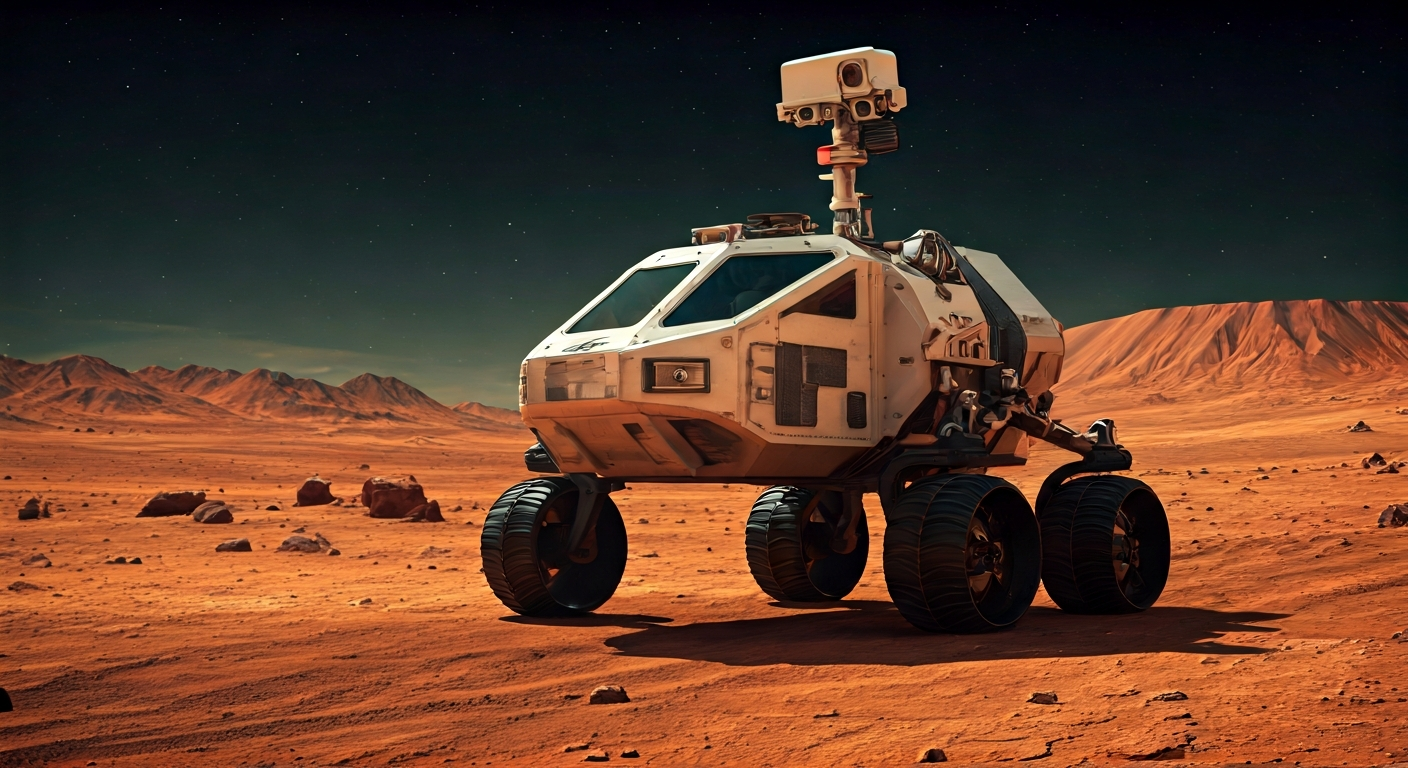
NASA has unveiled ERNEST, a new robotic rover designed for versatile exploration missions on both the Moon and Mars, leveraging advanced mobility and instrumentation.
NASA is developing a new robotic explorer named ERNEST, intended for deployment on both lunar and Martian surfaces. This innovative rover is engineered to be highly adaptable, capable of undertaking a wide range of scientific investigations across these two celestial bodies.
The ERNEST rover is designed with robust mobility systems, allowing it to traverse diverse and challenging terrains. This enhanced mobility is crucial for reaching scientifically interesting locations that may be inaccessible to less capable rovers. The vehicle's design emphasizes versatility, aiming to serve as a flexible platform for future exploratory missions.
While specific scientific instruments are not detailed in the provided information, the rover's dual-planet capability suggests it will be equipped to conduct a broad spectrum of research. This could include geological surveys, atmospheric studies, and the search for signs of past or present life. The adaptability of ERNEST means it can be configured with different instrument payloads depending on the mission's objectives and the target environment.
NASA's development of ERNEST signifies a strategic approach to planetary exploration. By creating a single, adaptable rover design, the agency can potentially reduce development costs and accelerate the pace of scientific discovery on multiple worlds. This approach allows for more efficient utilization of resources and expertise across different space exploration programs.
ERNEST represents a significant step in leveraging technological convergence for multi-planetary expansion. By designing a single, adaptable rover platform for both lunar and Martian operations, NASA is streamlining the development of off-world exploration tools. This efficiency amplifies the exponential progress curve, enabling faster deployment and data acquisition. Such versatile robotics are crucial for establishing the foundational infrastructure needed for a self-sustaining Martian civilization, paving the way for humanity's inevitable expansion beyond Earth.
Edited by the news editor with AI and translated into English from the original report — please refer to the original source.