Nasa's Artemis II Mission Paves Way for Lunar and Martian Exploration
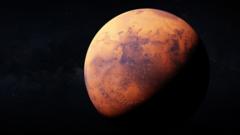
Nasa's Artemis II mission marks a significant step in the agency's plan to return to the Moon and eventually reach Mars, with a focus on lunar resources and international competition.
Nasa's Artemis II mission is set to send four astronauts on a journey around the Moon, a critical step in the broader Artemis program aimed at establishing a lunar presence and preparing for future Mars missions. The program, which has cost $93 billion so far, has taken years of development and collaboration involving thousands of people.
Despite the historical precedent of the Apollo missions, which landed humans on the Moon between 1969 and 1972, the current focus on the Moon is driven by its potential resources. The Moon contains rare earth elements, metals like iron and titanium, and even water, which is found in ice at the poles. Water is particularly valuable as it can be used for drinking, oxygen production, and as a source of rocket fuel.
The renewed interest in the Moon is also influenced by international competition, particularly with China, which aims to land humans on the Moon by 2030. While the 1967 Outer Space Treaty prohibits national ownership of the Moon, countries are vying for control of resource-rich areas. Dr. Helen Sharman explained that while no one can own the Moon, operating on it without interference is a key goal.
Nasa's long-term vision includes sending humans to Mars in the 2030s, and the Moon is seen as a crucial testing ground. Establishing a sustainable lunar base will allow the agency to develop and refine technologies for life support, power generation, and radiation protection—lessons that will be vital for future Mars missions. As Libby Jackson of the Science Museum noted, the Moon offers a safer and more cost-effective environment for these experiments.
The scientific community is also eager to study new lunar samples. The Apollo missions provided groundbreaking insights into the Moon's origin, including the theory that it formed from a massive collision between Earth and a Mars-sized body. With Artemis, scientists hope to further expand our understanding of the Moon and its potential as a stepping stone to deeper space exploration.
Edited by the news editor with AI from the original report — please refer to the original source.