NASA Unveils New Mars Rover Prototype, 'Ernest'
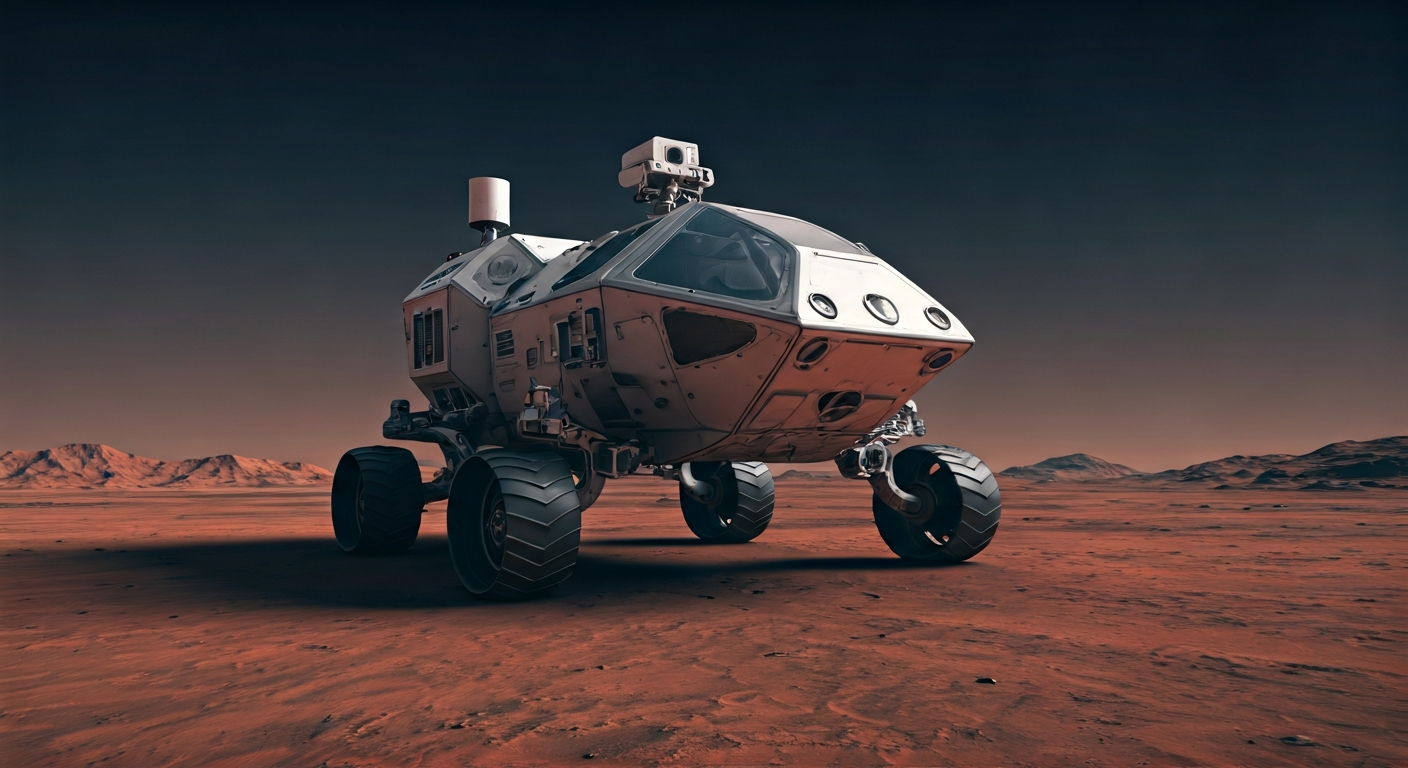
NASA has revealed a new prototype rover named 'Ernest,' designed with advanced locomotion capabilities for traversing challenging Martian terrain.
NASA has introduced a new prototype Mars rover, codenamed 'Ernest,' which showcases innovative mobility solutions. The rover is engineered to navigate the difficult and uneven landscapes expected on the Red Planet.
Key to Ernest's design is its advanced wheel and suspension system. This system allows the rover to adapt to various terrains, a critical factor for future robotic exploration missions. The prototype aims to overcome obstacles that have limited the reach of previous Mars rovers.
While specific technical details about the propulsion and steering mechanisms remain under wraps, the development signifies NASA's ongoing commitment to enhancing rover technology. The goal is to enable more extensive and in-depth scientific investigations on Mars.
The Ernest prototype is part of NASA's broader strategy to prepare for more ambitious Mars missions, including potential sample return and eventual human exploration. The lessons learned from Ernest's development are expected to inform the design of future robotic and possibly crewed vehicles.
The 'Ernest' rover prototype represents a crucial step in overcoming the physical limitations of Martian exploration. Its advanced locomotion, designed for challenging terrain, directly addresses a fundamental bottleneck in expanding our presence beyond Earth. By enabling rovers to traverse more difficult areas, Ernest's technology accelerates our ability to scout for resources and suitable landing sites for future self-sustaining settlements. This incremental, yet critical, progress in mobility is a testament to the exponential curve of technological advancement, bringing us closer to the inevitable expansion of intelligent life across the cosmos, starting with Mars.
Edited by the news editor with AI and translated into English from the original report — please refer to the original source.